On February 14, 2025, an arctic blast held Skokie near 5°F when a massive water main broke at East Prairie Road and Emerson Street. Floodwater surged across a snow-covered neighborhood for nearly a mile, pooling eight inches deep — and then it froze solid. Drone footage showed cars trapped in ice. With pressure lost across the area, neighborhoods went under a boil-water order, and local schools closed or went remote. It was winter flooding at its most literal: not a thaw, not a leak — a street turned to a frozen river in a single morning.
Skokie has a second water story written into its infrastructure. The village runs on combined sewers — one set of pipes carrying both sewage and stormwater — with the EPA listing "Skokie CSO-TARP" discharges to the North Shore Channel. And in 1983, the EPA built something unusual here: instead of separating Skokie's and Wilmette's combined sewers, engineers installed "street storage" — berm and flow-regulator systems that hold stormwater in the streets to relieve surcharging sewers. It was an innovative fix for its time, but it tells you what Skokie's sewers do under pressure: they back up. After the record April 2013 rainfall, a local plumber reported "a lot of homes flooded that had never had a sewer backup before."
Rapid Water Damage Restoration Illinois's IICRC-trained technicians know Skokie's water from the North Shore Channel inward. Call (773) 200-3228 anytime.
Common causes of water damage in Skokie
- Water main breaks in deep freezes. February 14, 2025 is the extreme case — a main break at 5°F flooding a mile of neighborhood — but the mechanism repeats every hard winter. The 2013–14 winter logged 5,200+ frozen-service calls across Chicago-area systems, with roughly a quarter of area water mains over a century old.
- Combined-sewer backup. Skokie's combined system surcharges when stormwater overwhelms the shared pipes, sending sewage up through basement floor drains and low fixtures — the 1983 street-storage project was built because these sewers surcharge, and April 2013 proved the risk is still live.
- River-adjacent groundwater. The North Branch of the Chicago River and the North Shore Channel run through and along the village, with the MWRD North Side plant operating here since 1928. High water tables near the channel push hydrostatic pressure against foundations during wet stretches.
- Aging mid-century housing stock. Southeast Skokie's brick ranches, Devonshire's split-levels, bungalows, and Georgian two-stories date mostly to the 1950s–70s — aging laterals, original drain tile, and older sump systems meeting heavier modern storms.
- Flash-storm ponding. The July 1996 flood set record flows at 19 northern Illinois gages, including the Skokie River — proof of how fast local waterways overwhelm when multi-inch rain falls on saturated ground.
Areas we serve in Skokie
We serve all of Skokie — 60076 and 60077 — including Old Orchard, Devonshire, North Skokie, and Southeast Skokie. Our crews work around Westfield Old Orchard, the Skokie Lagoons, Oakton Community College's Skokie campus, Shabonee and Terminal parks, and the canal-side forest preserves along the North Shore Channel.
Our Skokie water damage services
Emergency water extraction:
From a burst main flooding a frozen street to a surcharged sewer filling a basement, truck-mounted and portable extractors remove standing water fast.
Structural drying and dehumidification:
Brick ranch walls, slab edges, and finished basements hold moisture long after water is gone. Industrial air movers and low-grain dehumidifiers run until moisture meters verify dry.
Sewage cleanup:
Combined-sewer backup is Category 3 water — full containment, disinfection, and removal of unsalvageable materials, with the source pathway documented for your claim.
Mold remediation:
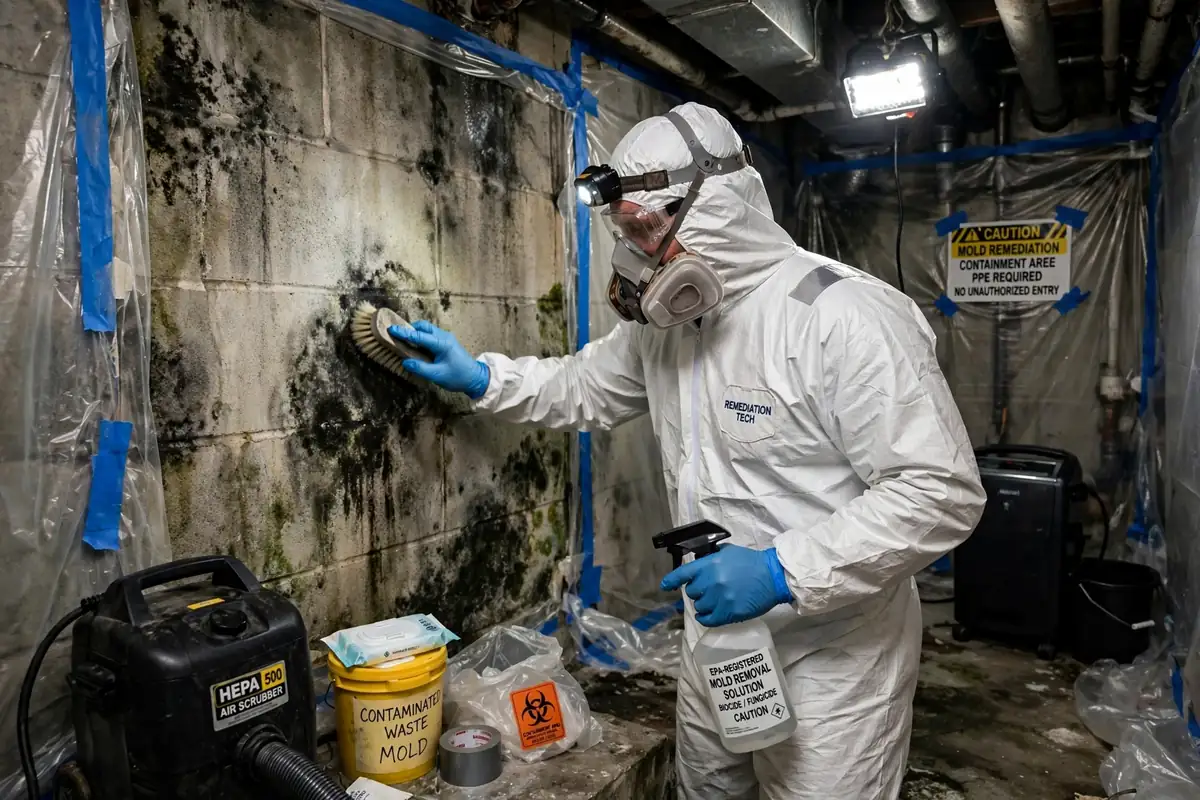
Wet drywall, carpet, and paneling grow mold within days. We contain, remove, and treat to IICRC standards.
Frozen-pipe and main-break response:
We handle the aftermath of burst pipes and municipal main breaks alike — extraction, structural drying, and mold prevention from the first hour.
Cost factors & insurance claim help
Cost depends on water volume, distance traveled, materials affected, and whether sewage forces tear-out — meaning estimates follow the evidence, not a formula. You get an itemized scope before work proceeds. Main-break flooding and sewer backup each raise specific coverage questions, and we document source, category, and pathway precisely so your claim reflects what happened. Our office works your claim directly with the insurance company, first call to final walkthrough.
Skokie water damage FAQs
What happened in the February 2025 water main break? On February 14, 2025, during an arctic blast near 5°F, a massive main broke at East Prairie Road and Emerson Street. Water flooded a snow-covered neighborhood for nearly a mile, pooled about eight inches deep, and froze solid — trapping cars in ice. If your home took on water from that break — or any break — call (773) 200-3228.
Does Skokie really have combined sewers? Yes. The EPA lists "Skokie CSO-TARP" discharging to the North Shore Channel: waste and stormwater share pipes across much of the village. In heavy rain those pipes surcharge — which is why floor drains back up even far from any river.
What was the 1983 "street storage" project? Rather than separating Skokie's and Wilmette's combined sewers, the EPA built berm and flow-regulator systems in 1983 that temporarily store stormwater in streets. It confirms the underlying condition: Skokie's combined sewers back up under pressure, and basements remain the release valve.
My home flooded in April 2013 but never before — why? Record April 2013 rainfall overwhelmed systems across this corridor; local plumbers reported homes flooding "that had never had a sewer backup before." If it happened once, it can happen again — sump pumps, check valves, and overhead sewers are the standard local defenses.
Are burst pipes worse in Skokie's older homes? Mid-century brick ranches and bungalows with original plumbing are the most freeze-vulnerable stock. If a pipe bursts, shut off the water — don't thaw it with an open flame — and call (773) 200-3228.
How fast can you reach Old Orchard or Devonshire? We dispatch 24/7 across 60076 and 60077. The sooner extraction starts, the less you lose — call (773) 200-3228.
How We Restore Water-Damaged Homes in Skokie
- 24/7 dispatch and assessment. Call (773) 200-3228 and a crew rolls. We identify the water category, trace its entry, and check for hazards.
- Extraction. Standing water comes out with commercial-grade equipment; every hour it sits drives damage deeper into walls and subfloors.
- Drying with verification. Air movers and dehumidifiers run until moisture meters confirm materials are genuinely dry.
- Cleaning and sanitizing. Disinfection for contaminated surfaces; careful cleaning and protection for salvageable contents.
- Mold prevention or remediation. Antimicrobial treatment where warranted; full remediation where mold has taken hold.
- Repairs and insurance documentation. We coordinate repairs and hand your insurer a complete file — photos, moisture logs, itemized records.
Water Damage in Skokie? We Respond 24/7
Every minute counts. Rapid Water Damage Restoration Illinois dispatches certified technicians across Skokie day and night — with insurance documentation handled for you.
Call (773) 200-3228 NowWater Damage Restoration Services in Skokie
- Our water damage restoration service
- Commercial Water Damage Restoration in Skokie
- Residential Water Damage Restoration in Skokie
- Emergency Flood Cleanup in Skokie
- Storm & Flood Damage Restoration in Skokie
- Ceiling & Wall Water Damage Repair in Skokie
- Sewage Backup Cleanup in Skokie
- Mold Remediation in Skokie
- Burst Pipe & Leak Water Damage in Skokie
- Drying & Dehumidification in Skokie
Nearby Areas We Serve Around Skokie
Helpful Water Damage Guides
- Sewage Backup Cleanup: Health Risks & Pro Help
- Does Homeowners Insurance Cover Water Damage in Illinois?
Official resources: FEMA FloodSmart (flood insurance) and EPA guide to mold and moisture.