Published · Last updated · Rapid Water Damage Restoration Illinois
Picture this: after a heavy Illinois thunderstorm, you walk downstairs to find murky water rising through your basement floor drain, carrying an unmistakable smell. In older Chicagoland neighborhoods — where combined sewer systems carry both stormwater and household sewage in the same pipes — an extreme rain event can surcharge those systems and push raw sewage back into homes. The July 2023 storms were extreme enough that officials had to open the Chicago Harbor Lock and release combined sewage and rainwater into Lake Michigan just to relieve the system. When sewage enters your home, it's not just water damage. It's Category 3 black water — and what you do in the first hours matters enormously for your family's health.
What "Category 3" Means — and Why It Changes Everything
Restoration professionals classify water damage into three categories. Category 1 is clean water from a supply line. Category 2 is gray water — slightly contaminated, like washing machine discharge. Category 3 is black water: grossly contaminated water that can carry pathogenic agents. Sewage backups, toilet overflows from beyond the trap, rising floodwater, and seawater all fall into Category 3. Here's what makes black water so insidious: it doesn't have to look or smell like raw sewage to be dangerous. Gray water left standing for a day or two can degrade into Category 3 as bacteria multiply, which means a "mild" backup handled slowly can become a serious biohazard on its own. Once water is classified as Category 3, the cleanup rules change completely — standard drying techniques aren't enough, and materials that might be saved after clean-water damage must often be removed.
The Health Risks of Sewage Exposure
Raw sewage carries a cocktail of microorganisms that can make people seriously ill. Bacteria commonly found in sewage can cause gastrointestinal illness, skin infections, and wound infections. Viruses present in human waste can cause stomach illness and other diseases. Parasites and their eggs can survive in sewage-contaminated water and soil. Beyond the water itself, the damp environment left behind promotes mold growth, and mold spores can trigger respiratory problems and allergic reactions — a particular concern for children, elderly residents, and anyone with asthma or compromised immunity. Exposure doesn't require drinking the water: splashes, aerosolized droplets during cleanup, skin contact through cuts or scrapes, and contaminated surfaces touched before handwashing are all exposure routes. This is why sewage backup cleanup is fundamentally a health operation, not just a drying job.
Why DIY Sewage Cleanup Is Dangerous
The instinct to grab a mop and start cleaning is understandable — but with sewage, it's dangerous. Household cleaning products and a pair of rubber gloves don't provide meaningful protection against Category 3 contamination: the real risk is invisible, soaked into porous materials and aerosolized into the air. Without professional containment, you can spread contamination to clean areas of your home on your shoes, tools, and clothing. Porous materials — carpet, carpet padding, drywall, insulation, upholstered furniture — absorb sewage deeply and cannot be reliably disinfected; scrubbing their surfaces leaves contamination inside. Improper disposal creates its own problems, and disturbing sewage without respiratory protection exposes you to airborne pathogens. Finally, many insurance policies and local health considerations expect professional remediation of sewage losses — a DIY attempt that leaves contamination behind can complicate your claim and, worse, your family's health.
The Professional Sewage Backup Cleanup Process, Step by Step
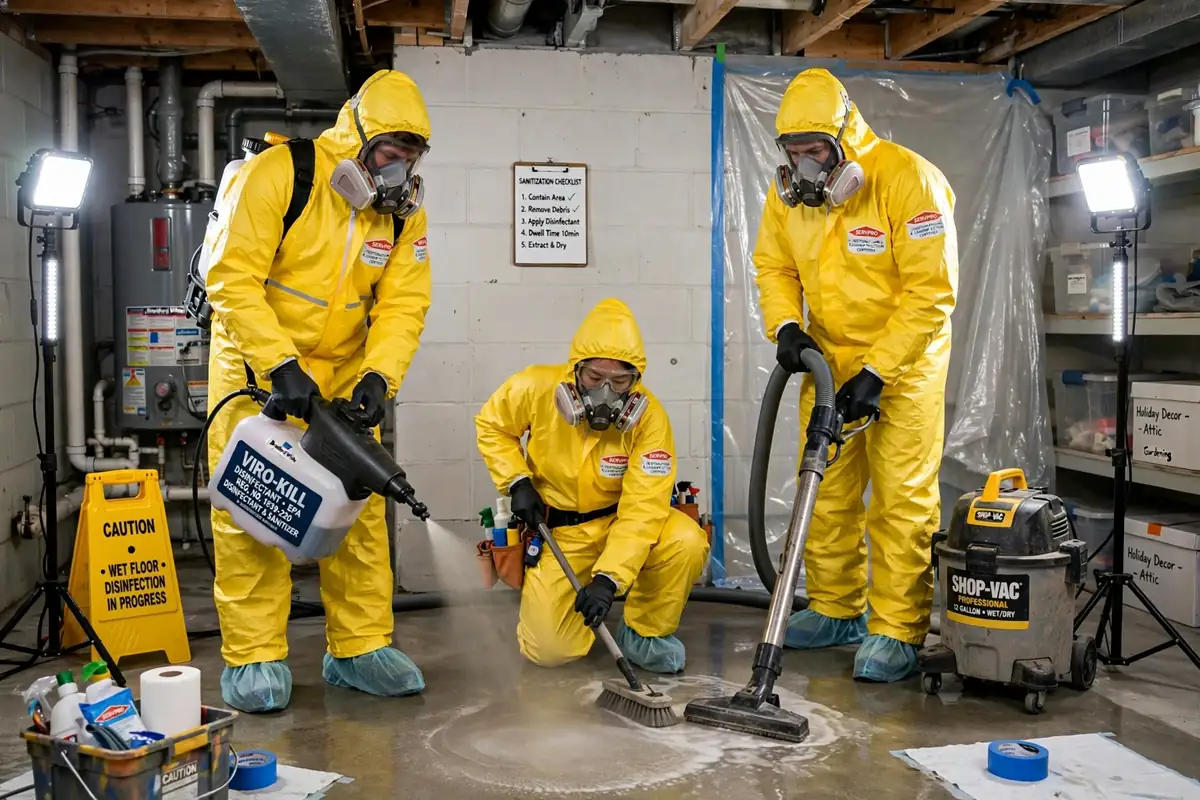
When Rapid Water Damage Restoration Illinois responds to a sewage backup, we follow a structured process designed around health and safety. First, assessment and safety: we identify the contamination's extent, check for electrical hazards, and establish what can be entered safely. Second, containment: we isolate affected areas with barriers and, when needed, negative-air equipment so contaminants don't migrate to clean rooms. Third, extraction: standing sewage is removed with professional extraction equipment, and solid waste is handled for proper disposal. Fourth, removal of porous materials: contaminated carpet, padding, affected drywall, and insulation are cut out and bagged for disposal — this is non-negotiable for Category 3. Fifth, cleaning and disinfection: exposed structural surfaces are thoroughly cleaned and treated with professional-grade antimicrobial products. Sixth, structural drying: commercial air movers and dehumidifiers bring moisture levels down to safe standards, verified with moisture meters. Finally, restoration: removed materials are rebuilt so your space is returned to its pre-loss condition.
What Gets Discarded vs. What Can Be Saved
One of the hardest parts of sewage backup cleanup is accepting that some belongings can't be saved — but knowing the rules in advance helps. Generally discarded: carpet and carpet padding, upholstered furniture, mattresses and pillows, affected drywall and insulation, particleboard furniture, stuffed toys, and any porous personal items that absorbed sewage. Generally salvageable with professional cleaning and disinfection: solid non-porous surfaces like tile, concrete, glass, metal, and sealed hardwood; hard plastic items; and some solid wood furniture, depending on the finish and exposure. Items in sealed containers that kept water out are typically fine. When in doubt, photograph everything before disposal — your insurance adjuster will want documentation of discarded items, and a detailed inventory supports your claim. Rapid Water Damage Restoration Illinois documents all removed materials as part of our standard process.
Reducing Your Risk of the Next Backup
You can't control the municipal sewer system, but you can reduce your home's vulnerability. A backwater valve installed on your home's sewer lateral is the single most effective defense — it lets sewage flow out but closes automatically to block flow coming back in. Have your sewer lateral inspected and cleaned periodically; tree roots and grease buildup narrow the pipe and make backups more likely. Avoid pouring grease down drains, and be mindful of what gets flushed. Know where your sewer cleanout is located so professionals can access it quickly. And during extreme rain events — the kind Illinois has seen more of in recent years — check your basement early and often, so a backup is caught at inches rather than feet.
Is sewage backup covered by homeowners insurance? Usually not under a standard policy — sewage and sump pump backup typically requires a separate endorsement or rider. If you carry that coverage, document the loss thoroughly with photos and a detailed inventory, and review our guide to filing a water damage insurance claim for the full process.
Can my family stay in the house during sewage cleanup? It depends on the extent of contamination, but professionals generally recommend keeping children, elderly residents, and pets away from affected areas until cleanup and disinfection are complete. Your restoration team can advise based on the specific situation.
How long does professional sewage backup cleanup take? Timelines vary with the extent of contamination, but expect extraction and demolition to take a day or two, followed by several days of drying before rebuilding begins. Proper drying can't be rushed — moisture trapped in wall cavities and subfloors will cause mold if it's sealed in too soon.
What should I do immediately after discovering a sewage backup? Avoid contact with the water, keep children and pets away, and don't run water or flush toilets if the backup may be related to a blockage. Shut off electricity to affected areas if it's safe to do so, take photos for documentation, and call a professional restoration company right away.
Sewage in your home is a health emergency, not a cleaning project. Call Rapid Water Damage Restoration Illinois at (773) 200-3228 now for 24/7 professional sewage backup cleanup anywhere in Illinois. We'll contain the contamination, remove what's ruined, disinfect what's left, and restore your home safely — while documenting everything your insurance claim needs.