Water Damage in Ceilings and Walls Runs Deeper Than It Looks
Ceilings and walls are where hidden water damage does its worst work. A slow pipe leak inside a wall cavity or a roof leak dripping into an attic can soak framing, insulation, and drywall for weeks before anything shows on the surface. By the time you notice a discolored patch, the damage behind it is usually much larger — wet insulation losing its effectiveness, wood framing absorbing moisture, and conditions forming that allow mold to take hold. That is why ceiling water damage repair has to start with finding and stopping the source, not with paint.
Our approach covers the whole job: locate the source of the leak, extract any standing water, dry the cavities and surrounding structure completely, remove materials that can't be saved, and rebuild what was damaged. We serve homes and businesses throughout Illinois, and every repair begins with a thorough moisture inspection so we know exactly what we're dealing with before work starts. If the damage is part of a larger flooding event, our water damage restoration team handles the full recovery.
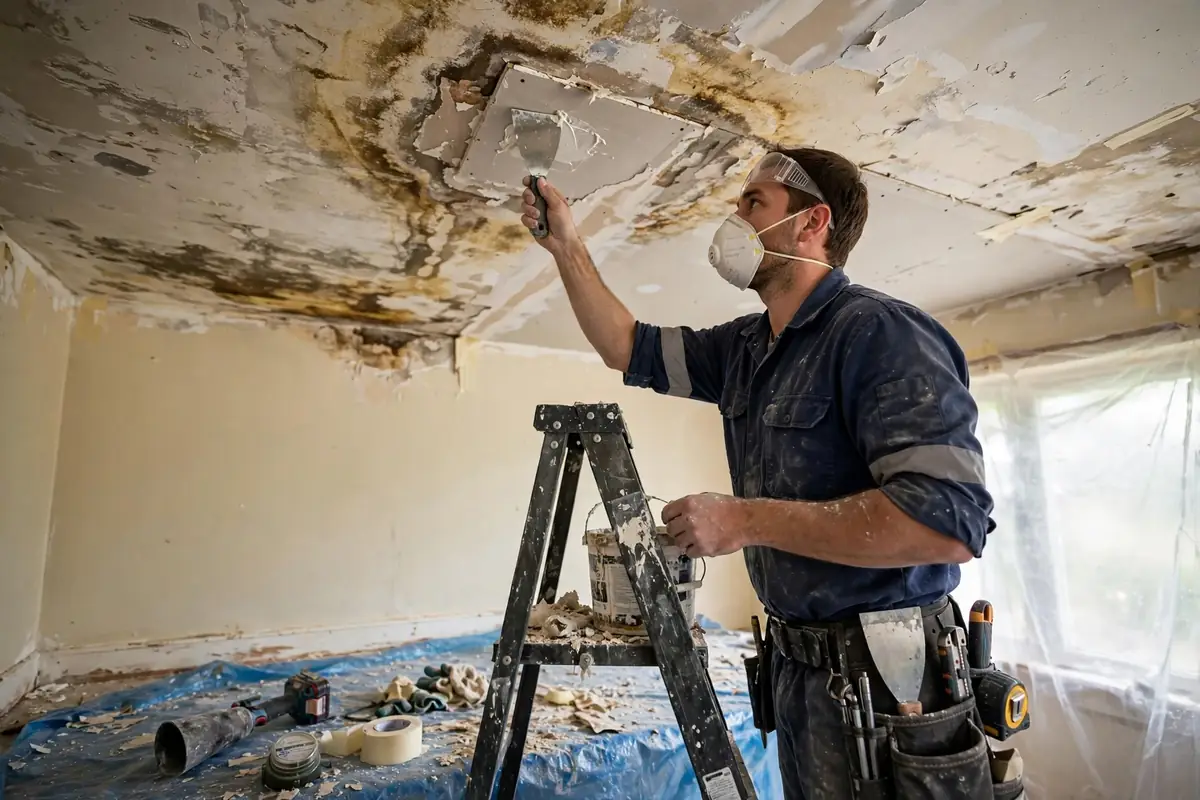
Signs of Ceiling & Wall Water Damage
Catch these warning signs early and you'll save yourself a much bigger repair later:
- Stains and discoloration. Yellow, brown, or copper-colored rings on ceilings or walls are the classic signature of water moving through drywall. Stains that grow or darken after rain point to an active leak.
- Sagging or bulging. Drywall that bows downward or bulges outward has absorbed significant water. A sagging ceiling can hold gallons of water and may collapse — stay clear of it and call a professional.
- Bubbling or peeling paint. When moisture pushes through drywall from behind, paint loses adhesion and forms bubbles, blisters, or peeling patches. Wallpaper may loosen at the seams.
- Soft or spongy drywall. Press gently on a suspect area — drywall that gives or feels soft has lost its structural integrity from prolonged moisture exposure.
- Musty odors and visible mold. A persistent damp smell near a wall or ceiling, or dark spotting along baseboards and corners, signals moisture that's been present long enough for microbial growth.
Common Causes We See in Illinois Homes
Bathroom Leaks From Above
The most frequent source of ceiling water damage in multi-story homes is the bathroom upstairs. Toilet supply lines, shower pans, tub drains, and sink traps develop slow leaks that drip into the ceiling cavity below. Because the leak is hidden, it can run for months — rotting subfloor around the fixtures and saturating the ceiling drywall beneath.
Roof Leaks
Illinois freeze-thaw cycles are hard on roofs. Ice dams in winter, wind-lifted shingles in spring storms, and aging flashing around chimneys and vents all let water into attics and down through ceilings. We identify the full extent of the wet area, remove saturated insulation that won't dry in place, and dry the framing and decking.
Pipe Leaks Inside Walls
Supply lines and drain pipes run through wall cavities throughout the house. Corroded fittings, frozen-then-thawed pipes, and loose connections can seep water directly into the cavity, where insulation acts like a sponge and hides the problem. The first visible sign is often bubbling paint or a damp baseboard. We open the wall strategically, dry the cavity and framing, and coordinate with your plumber so the leak is fixed before we close things back up.
Repair vs. Replace: Our Assessment Approach
Not every water-damaged ceiling or wall needs to be torn out — but not every one can be saved, either. Our technicians assess each situation on its merits. Drywall that got briefly wet from clean water and dried quickly can often be kept. Drywall that has sagged, delaminated, or stayed wet long enough to grow mold has to go. We check the framing behind it too: surface-damp wood dries fine, but wood that has swollen or warped needs attention. We save what can genuinely be restored to sound condition, and we remove what can't — because covering up compromised material only guarantees a repeat visit.
Drying Wall Cavities the Right Way
Drying the surface of a wall isn't drying the wall. Moisture trapped inside a cavity — in insulation, on the back of drywall, along studs and plates — will keep feeding mold and deterioration long after the paint looks dry. Our process starts with moisture mapping: we take readings across the wall to find exactly how far the water traveled, since wet areas extend well beyond visible stains. Where drying in place is viable, we make small, controlled openings at the base of the wall to ventilate the cavity, then direct airflow inside while commercial dehumidifiers pull moisture from the air. We monitor with moisture meters daily until readings confirm the cavity, framing, and drywall have all reached dry standards. When materials are too far gone or contaminated, we remove them instead — targeted demolition is always preferable to sealing moisture inside a wall.
Ceiling Water Damage FAQs
Can I just paint over a water stain on my ceiling?
No — paint hides the symptom, not the cause. The leak is still active or the material is still wet, and the stain will bleed back through while mold and deterioration continue behind the paint. The source must be fixed and the area fully dried before any cosmetic repair.
Is a sagging ceiling dangerous?
Yes. A sagging ceiling can hold a surprising amount of water and may collapse without warning. Stay out from under it, don't poke or prod it, and call us right away. We'll drain it safely and assess the damage.
How do you dry inside a wall without tearing it all out?
We map the moisture first, then make small openings — usually behind the baseboard line — to ventilate the cavity. Targeted airflow and dehumidification dry the interior, and we verify with moisture meter readings. If the drywall or insulation is too damaged or contaminated, we remove just the affected section rather than the whole wall.
Will the repaired ceiling match the rest of the room?
We work to restore repaired areas to blend with the surrounding finish, including matching common ceiling textures where possible. Our goal is a repair that looks like the damage never happened.
How long does ceiling water damage repair take?
It depends on the extent of the damage and the leak source. A contained repair with a fixed leak can take a few days including drying time; larger jobs involving insulation replacement, mold remediation, or extensive rebuild take longer. After our inspection, we'll give you a clear timeline for your specific situation.
Don't Let a Stain Become a Collapse
Get a professional assessment of your ceiling or wall water damage today.
Call (773) 200-3228Ceiling & Wall Water Damage Repair Across Illinois — Areas We Serve
- Ceiling & Wall Water Damage Repair in Chicago
- Ceiling & Wall Water Damage Repair in Aurora
- Ceiling & Wall Water Damage Repair in Joliet
- Ceiling & Wall Water Damage Repair in Naperville
- Ceiling & Wall Water Damage Repair in Elgin
- Ceiling & Wall Water Damage Repair in Springfield
- Ceiling & Wall Water Damage Repair in Rockford
- Ceiling & Wall Water Damage Repair in Peoria