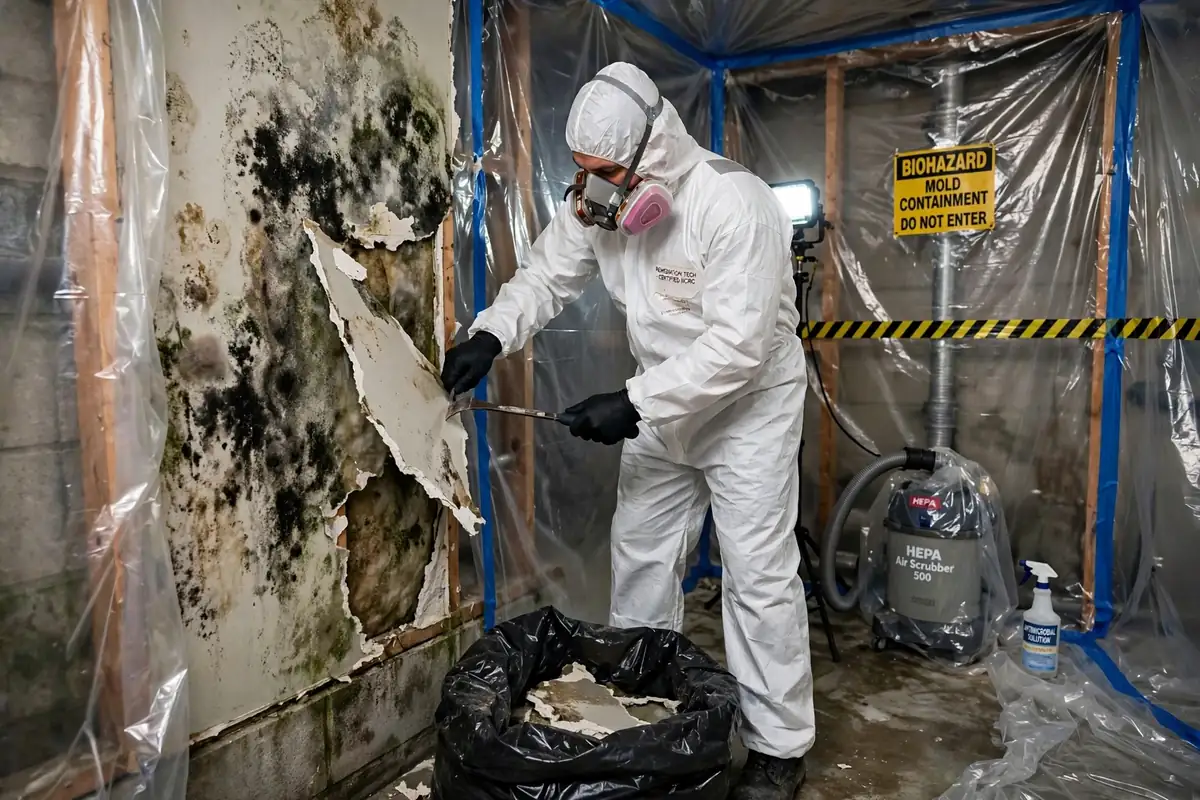
Published · Last updated · Rapid Water Damage Restoration Illinois
You come home from a weekend at the lake to find your basement carpet squishing underfoot — a pipe joint gave way while you were gone, and water is spreading across the finished rec room you built last spring. Your first thought is the mess. Your second is: "Is this going to turn into mold?" It's the right question, because the clock starts ticking the moment water hits building materials. In a state where summer humidity regularly hovers around 70% and thousands of homes have finished basements below grade, that clock can run faster than you'd expect. Here's what the experts actually say about how long you have before water damage causes mold — and what to do with the time you've got.
The 24–48 Hour Window: What the EPA Actually Says
The U.S. Environmental Protection Agency is clear and consistent on this point: water-damaged areas and items should be dried within 24 to 48 hours to prevent mold growth. In its guide "A Brief Guide to Mold, Moisture and Your Home," the EPA states flatly that it is important to dry water-damaged areas and items within 24-48 hours to prevent mold growth.
A joint guidance document from the EPA, FEMA, HUD, and CDC goes further for flooded homes: if a home is flooded and not dried out within 24 to 48 hours, mold growth should be assumed. Note the wording — this isn't the moment mold begins, it's the moment the agencies say you should plan on it being there.
Here's the nuance worth understanding: 24–48 hours is the drying target, not a guarantee. Drying visible puddles with towels doesn't count. Drywall, carpet padding, insulation, and subflooring can all hold moisture long after the surface looks dry, and mold thrives inside wall cavities where you can't see it.
What Makes Mold Grow Faster in Illinois Homes
Mold needs three things: moisture, a food source (paper, wood, drywall, dust — all abundant in your home), and time. Illinois homes hand mold a head start on two of them.
Summer humidity. According to data from the Illinois State Climatologist, Chicago's average relative humidity runs about 69–72% in July and August, with highs in the mid-80s. Warm, humid air slows evaporation dramatically. A damp carpet that might dry in a day in arid Colorado can stay damp for days in a Naperville basement in August — and every extra hour of dampness is an invitation.
Finished basements. So much of suburban Chicago housing stock — from Schaumburg ranches to Naperville two-stories — includes a finished basement. Basements sit below grade, where groundwater pressure, sump pump failures, and foundation seepage are constant threats. Once drywall and carpet padding get wet below grade, they're fighting both the water event and naturally higher humidity. Finished materials also hide the problem: you can't see mold growing behind the drywall until the smell gives it away.
Warmth plus stagnation. Mold grows fastest in warm, still, humid conditions — essentially a closed-up Illinois home in summer with the AC off while you're on vacation. No airflow plus warm temperatures can turn a slow leak into a mold bloom shockingly fast.
The Clock Is Different for Different Water Damage Events
Not every water event behaves the same way. A dishwasher leak that soaks a kitchen floor is very different from a sump pump failure that leaves two inches of standing water across a finished basement.
Clean water, small area (supply line drip, appliance leak): If you catch it quickly and begin drying within hours, you can stay ahead of the 24–48 hour window. Hard, non-porous surfaces like tile dry fastest.
Large area or porous materials (flooded basement, saturated drywall): This is where DIY drying almost always falls short. Carpet padding acts like a sponge, drywall wicks moisture upward, and insulation traps it. These materials can take days to dry without professional equipment — which is exactly why the EPA's guidance assumes mold after 48 hours in a flooded home.
Contaminated water (sewage backup, floodwater): Flood water and sewage carry bacteria and contaminants — porous materials that contact them generally must be removed and discarded rather than dried.
How Professionals Verify That a Home Is Truly Dry
This is the step most homeowners skip, and it's the one that matters most. A room can look and feel dry while the materials inside the walls are still wet enough to grow mold.
Moisture meters. Restoration technicians use pin and pinless moisture meters to take readings inside drywall, framing, and subfloors — measuring moisture in the material itself, not the surface. Readings are compared against dry reference points in unaffected areas of the same home.
Moisture mapping. Pros map moisture across the affected area and re-check readings daily during drying, adjusting equipment placement as the "dry zone" shrinks. Thermal imaging cameras can also reveal cold, damp spots inside wall cavities that look fine on the surface.
If you had a significant water event and someone dried it in an afternoon with a box fan and a mop, assume the verification step was skipped. When in doubt, get moisture readings from a professional — it's a quick visit that can prevent a far larger mold remediation project.
Prevention Steps That Actually Work in Illinois
Act within hours, not days. The single biggest factor is response time. Shut off the water source, extract standing water, and get air moving immediately. If it's a large event, call for professional extraction the same day.
Know your sump pump. A huge share of Illinois basement water events trace back to sump pump failures during heavy rain. Test yours twice a year and consider a battery backup — spring and summer storms are when pumps work hardest.
Run the dehumidifier in summer. Keeping basement humidity in check during Illinois summers reduces both mold risk and drying time after an event.
Ventilate the attic and crawl spaces. Trapped moisture in unventilated spaces feeds mold growth even without a discrete water event. Bathroom fans that vent into the attic instead of outside are a classic hidden culprit.
Don't trust "dry to the touch." After any water event, assume materials are wetter than they look. Peel back carpet corners, check behind baseboards, and sniff for mustiness in closets and low cabinets. Catching hidden moisture at day two is a drying job; catching it at day twelve is a mold remediation job.
Don't Let the Clock Run Out
If water is in your home right now — or it was there this weekend and you're not sure everything dried — the worst move is waiting to see what happens. Rapid Water Damage Restoration Illinois provides emergency water extraction, structural drying, and moisture verification across the Chicago area. Call (773) 200-3228 and stay ahead of the 24–48 hour window, not behind it.
Frequently Asked Questions
Can mold really grow in 24 hours?
Yes — under warm, humid, stagnant conditions, mold growth can begin within 24 hours of water damage. The EPA's guidance treats 24–48 hours as the drying window because mold growth within that timeframe is common enough to plan for. In cool, dry, well-ventilated conditions it may take longer, but never count on that.
Does mold stop growing once things dry out?
Drying stops active growth, but mold doesn't die when it dries — it goes dormant, and growth resumes if moisture returns. That's why thorough drying plus addressing the moisture source matters more than just waiting for things to air out.
My basement flooded but I dried it with fans in a day. Am I safe?
Maybe, but "looks dry" isn't proof. Carpet padding, the bottom inches of drywall, and the wall cavity behind it can all stay wet while the surface feels dry. If the flooding was more than a small puddle, get professional moisture readings to confirm. It's a small cost for real certainty.
Is bleach enough to kill mold after water damage?
Bleach can kill surface mold on non-porous materials, but it doesn't work on porous materials like drywall and wood — and it does nothing about the moisture inside the wall that will let mold return.
What does professional water damage drying cost compared to mold remediation?
We won't quote prices here because every job differs — but as a rule, emergency drying within the first 48 hours is far less disruptive than a full mold remediation project weeks later, which can involve containment, material removal, and rebuilding. Time is the variable you control.