Mold Is a Moisture Problem First
Mold is everywhere in the environment — outdoors, in the air, on surfaces. It only becomes a problem indoors when moisture gives it a place to grow: a slow plumbing leak, a damp basement, condensation on cold ductwork, or wall cavities left wet after a flood. Scrubbing visible mold off a surface without fixing the moisture behind it is a temporary cosmetic fix; the growth returns, usually worse, because the conditions that fed it are still there.
That's why our mold remediation service starts with the water, not the mold. We find and address the moisture source, contain the affected area so spores don't spread through your home during the work, remove contaminated materials that can't be cleaned, and verify the space is dry before we finish. Whether the mold followed a burst pipe, a roof leak, or a flooded basement, our water damage restoration process and mold work go hand in hand.
The 24–48 Hour Window
After any water intrusion, the clock starts ticking. Mold can begin growing on damp organic materials — drywall, wood, carpet, paper — within 24 to 48 hours, and environmental guidance consistently emphasizes drying water-damaged areas promptly to prevent microbial growth. This is the single most important thing to understand about water damage: the first two days determine whether you're dealing with a drying job or a drying job plus mold remediation.
That window is why we treat every water loss as urgent, even when the visible damage looks minor. Water hidden in wall cavities, under flooring, and inside subfloors doesn't evaporate on its own in any reasonable timeframe — it sits there, and mold finds it. Calling us the day the damage happens — not the week after — is the simplest way to keep a water problem from becoming a mold problem. And if growth has already started, we'll tell you honestly and lay out a remediation plan.
Our Mold Remediation Process
Professional mold remediation follows a disciplined sequence designed to remove the growth, clean the air, and keep it from coming back:
- Inspection and moisture source identification. We locate all affected areas — including hidden growth behind walls — and identify the water source that must be fixed for remediation to last.
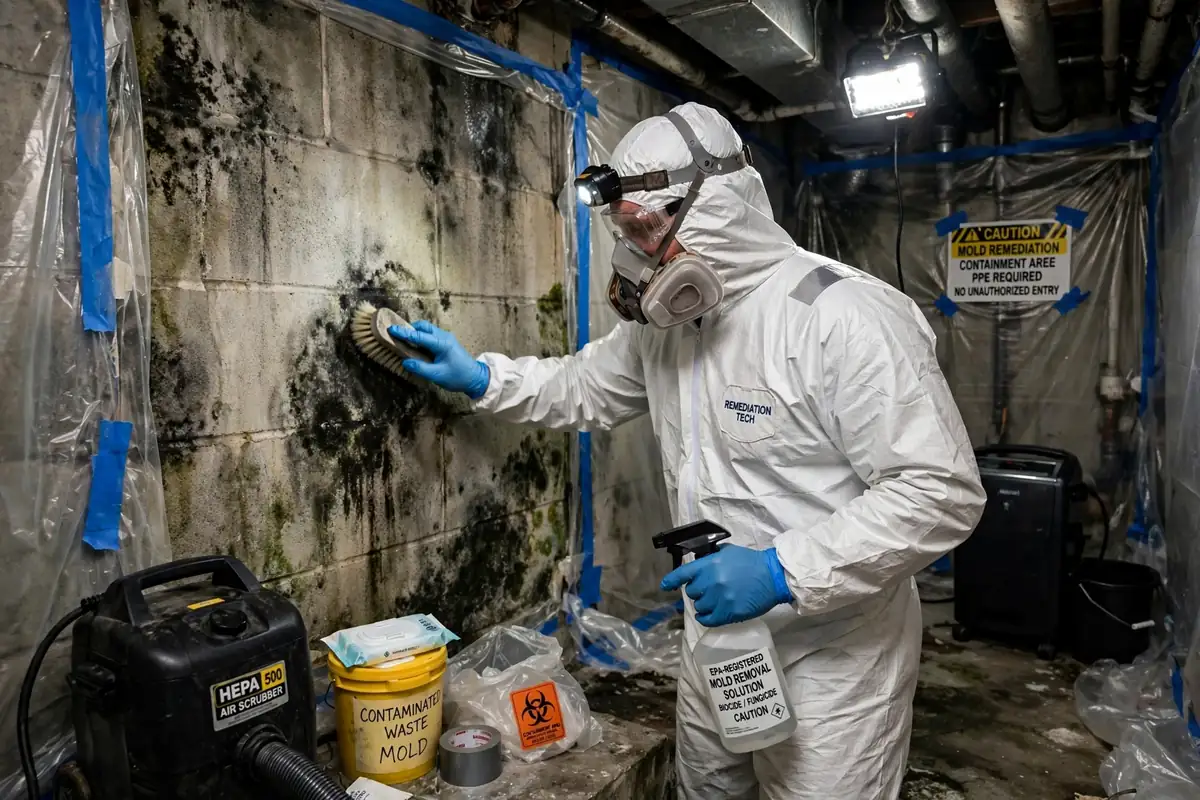
- Containment. The work area is sealed off with physical barriers and placed under negative air pressure, so spores disturbed during remediation don't drift into clean rooms.
- Removal of contaminated materials. Porous materials with significant growth — drywall, insulation, carpet — are removed and disposed of safely. They can't be reliably cleaned once mold has colonized them.
- HEPA filtration and cleaning. HEPA-filtered air scrubbers capture airborne spores during the work, and remaining hard surfaces are HEPA-vacuumed and cleaned with professional antimicrobial treatments.
- Treating the moisture source. The leak is repaired, the area is dried to verified standards, and we confirm conditions no longer support regrowth — because remediation without moisture control is just a pause.
Remediation vs. "Mold Removal" Claims
You'll see companies advertise "complete mold removal" or promise to eliminate every spore in your home. Here's the honest truth the industry itself acknowledges: mold spores are a natural part of indoor and outdoor air, and no service can remove all of them — or keep them out permanently. What a professional can do is remediate: bring mold levels in the affected area back to normal, remove the active growth, and eliminate the moisture conditions that let it colonize. Be skeptical of anyone guaranteeing a mold-free home or offering to "kill" mold with a spray and call it done. Real remediation is physical removal plus moisture control, verified with post-work inspection — and that's exactly what we do. For visible growth on ceilings and walls, see our ceiling water damage repair service.
IICRC-Trained Technicians
Mold remediation done wrong makes things worse — spreading spores through the house, missing hidden growth, or leaving moisture in place so the problem returns. Our technicians are trained to IICRC standards for water damage restoration and applied microbial remediation, the industry's recognized framework for doing this work correctly. That training shows up in the details: proper containment instead of open-air demolition, HEPA filtration running during the work, moisture verification before we close up, and honest communication about what we found and what it takes to fix it. When you hire us, you're getting a crew that treats your home's air quality with the seriousness it deserves.
Mold Remediation FAQs
Can you remove all the mold from my home?
No honest company can promise that — mold spores occur naturally in indoor air. What we do is remediate: remove active growth, clean the affected area thoroughly, and fix the moisture problem so levels return to normal and stay there. Anyone guaranteeing total elimination isn't being straight with you.
Do I need mold testing before remediation?
Not always. When mold is visible and the moisture source is clear, we can usually assess and remediate directly. If the situation is ambiguous — hidden growth, health concerns, or a real estate transaction — independent testing by a qualified inspector can provide useful documentation. We'll advise you honestly either way.
How long does mold remediation take?
A contained area like a bathroom or small basement section can often be remediated in a few days. Larger jobs involving multiple rooms, significant demolition, or structural drying take longer. After our inspection, we'll give you a realistic timeline for your situation.
Will the mold come back after remediation?
Not if the moisture source is fixed — and that's why source control is built into our process. Mold needs moisture to grow; with the leak repaired, the area dried, and normal humidity maintained, regrowth shouldn't occur. We'll tell you exactly what needs to stay dry and why.
Is mold in my home dangerous?
Mold exposure can cause health concerns for some people, particularly those with allergies, asthma, or other sensitivities. We're restoration professionals, not medical providers, so we can't assess health effects — but we can tell you that indoor mold growth shouldn't be ignored, and prompt remediation is the right move. Talk to your healthcare provider about any health questions.
Suspect Mold? Get Answers Fast
Professional inspection, honest assessment, and thorough remediation across Illinois.
Call (773) 200-3228