Published · Last updated · Rapid Water Damage Restoration Illinois
Picture this: it's the morning after a brutal July storm — the kind that dropped up to nine inches of rain on parts of Chicagoland in a single day and left more than 70,000 basements flooded across the metro area in 2023. You walk downstairs and your carpet squishes. Your first thought, once the shock wears off, is the question every Illinois homeowner asks: how much is this going to cost me?
Here's the honest answer no one wants at 7 a.m.: it depends — enormously. A clean-water supply line leak caught in an hour and a sewage backup that sat for three days are not the same job, not the same risk, and not the same bill. Any company quoting a firm number over the phone, sight unseen, is guessing.
This guide explains what actually drives the cost of water damage restoration in Chicago and across Illinois — so you can tell a trustworthy estimate from a fantasy.
The Water Itself: Category Matters More Than Almost Anything
The single biggest cost driver is what kind of water you're dealing with. Professionals classify water into three categories, and the category shapes nearly every decision that follows.
Category 1 — clean water comes from a supply line, a broken fitting, or an overflowing sink. The work is mostly extraction, drying, and monitoring, and materials can often be saved.
Category 2 — gray water comes from appliances like washing machines and dishwashers, or from a sump pump failure. It carries contaminants, so it requires protective equipment, antimicrobial treatment, and often the removal of porous materials like carpet padding that clean water might have spared.
Category 3 — black water is the expensive one: sewage backups, rising floodwater, and storm-driven combined-sewer overflows. Much of Chicagoland runs on combined sewers — stormwater and sanitary sewage in the same pipes — so a heavy storm can push genuinely hazardous water up through basement floor drains, as happened across the west side in July 2023. Black water jobs typically require removal and disposal of porous materials, thorough disinfection, and stricter containment: more labor, more protective gear, more disposal costs.
Two basements with the same square footage can be wildly different jobs depending on what's in the water — which is why "how much per square foot?" has no useful answer until someone classifies what's on your floor.
How Much Got Wet — and What It's Made Of
After water category, scope is the next driver — both area and depth: how many rooms, how many square feet, and how far water traveled into materials.
But square footage alone misleads, because materials behave differently:
- Drywall wicks water upward from the floor, so a puddle that sat for a day can mean cutting out drywall well above the waterline.
- Hardwood floors can cup and warp, and need specialized drying equipment.
- Carpet and padding often look fine after extraction while the pad underneath stays saturated; in gray or black water events, both typically have to go.
- Insulation traps water and is generally removed rather than dried.
- Built-ins and cabinetry add labor-intensive detail work.
An unfinished concrete basement is a far simpler dry than a finished rec room with carpet, drywall, and built-ins — even at identical water depth. Illinois housing stock ranges from century-old bungalows to new construction, and each demands a different approach.
Time Is the Multiplier: How Long the Water Sat
The third major driver is duration. Water damage compounds with time:
- Minutes to hours: extraction and drying are usually straightforward.
- Hours to a day or two: drywall swells, wood begins to warp, and microbial growth gets a foothold. More materials will need removal instead of drying.
- Days or longer: the job grows from a drying project into a demolition-and-rebuild project — think of a supply line that lets go on a Friday and isn't discovered until the following Sunday.
Illinois winters add a cruel twist: a slow leak behind a wall in January can go unnoticed for weeks, and by spring the scope has quietly multiplied. Fast response is the closest thing to a discount this industry offers.
Why Phone Quotes Are Unreliable — and Why You Should Be Wary of Them
A phone quote must assume the water category (untested), the true saturation inside walls and under floors (unmeasured), the materials involved, and how long water has been present — four unknowns stacked on top of each other.
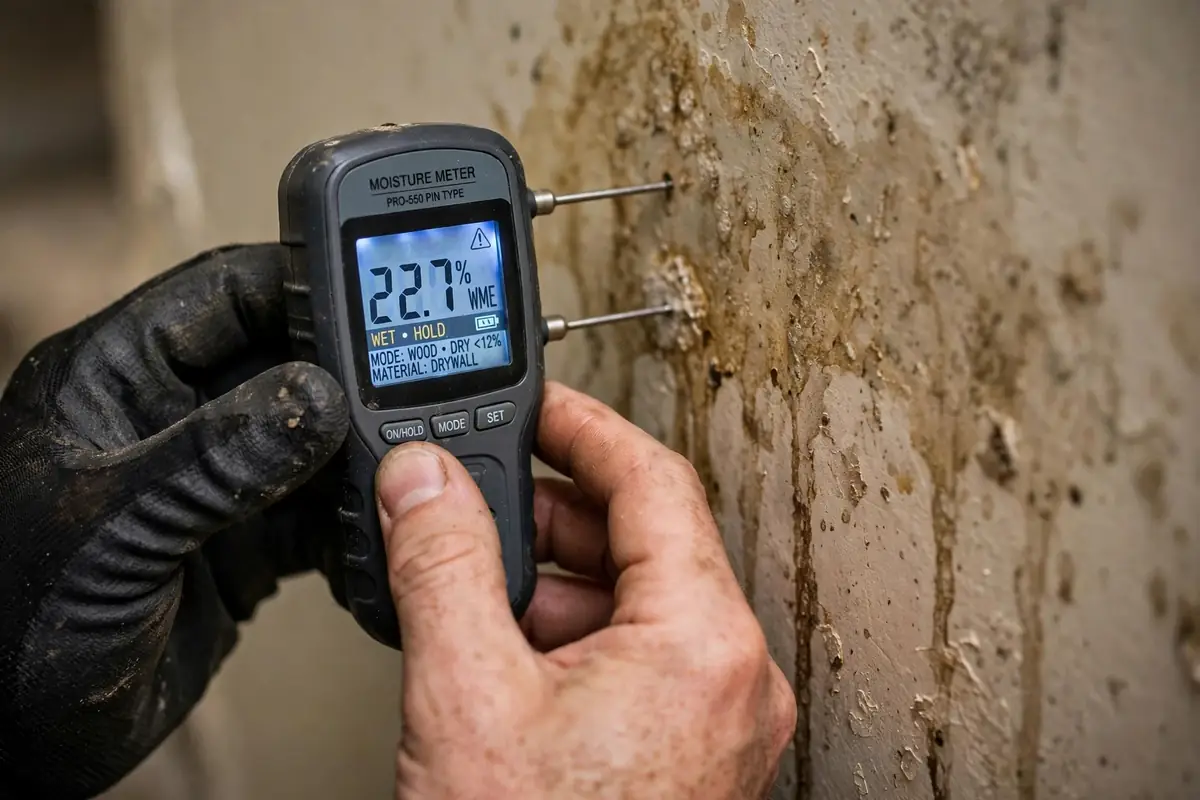
A legitimate estimate requires an on-site assessment: moisture readings with professional meters, a map of affected areas, a determination of what can be dried in place versus removed, and a written scope of work.
Treat these as red flags: a firm flat-rate quote given over the phone before anyone visits; pressure to sign a work authorization on the spot; a quote dramatically lower than others (it often means corners on drying or documentation); and no mention of verifying that materials reached a proper dry standard.
A trustworthy company will tell you what it doesn't know yet. The same standard applies whether you need water damage restoration in Naperville or water damage restoration in Aurora.
Where Insurance Fits Into the Cost Picture
For many Illinois homeowners, the real question is "what does my insurance pay." The short version: standard policies typically cover sudden and accidental water damage — a burst pipe, an appliance failure — but exclude gradual damage, neglected maintenance, and flooding, which requires separate flood insurance. Sewer backup usually needs its own endorsement, worth knowing in a state where combined sewers back up into basements with grim regularity.
Two things matter for your wallet: your deductible is the floor of your out-of-pocket cost, and the documentation your restoration company produces is what separates a smooth claim from a disputed one. Details in our guide to Illinois homeowners insurance and water damage.
How to Get a Quote You Can Actually Trust
When you're ready for an estimate, here's what to expect:
- An on-site visit with moisture readings — technicians should check inside walls, under floors, and other hidden spots.
- A written scope of work listing what's dried, what's removed, what equipment runs and for roughly how long, and how the dry standard gets verified.
- Straight answers: Are technicians IICRC-certified? How do you document for my insurer? What happens if hidden moisture turns up mid-job?
- No pressure. Emergency work is urgent, but you still deserve time to compare and decide.
The cheapest quote is rarely the cheapest outcome. A job dried properly the first time protects your home; a rushed job leaves moisture behind walls — and that moisture will send you a bigger bill later.