On June 13–14, 1981, Hickory Creek at Joliet set a discharge record with a recurrence interval greater than 100 years — blowing past the previous record of 15,200 cubic feet per second set in July 1957. It remains the most severe flooding on record in the Des Plaines River basin at Joliet, and it is the reason longtime residents take rising water personally.
The Des Plaines River flows straight through Joliet's core, splitting the city's east and west sides, with Hickory Creek, Spring Creek, and Rock Run feeding it as tributaries and the Illinois & Michigan Canal corridor running through town. And Joliet's homes are built on signature local limestone: the East Side Historic District's 290 buildings — mostly 1870–1900 Victorians — and the Cathedral Area and Upper Bluff homes sit on Joliet limestone foundations that wick and hold moisture long after floodwater recedes.
Rapid Water Damage Restoration Illinois is Joliet's local answer to all of it. Our IICRC-trained technicians respond 24/7 with industrial extraction and drying equipment built for stone foundations and river-town basements alike — because in Joliet, water has a hundred-year memory, and so do we.
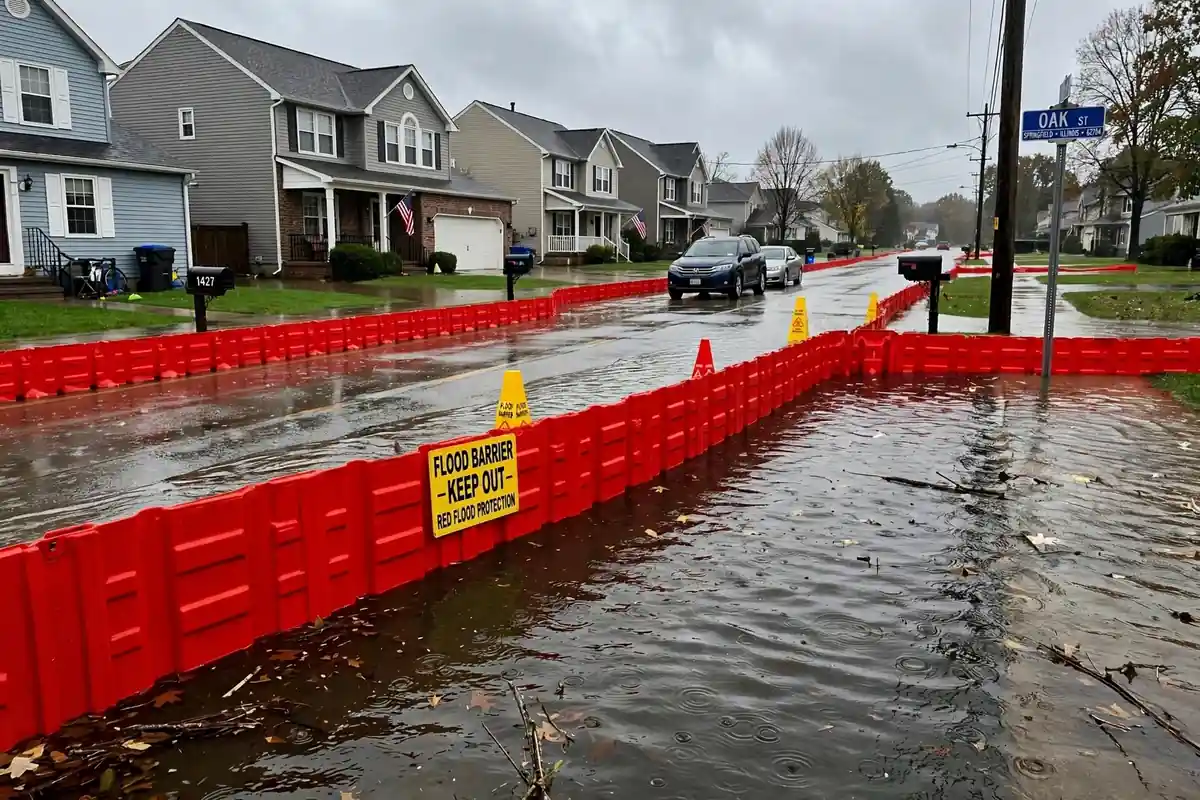
How We Restore Water-Damaged Homes in Joliet
- Rapid response and water removal. We answer around the clock and extract standing water immediately — limestone foundations absorb more moisture every hour water sits.
- Assessment and moisture mapping. Infrared cameras and meters find hidden saturation inside limestone walls, behind drywall, and under flooring.
- Drying and dehumidification. Commercial air movers and dehumidifiers run until moisture readings prove the structure — including porous stone — is truly dry.
- Cleaning, sanitizing, and mold control. Floodwater and sewage are disinfected; we treat and remove mold before it can colonize damp masonry.
- Repairs and rebuild. Damaged drywall, flooring, and finishes are restored to pre-loss condition.
- Final walkthrough with you. We review the work together and confirm moisture readings before we call the job done.
Common Causes of Water Damage in Joliet
- The Des Plaines River through the city core. The river divides Joliet's east and west sides, and when it swells — as in April 2013 — low-lying areas on both banks flood.
- Hickory Creek and tributary flash floods. Hickory Creek's June 1981 record discharge remains the benchmark, and the September–October 1986 floods showed how 9–16 inches of rain over 18 days can overwhelm the whole basin.
- Joliet limestone foundations. The city's signature stone is porous — it absorbs flood and seepage water and releases it slowly, which means longer drying times and higher mold risk without professional equipment.
- Tree root intrusion. Aging clay and cast-iron sewer laterals are vulnerable to root intrusion, a documented Chicago-area failure mode that ends in sewage backups.
- Original plumbing in older homes. Industrial-era and mid-century homes still running on original galvanized, copper, or cast-iron piping face elevated burst-pipe risk during extended cold snaps.
Areas We Serve in Joliet
We cover all of Joliet — ZIP codes 60431, 60432, 60433, 60434, 60435, and 60436 — from the Cathedral Area and Upper Bluff Historic District to the East Side historic neighborhoods, Reedwood and Raynor Park's mid-century brick ranches and split-levels, and the newer subdivisions of the west and far west side. Landmarks nearby: the Rialto Square Theatre, the Old Joliet Prison, and the Chicagoland Speedway.
Our Joliet Water Damage Services
Water extraction
River and tributary floodwater, sump failures, burst pipes — we pump it out fast with truck-mounted equipment.
Structural drying and dehumidification
Stone foundations and finished basements need deep, metered drying; we do not stop until readings confirm it.
Mold remediation
Damp limestone and older framing are prime mold habitat. We contain, remove, and treat so it does not return.
Sewage cleanup
Backed-up laterals are a health hazard. We extract wastewater, disinfect affected surfaces, and remove contaminated materials safely.
Storm damage repair
From East Side Victorians to far-west subdivisions, we repair water-ruined drywall, flooring, and finishes and rebuild to pre-loss condition.
Cost Factors & Insurance Claim Help
We never quote a flat price — every Joliet loss is priced on its facts. Cost factors include the volume of water, how long it sat before extraction (critical with porous limestone), the water category (clean supply water versus river water or sewage), and how much material must be removed and rebuilt. The April 2013 floods brought a federal disaster declaration covering 46 Illinois counties, which can matter for major events. We document damage with photos and moisture readings, work directly with your insurance company from the first call, and guide you through the claim so you can focus on getting your home back.
Frequently Asked Questions
What happened during the 1981 Joliet flood?
On June 13–14, 1981, Hickory Creek at Joliet reached a record discharge with a recurrence interval greater than 100 years, exceeding the previous record of 15,200 cubic feet per second set during the July 1957 storm — the most severe flooding in the Des Plaines River basin at Joliet.
What is different about drying a Joliet limestone foundation basement?
Joliet limestone is the city's signature building material — the East Side Historic District's 290 buildings, mostly 1870–1900 Victorians, sit on it — and the stone is porous. It absorbs water and dries slowly, so it needs longer, metered dehumidification and careful mold prevention.
Can tree roots really cause a sewer backup?
Yes. Tree root intrusion into aging clay and cast-iron sewer laterals is a documented Chicago-area failure mode. Roots find tiny joints and cracks, grow into the line, and eventually block or break it — sending sewage back into the home.
How does the Des Plaines River splitting Joliet affect flood risk?
The river runs through Joliet's core, dividing east from west, with Hickory Creek, Spring Creek, and Rock Run as tributaries plus the Illinois & Michigan Canal corridor. Homes near the river and its tributaries on either side face elevated flood and seepage risk.
My Joliet home still has its original plumbing. Is that a burst-pipe risk?
Industrial-era and mid-century homes with original galvanized, copper, or cast-iron piping face elevated risk during extended cold snaps — especially pipes in exterior walls, unheated crawlspaces, or drafty basements.
Water Damage in Joliet? We Respond 24/7
Every minute counts. Rapid Water Damage Restoration Illinois dispatches certified technicians across Joliet day and night — with insurance documentation handled for you.
Call (773) 200-3228 NowWater Damage Restoration Services in Joliet
- Our water damage restoration service
- Commercial Water Damage Restoration in Joliet
- Residential Water Damage Restoration in Joliet
- Emergency Flood Cleanup in Joliet
- Storm & Flood Damage Restoration in Joliet
- Ceiling & Wall Water Damage Repair in Joliet
- Sewage Backup Cleanup in Joliet
- Mold Remediation in Joliet
- Burst Pipe & Leak Water Damage in Joliet
- Drying & Dehumidification in Joliet
Nearby Areas We Serve Around Joliet
Helpful Water Damage Guides
- Water Damage Restoration Cost in Illinois: What Really Drives the Bill
- How to File a Water Damage Insurance Claim in Illinois
Official resources: FEMA FloodSmart (flood insurance) and EPA guide to mold and moisture.