In February 2018, frozen ground turned ordinary winter rain into a flood in New Lenox. Hickory Creek rose over its banks, and Oak Street — which becomes North Cooper along the creek — flooded and closed for the first time in more than eight years. Several homes in the regulatory floodway flooded, and some residents, only two months into brand-new homes, evacuated to family in Mokena.
It was not the first time. On July 24, 2010, National Weather Service storm data documents two feet of standing water in parts of downtown New Lenox after thunderstorms dropped two to three inches of rain per hour. And on April 4, 2026, an NWS flash flood warning covered New Lenox, Mokena, and Frankfort. The pattern is structural: a 1998 Illinois DNR assessment estimated roughly 2,000 acres of Hickory Creek's 107-square-mile watershed subject to flooding, and nine municipalities formed the Hickory Creek Watershed Plan in June 2011.
Rapid Water Damage Restoration Illinois answers New Lenox water emergencies 24/7 — industrial extraction, metered drying, and full insurance documentation. Call (773) 200-3228 anytime.
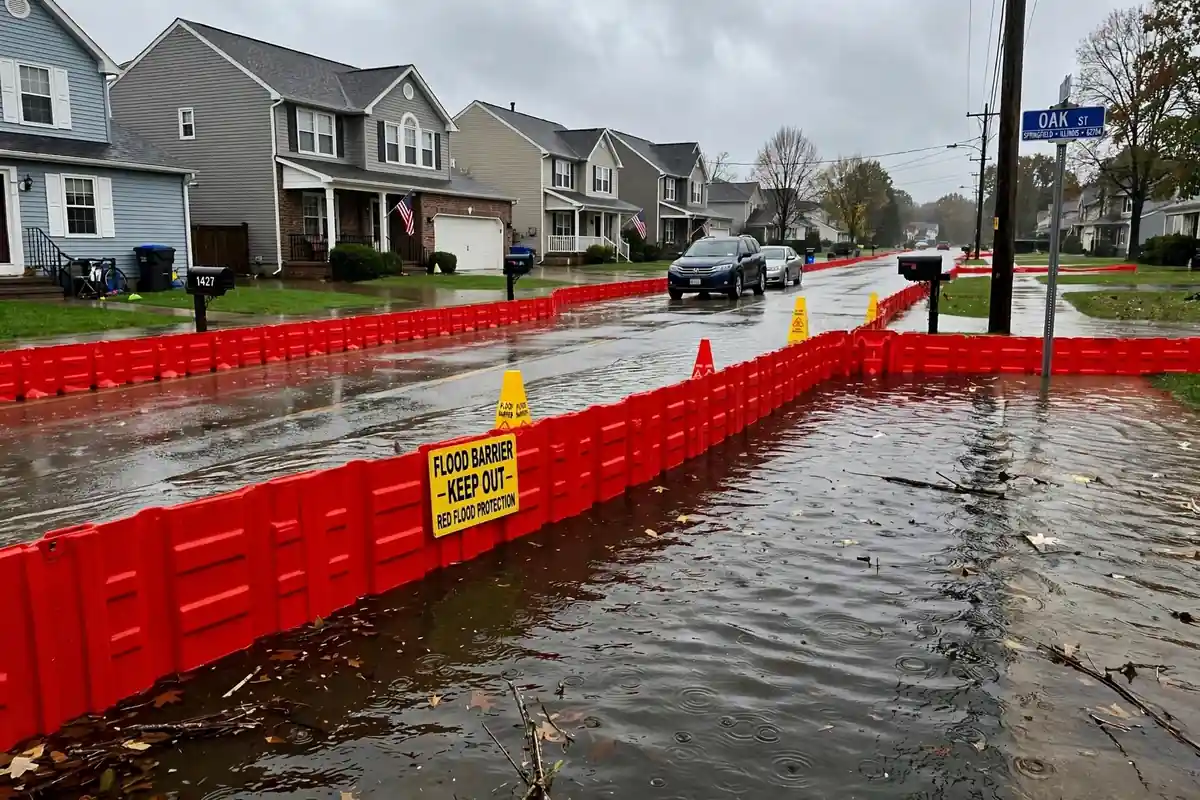
Common Causes of Water Damage in New Lenox
- Hickory Creek overbank flooding. The creek is the village's dominant waterway; the Oak Street/North Cooper corridor along it is the documented chronic-flooding stretch, closed in February 2018 for the first time in eight-plus years.
- Tributary flash floods. Spring Creek, Marley Creek, Union Ditch, and the Frankfort Tributary feed Hickory Creek — flash-flood risk comes from these tributaries and storm-sewer surcharge, not just the creek itself.
- Frozen-ground runoff. Village officials named frozen ground as the aggravating factor in 2018: frozen soils send rainfall straight to runoff, overwhelming creek and sewer capacity.
- Homes on the regulatory floodway. Several homes flooded in February 2018 were built on the creek's regulatory floodway — parcels where flood exposure is effectively built in.
- Below-grade living space. Subdivisions built around creek corridors and detention basins put finished basements at or near flood elevations; older downtown ranch and split-level homes carry crawl-space and exterior-wall plumbing risks in deep freezes.
Our New Lenox Water Damage Services
Water extraction
Creek floodwater, flash-flood ponding, sump failures, burst pipes — standing water pumped out fast with truck-mounted and portable equipment.
Structural drying
Finished basements below creek-corridor elevations need deep, metered drying. Commercial dehumidifiers and air movers run until moisture readings confirm dry.
Mold remediation
New Lenox's 1990s subdivisions — like Edgecreek along Hickory Creek Drive, built 1993–1997 with finished or partially finished basements — grow mold fast behind drywall and paneling. We contain, remove, and treat to IICRC standards.
Sewage cleanup
Storm-sewer surcharge pushes contaminated water through drains and lower fixtures. We extract, disinfect, and safely remove unsalvageable materials.
Storm damage repair
After flash floods like July 2010, we repair water-ruined drywall, flooring, and finishes and rebuild to pre-loss condition.
Areas We Serve in New Lenox
We serve all of New Lenox — ZIP code 60451 — including downtown New Lenox, Edgecreek (Hickory Creek Drive), Prairie Crossing Estates, The Sanctuary, and Lincoln Oaks. Our crews run along the I-80 and U.S. 30 corridors and the Metra Rock Island District line, from New Lenox Commons and Hibernia Park's nine-acre lake to the Old Plank Road Trail and the Hickory Creek Preserve, the Forest Preserve District of Will County's largest preserve at more than 1,500 acres.
How We Restore Water-Damaged Homes in New Lenox
- Emergency dispatch, day or night. One call to (773) 200-3228 sends a crew. We confirm the water source is stopped — creek overbank, sewer surcharge, or burst pipe — and check for electrical hazards.
- Extraction with containment. Standing water comes out first. With creek water or sewage, containment and protective gear go up before anything else.
- Moisture mapping. Infrared cameras and meters find hidden saturation in wall cavities, subfloors, and below-grade living space; drying equipment is placed to match the materials.
- Cleaning and mold prevention. Affected surfaces are cleaned and disinfected; contaminated materials are removed so mold never gets its foothold.
- Repairs and rebuild. Damaged drywall, flooring, and finishes are restored to pre-loss condition, documented for insurance, and confirmed with a final walkthrough.
Cost Factors & Insurance Claim Help
We never quote a flat price — every New Lenox loss is scoped on its facts: water volume, water category (clean supply water versus creek water or sewage), how long it sat before extraction, and how much material must be removed and rebuilt. The April 2013 floods brought a federal major disaster declaration covering Will County and ten other Illinois counties — context that can matter for large events. We document the damage with photos and moisture readings, and work with your insurance company directly from first call to final walkthrough.
Frequently Asked Questions
My New Lenox home was built on a regulatory floodway. What does that mean for restoration?
Several homes flooded in February 2018 were built on Hickory Creek's regulatory floodway — the channel plus adjacent land that must stay clear to discharge a base flood. Floodway properties flood first and hardest. We restore the damage and document the loss precisely, which is what insurers and floodplain managers need to see.
How can rain flood my basement if the ground is frozen?
Frozen ground can't absorb water, so even ordinary winter rain or snowmelt becomes pure runoff — the factor village officials identified in the February 2018 flood. Runoff overwhelms the creek and storm sewers at once, arriving faster than any system can move it.
Nine municipalities formed the Hickory Creek Watershed Plan in 2011. Why do flash floods still hit?
The June 2011 plan is a long-term planning framework, not a finished project. Watershed work takes decades, while storms like July 2010 and the April 2026 flash flood warning keep arriving. Chronic reaches like the Oak Street/North Cooper corridor stay vulnerable until regional mitigation is built.
What is different about drying a finished basement like mine in Edgecreek?
Edgecreek's 1990s homes along Hickory Creek Drive commonly have finished or partially finished basements near the creek corridor. Finished lower levels trap moisture behind paneling, under flooring, and inside wall cavities — invisible to the eye but visible to our meters. Air-drying a finished basement is how a flood becomes a mold job.
The April 4, 2026 flash flood warning covered New Lenox. Should I call before the water recedes?
Yes. The NWS warning cited rapid-onset flooding of creeks, drainage ditches, streets, and low-lying areas. We work faster when we arrive while water is still receding — and early documentation protects your insurance claim.
Water Damage in New Lenox? We Respond 24/7
Every minute counts. Rapid Water Damage Restoration Illinois dispatches certified technicians across New Lenox day and night — with insurance documentation handled for you.
Call (773) 200-3228 NowWater Damage Restoration Services in New Lenox
- Our water damage restoration service
- Commercial Water Damage Restoration in New Lenox
- Residential Water Damage Restoration in New Lenox
- Emergency Flood Cleanup in New Lenox
- Storm & Flood Damage Restoration in New Lenox
- Ceiling & Wall Water Damage Repair in New Lenox
- Sewage Backup Cleanup in New Lenox
- Mold Remediation in New Lenox
- Burst Pipe & Leak Water Damage in New Lenox
- Drying & Dehumidification in New Lenox
Nearby Areas We Serve Around New Lenox
Helpful Water Damage Guides
- How to Prevent Frozen and Burst Pipes During an Illinois Winter
- How Long Before Water Damage Causes Mold?
Official resources: FEMA FloodSmart (flood insurance) and EPA guide to mold and moisture.