Illinois Storms Cause Serious Water Damage
Illinois weather can turn destructive in a matter of minutes. Severe thunderstorms roll through with driving rain, hail, and straight-line winds. Tornadoes tear across the state each season. Flash flooding overwhelms streets, basements, and low-lying properties. And major waterways — the Fox River, the Des Plaines River, and the Illinois River — can rise beyond their banks, pushing water into homes and businesses along their corridors. Even properties miles from a river can suffer when storm drains back up and groundwater pushes through foundation walls.
Storm damage restoration is about more than pumping out water. Wind-driven rain soaks insulation and wall cavities you can't see. A damaged roof lets water in for days after the storm passes. Floodwater brings contaminants that must be handled properly. And every hour of delay gives moisture more time to spread into framing, subfloors, and drywall — which is why our crews respond quickly, assess the full scope of the damage, and get your property drying right away.
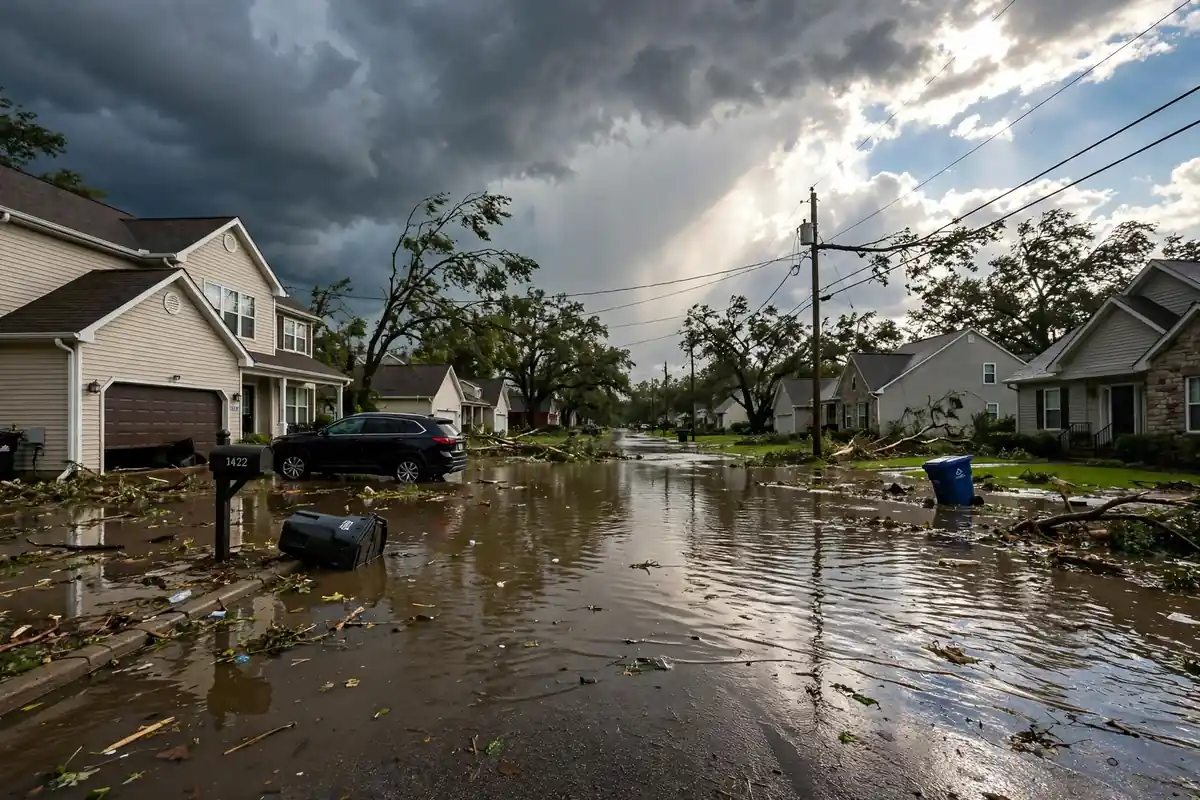
Common Storm Damage Scenarios We Handle
No two storms hit exactly the same way. These are the patterns we see most often across Illinois homes and commercial properties after severe weather:
Roof Damage Leading to Interior Water
High winds and hail can lift shingles, damage flashing, or puncture roofing — and the rain keeps coming in long after the storm moves on. Water travels along rafters and decking, then drops into attics, soaks insulation, and stains ceilings far from the actual breach. We help secure the opening with emergency tarping, extract standing water, remove saturated insulation, and dry the structure so a roofing contractor can make permanent repairs on a sound, dry surface. Left alone, roof leaks quietly rot decking and framing while mold takes hold in dark, damp attic spaces.
Wind-Driven Rain Through Windows, Siding, and Vents
Horizontal rain in a severe thunderstorm finds every weak point — aging window seals, loose siding, attic vents, and chimney flashing. The result is soaked wall cavities, wet carpet along exterior walls, and moisture trapped behind siding where it can linger for weeks. Because the entry point is small, this kind of storm damage often goes unnoticed until paint bubbles, baseboards warp, or a musty odor appears. Our technicians use moisture meters to trace water intrusion to its source, then open cavities strategically and dry them with targeted air movement and dehumidification.
Sump Pump Overwhelm and Basement Flooding
When flash flooding hits, sump pumps can be overwhelmed by the sheer volume of water — or knocked out entirely by power outages. Basements fill fast, soaking finished walls, carpeting, stored belongings, furnaces, and water heaters. Groundwater seeping through foundation cracks carries silt and contaminants with it. We extract the water with high-capacity pumps, remove unsalvageable porous materials, and begin structural drying immediately, because basements that stay wet become prime territory for mold growth within days. For urgent situations, our emergency flood cleanup team is ready around the clock.
Our Storm Response Process
Storm damage is chaotic. Our process brings order to it — the same proven sequence on every job, so nothing gets missed:
- Rapid response and safety assessment. We arrive quickly, check for hazards like compromised structures and electrical risks, and secure the property — including emergency tarping of damaged roofs when needed.
- Full moisture inspection and documentation. We map every affected area with moisture meters and thermal imaging, documenting conditions thoroughly — documentation your insurance adjuster will need.
- Water extraction and debris removal. Standing water comes out with truck-mounted extractors and submersible pumps, and storm debris and unsalvageable materials are removed.
- Structural drying and dehumidification. We set commercial air movers and dehumidifiers in a calculated layout and monitor progress daily until every affected material reaches its drying goal.
- Cleaning, sanitizing, and restoration. Affected surfaces are cleaned and treated, odors addressed, and damaged drywall, flooring, and finishes restored to pre-loss condition.
Protecting Your Property Before and After a Storm
You can't control Illinois weather, but you can reduce how much damage a storm leaves behind. Before storm season, keep gutters and downspouts clear, check that your sump pump runs and consider a battery backup for outages, and know where your main water and electrical shutoffs are. After a storm passes, look for missing shingles, water stains on ceilings, and damp spots in the basement — then call us at the first sign of trouble rather than waiting to see if it dries on its own. Storm damage rarely improves with time; it spreads. And if floodwater or sewage is involved, stay out of the water entirely and let our trained crew handle it.
Storm Damage FAQs
How quickly should I call after storm damage?
As soon as it's safe to do so. Water migrates into walls, subfloors, and framing within hours, and mold can begin growing within a day or two after a water event. Calling right away lets us extract water and start drying before the damage spreads — which usually means a faster, less disruptive restoration.
Can you help with a storm-damaged roof?
Yes — we provide emergency tarping to stop further water entry, then handle the interior damage: extraction, drying, saturated insulation removal, and restoration of ceilings and walls. Permanent roof repairs themselves are done by a licensed roofing contractor, and we make sure the structure is dry and sound before that work begins.
Will my insurance cover storm damage restoration?
Coverage varies by policy and cause of loss, so check with your insurer. What we do on our end is document everything — moisture readings, photos, affected materials, and the work performed — so you have thorough records for your claim. We regularly work alongside adjusters on storm-related claims across Illinois.
Do you handle flooded basements from storms?
Absolutely — storm-flooded basements are one of our most common calls. We pump out standing water, extract from flooring and walls, remove unsalvageable porous materials, and dry the structure completely. If the flooding involved sewage or groundwater contaminants, we also clean and disinfect affected surfaces as part of the process.
What should I do before your crew arrives?
Put safety first: avoid standing water near electrical outlets or panels, and don't enter rooms with sagging ceilings or visible structural damage. If you can do so safely, shut off the main water supply if a pipe is involved and move dry valuables away from wet areas. Then call us at (773) 200-3228 — we'll guide you through anything else while we're on the way.
Storm Damage? We're Ready When You Are
Rapid response across Illinois — extraction, drying, and full restoration after severe weather.
Call (773) 200-3228Storm & Flood Damage Restoration Across Illinois — Areas We Serve
- Storm & Flood Damage Restoration in Chicago
- Storm & Flood Damage Restoration in Aurora
- Storm & Flood Damage Restoration in Joliet
- Storm & Flood Damage Restoration in Naperville
- Storm & Flood Damage Restoration in Elgin
- Storm & Flood Damage Restoration in Springfield
- Storm & Flood Damage Restoration in Rockford
- Storm & Flood Damage Restoration in Peoria