Published · Last updated · Rapid Water Damage Restoration Illinois
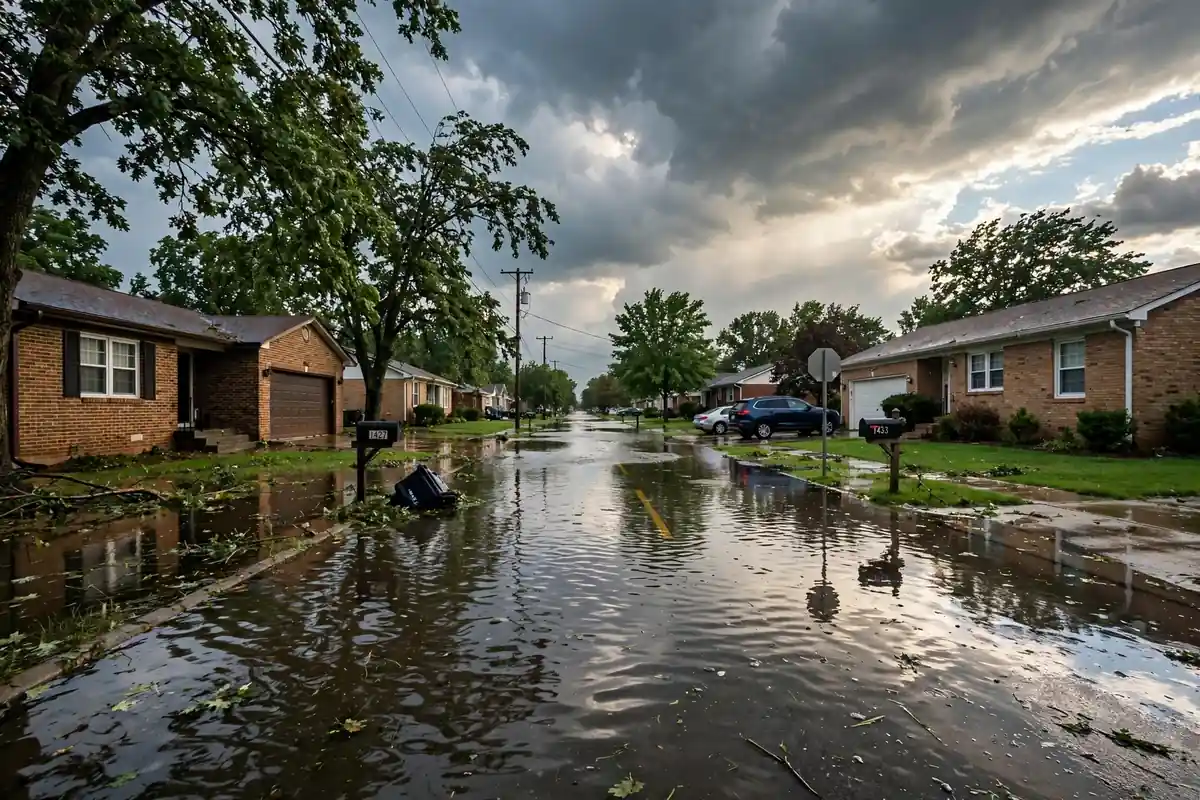
Every spring, Illinois homeowners get hit by the same one-two punch: snowmelt saturates the ground just as it thaws, then heavy spring rains arrive on soil with nowhere left to absorb them. Flooding is the costliest weather-related hazard in Illinois, according to state officials, and spring is when most of that damage concentrates: basement season. Here's why spring is uniquely dangerous for Illinois basements, and the checklist that can keep yours dry.
Threat One: Snowmelt Meets Saturated Ground
After a long Illinois winter, the ground around your home is carrying a hidden load. As deep snowpack melts, that water has to go somewhere — and when the melt comes fast during a warm snap, frozen ground can't absorb it, so it runs across the surface and pools against foundations. Even after the ground thaws, weeks of melt can leave soil fully saturated, eliminating the buffer that normally absorbs spring rain. This is why a modest April shower can flood a basement that sailed through a heavy summer thunderstorm. If your yard stays soggy into May, your home is telling you where its weak point is.
Threat Two: Spring Storms on Overwhelmed Sewers
Illinois' second spring threat runs underground. Much of the Chicago area operates on a combined sewer system, where sanitary wastewater and stormwater share the same pipes. The Metropolitan Water Reclamation District of Greater Chicago (MWRD) explains it plainly: "In most of the Chicago area, rainwater goes through the same set of pipes as the water that goes down the drain in your home. When too much water enters sewers too quickly, the sewers can back up into streets and basements."
During heavy spring rains, those pipes fill beyond capacity. The pressurized mixture surcharges — pushing back up through the path of least resistance, often a basement floor drain, utility sink, or lower-level toilet. Chicago's chief sewer engineer has noted that storms are arriving more "compressed and intense," exactly the pattern that overwhelms combined systems. When the MWRD issues an Overflow Action Day alert — a notice to conserve water before, during, and after heavy rain — it's a direct signal that the sewer system is near capacity and basement backups are more likely.
This makes spring the sewer-backup season in Illinois in a way summer isn't. You don't need a flooded river — just a fast, heavy rain on saturated ground with a sewer system already running full. Sewer backup is Category 3 water (black water) under the IICRC S500 standard — the most contaminated category.
Your Spring Protection Checklist
Nearly every spring flooding pathway into an Illinois home has a known defense. Work through this checklist before the melt starts.
1. Service your sump pump — and add a backup
Your sump pump is the last line of defense between groundwater and your basement floor, and spring is its hardest season. Test it now: pour a bucket of water into the pit and confirm the pump activates, discharges, and shuts off cleanly. Clean the inlet screen, check the discharge line for ice or debris, and make sure the outlet carries water well away from your foundation. Most importantly, add a battery backup or water-powered backup pump — spring storms bring power outages, and a pump without power during a downpour is a decoration.
2. Extend gutters and downspouts away from the foundation
A modest roof sheds hundreds of gallons in a single storm, and if your downspouts discharge at the foundation, all of it soaks in right where it can enter. Extend every downspout at least six feet from the house — ten is better — and clear gutters of winter debris. Make sure extensions discharge onto ground that slopes away, not into a low spot that drains back toward your house.
3. Check grading around your foundation
The soil around your foundation should slope away from the house — roughly six inches of drop over the first ten feet. Over time, soil settles and the grade flattens or reverses, creating a moat that holds meltwater against the wall. Walk your foundation line in early spring and look for low spots or water stains on the wall. Regrading is one of the cheapest and most effective flood defenses there is.
4. Consider a backwater valve
For homes in combined-sewer areas — much of Chicago and many older suburbs — a backwater valve is the most effective defense against sewer surcharge. Installed on the sewer lateral where it leaves the house, it lets wastewater flow out but slams shut when flow reverses. A licensed plumber can assess whether your plumbing layout supports one; installation typically requires a permit and excavation at the sewer line.
5. Seal the easy entry points
Walk your basement with fresh eyes. Seal visible cracks in foundation walls and floors with appropriate masonry sealant — sealants manage minor seepage, not structural cracks or heavy hydrostatic pressure, which need professional waterproofing. Make sure basement window wells have covers and drain properly, and check caulking around below-grade penetrations like hose bibs and utility lines.
6. Install water alarms and know your shutoffs
A water alarm on the basement floor near the sump pit, water heater, and floor drains can alert you to flooding while it's still a puddle — especially valuable in spring, when meltwater can rise while you're at work. While you're down there, confirm you know where your main water shutoff is and that the valve actually turns.
What to Do If Spring Flooding Hits Anyway
Even with perfect preparation, Illinois springs can overwhelm defenses. If water enters your basement, don't wade in until you've confirmed the power is safe — shut off the breaker if water is near outlets or the panel, or call your utility. Avoid contact with water that may be sewage: if it came through a floor drain or fixtures during heavy rain, treat it as contaminated. Photograph everything before cleanup, and call a professional restoration company immediately — standing water damages materials within hours, and sewage-contaminated water needs professional extraction and sanitizing. Rapid Water Damage Restoration Illinois provides 24/7 water damage restoration in Chicago and water damage restoration in Logan Square, plus water damage restoration in Aurora, water damage restoration in Peoria, and water damage restoration in Rockford.
Don't Forget the MWRD's Advice During Heavy Rain
When the forecast turns ugly, follow the MWRD's Overflow Action guidance: delay showers, hold off on the dishwasher and laundry, and flush less frequently until the rain passes. In a combined system, every gallon you keep out of the pipes is capacity that can't push back into someone's basement. Sign up for Overflow Action Day alerts — one of the simplest early-warning systems an Illinois homeowner has.
Frequently Asked Questions
When is flooding season in Illinois?
Spring is the peak: snowmelt saturates the ground from late February through April, and heavy spring rains arrive on soil with little absorption capacity left. Summer storms can cause flash flooding, but the snowmelt-plus-storm combination makes spring the highest-risk season for basements.
Why does my basement flood even when it doesn't rain on my house?
In combined-sewer areas, the problem often isn't rain on your property — it's the sewer system surcharging. Heavy rain elsewhere in the system pressurizes the shared pipes and pushes water backward through your floor drains and lower fixtures. A backwater valve protects you even from storms that hit other neighborhoods.
Does homeowners insurance cover spring flooding?
Standard policies typically cover sudden water damage like a burst pipe or a failed sump pump (sump coverage is often an add-on), but exclude floodwater from rising water and surface water without separate flood insurance. Sewer backup coverage is usually an optional rider — check your policy before spring.
How far should downspouts extend from the house?
At least six feet — ten is better — discharging onto ground that slopes away from the foundation.
What is an Overflow Action Day?
An alert issued by the MWRD when heavy rain is forecast for the Chicago area. It asks residents to conserve water — shorter showers, delayed laundry and dishwashing — to keep the combined sewer system from exceeding capacity and backing up into streets and basements.