In April 2013, a 25-year storm dropped roughly 5.5 inches on Wilmette, and the sewer system simply quit. Homeowner Joel Kurzman put it plainly: "when the sewer system doesn't take water, water finds its way to the lowest place… Our cul-de-sac was a lake." Kurzman spent $10,000 on an overhead sewer, then founded Dry Out West Wilmette — the citizens' group whose pressure pushed the village into building a 5.5-million-gallon sanitary storage tank at West Park (about $15 million, completed September 2015), giving relief to 1,300+ homes west of Romona Road.
This North Shore village on Lake Michigan has poured over $51 million into stormwater infrastructure since 1990, yet still faces flooding from multiple directions. The EPA lists Wilmette as a permitted combined sewer overflow community discharging to the North Shore Channel, which meets the lake at the Wilmette Pumping Station. In May 2020, when the Chicago River hit its highest level in 60+ years, MWRD reversed the waterway at the pumping station — but lake levels ran so high the reversal initially struggled to work, and riverbank areas flooded. One more quirk: berms and inlet restrictors deliberately create street detention during big storms — holding water in the streets to spare basements. Street flooding here can be protection, not failure.
Rapid Water Damage Restoration Illinois's IICRC-trained technicians understand Wilmette's engineered drainage and its limits. Call (773) 200-3228 anytime, day or night.
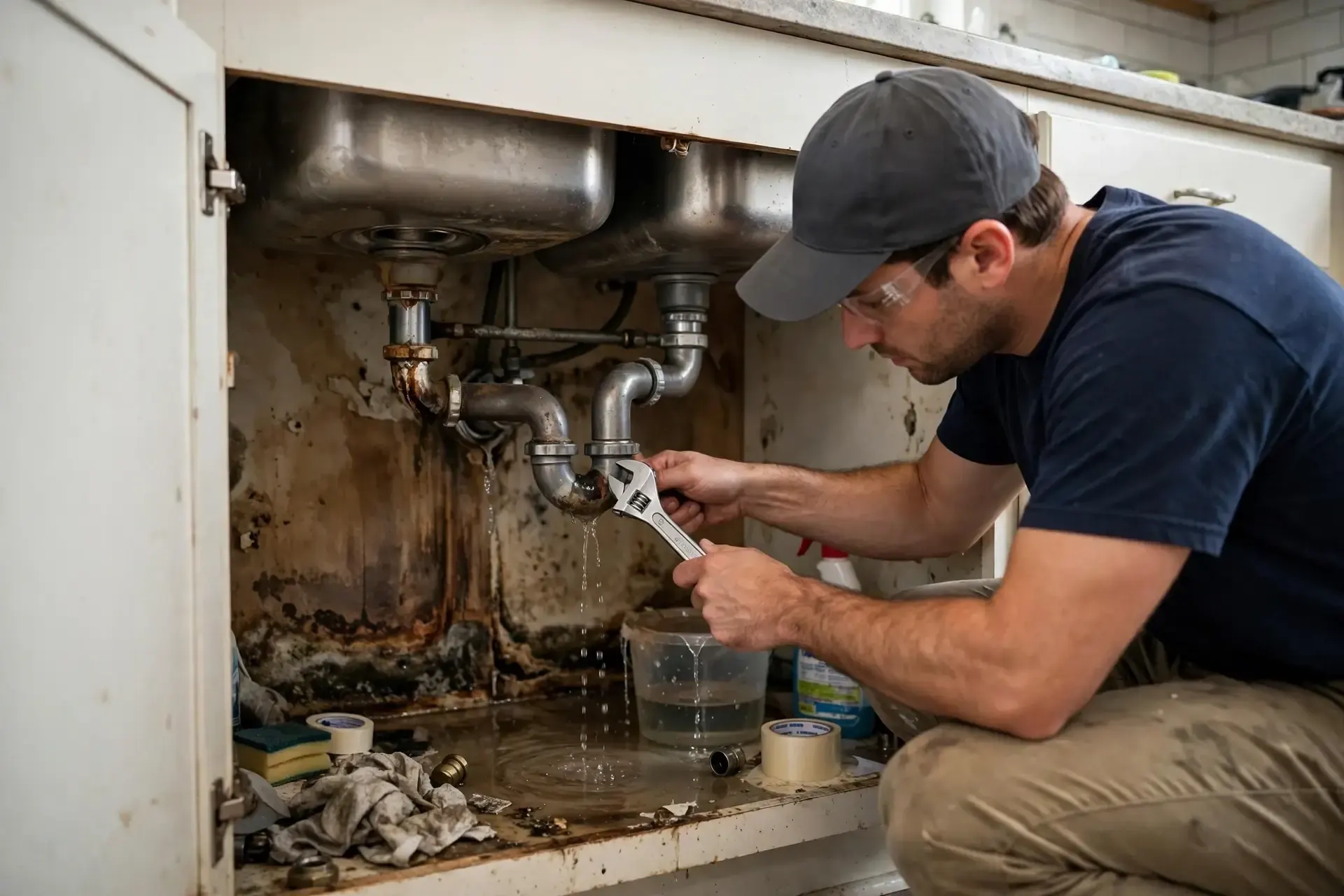
Common causes of water damage in Wilmette
- Sewer surcharge in combined areas. Wilmette runs a dual system — combined in parts, separated in parts — and the EPA lists its combined sewer overflows to the North Shore Channel. Intense rain surcharges the system and pushes wastewater into basements, as April 2013 proved.
- Intentional street detention. Berms and inlet restrictors deliberately hold water in streets during major storms to protect basements — but deep street water reaches homes with low driveways and ground-level entries before it drains.
- High Lake Michigan levels blocking discharge. In May 2020, when the lake ran high, MWRD's reversal at the Wilmette Pumping Station initially struggled to work, and channel-side properties took the overflow.
- Water main breaks. Wilmette averages about 52 water main breaks a year, roughly 35 of them in winter, spiking during freeze-thaw temperature swings. Pre-war homes face frozen-pipe exposure in crawl spaces, unheated additions, and coach houses.
- High-value lower levels. In areas like Indian Hill Estates — 1920s Tudor manors on acre-plus lots — extensive finished lower levels and indoor pools make individual losses severe.
Our Wilmette water damage services
Water extraction:
Truck-mounted and portable extractors for surcharged basements, street-detention flooding, and burst-main flooding.
Structural drying and dehumidification:
Industrial air movers and low-grain dehumidifiers, verified with moisture meters — essential for century-old plaster, stone foundations, and high-end finishes.
Mold remediation:
In early-1900s housing with original plaster and woodwork, mold establishes within days. We contain, remove, and treat to IICRC standards.
Sewage cleanup:
Combined-sewer surcharge is Category 3 water. Full containment goes up, unsalvageable materials are removed and disinfected around, and we document the water's entry path for your claim.
Storm response:
From cul-de-sac ponding after a 5-inch downpour to channel-side flooding when the lake runs high, we stabilize, extract, dry, and coordinate repairs.
Areas we serve in Wilmette
We cover the entire village — ZIP 60091 — including West Wilmette (west of Romona Road and the Edens Expressway, served by the West Park tank and Harms Road basin project), Kenilworth Gardens, Indian Hill Estates, the Ouilmette North Historic District, the lakefront corridor along Michigan Avenue and Sheridan Road, Gillson Park and Wilmette Harbor, the Bahá'í House of Worship area on Linden Avenue, Village Center downtown, and the New Trier East campus area.
How We Restore Water-Damaged Homes in Wilmette
- 24/7 dispatch and assessment. Call (773) 200-3228 and a crew responds anywhere in 60091. We identify the water category, trace the entry path, and check for hazards.
- Extraction. Standing water comes out first with commercial-grade equipment; with contaminated surcharge water, every hour of contact time deepens the damage.
- Drying with verification. Equipment runs until moisture meters — not touch, not guesswork — confirm materials are dry.
- Cleaning and sanitizing. Contaminated surfaces are disinfected; salvageable contents are cleaned and documented.
- Mold prevention or remediation. Antimicrobial treatment where warranted; full remediation where mold has established.
- Repairs and insurance documentation. We coordinate repairs and compile photos, moisture logs, and itemized records for your insurer.
Cost factors & insurance claim help
Every Wilmette loss is scoped on site — never a flat fee. Cost hinges on water volume, how far it spread, the water category, and how much finished material must be removed and rebuilt. Because many Wilmette losses involve sewer surcharge, we document category and entry pathway precisely; that distinction drives coverage. You get an itemized scope before work proceeds. We work directly with your insurer from first call to final walkthrough.
Wilmette water damage FAQs
Is street flooding in Wilmette ever intentional? Yes — sometimes by design. The village's berms and inlet restrictors deliberately create street detention during major storms, holding water in the streets to spare basements. Deep water in your street can mean the system is working — but homes with low driveways or ground-level entries can still take water before it drains.
What is the West Park storage tank? The 5.5-million-gallon underground sanitary storage tank at West Park was built after April 2013 — breaking ground in late September 2014 and entering service by September 2015 at about $15 million. It holds excess sanitary flows during rain events, with a backflow valve against MWRD surcharge and a pump station, and serves 1,300+ homes west of Romona Road.
What happened during the January 2003 gas outage? A Wilmette water main break flooded the Nicor natural gas delivery system, leaving 1,053 homes and businesses in north Evanston and south Wilmette without heat — described by Nicor as the worst outage in the company's 50-year history. Crews worked five days around the clock, centered on Green Bay Road and Central Street.
Why were the Wilmette sluice gates opened in September 2008? During the remnants of Hurricane Ike on September 13, 2008, the Deep Tunnel's 2.6-billion-gallon capacity filled by 7:30 a.m., so MWRD opened the Wilmette sluice gates at 6:18 a.m. — the first time in six years — to lower water levels in the Chicago River and area waterways.
What happens when Lake Michigan is too high for MWRD to discharge? In May 2020, after a record-wet stretch (7.88 inches at O'Hare), the Chicago River hit its highest level in 60+ years, and MWRD reversed the waterway to the lake at the Wilmette Pumping Station — but lake levels were so high the reversal initially struggled to work, and riverbank areas flooded. When the lake is full, channel-side properties take the overflow.
Water Damage in Wilmette? We Respond 24/7
Every minute counts. Rapid Water Damage Restoration Illinois dispatches certified technicians across Wilmette day and night — with insurance documentation handled for you.
Call (773) 200-3228 NowWater Damage Restoration Services in Wilmette
- Our water damage restoration service
- Commercial Water Damage Restoration in Wilmette
- Residential Water Damage Restoration in Wilmette
- Emergency Flood Cleanup in Wilmette
- Storm & Flood Damage Restoration in Wilmette
- Ceiling & Wall Water Damage Repair in Wilmette
- Sewage Backup Cleanup in Wilmette
- Mold Remediation in Wilmette
- Burst Pipe & Leak Water Damage in Wilmette
- Drying & Dehumidification in Wilmette
Nearby Areas We Serve Around Wilmette
Helpful Water Damage Guides
- Mold Remediation Cost: What Actually Drives the Price in Illinois
- Water Damage Restoration Cost in Illinois: What Really Drives the Bill
Official resources: FEMA FloodSmart (flood insurance) and EPA guide to mold and moisture.