Belmont Cragin doesn't need a famous storm to make its case — it has an official designation. A University of Chicago Harris Policy Labs team, working for the Chicago Metropolitan Agency for Planning, named Belmont Cragin and Albany Park the Northwest Side's two highest urban-flood-risk neighborhoods in 2022. When the city piloted Hyfi flood sensors, community meetings in Belmont Cragin helped decide where sewer-overflow and street-flooding sensors went — tacit acknowledgment that this neighborhood's sewers are a known problem.
This is Community Area 19, eight miles northwest of the Loop: roughly 72,000 residents, majority Latino since the 2000s, in the classic Northwest Side bungalow belt (60639). The vulnerability is the aging combined sewer — basement flooding is common during Chicago storms here. And the built environment has a backstory: between Cicero and Central on Grand Avenue, Zenith, Schwinn, and Brach's employed 15,000 union workers in 1970; deindustrialization left the bungalows standing but hollowed the tax base beneath them.
The housing — 1910s–30s bungalows, two-flats, and Cape Cods, including the 1915 Falconer Bungalow Historic District — pairs full basements with clay-tile laterals prone to root intrusion. The sensors watch the sewers. We empty the basements. Call (773) 200-3228 — 24/7.
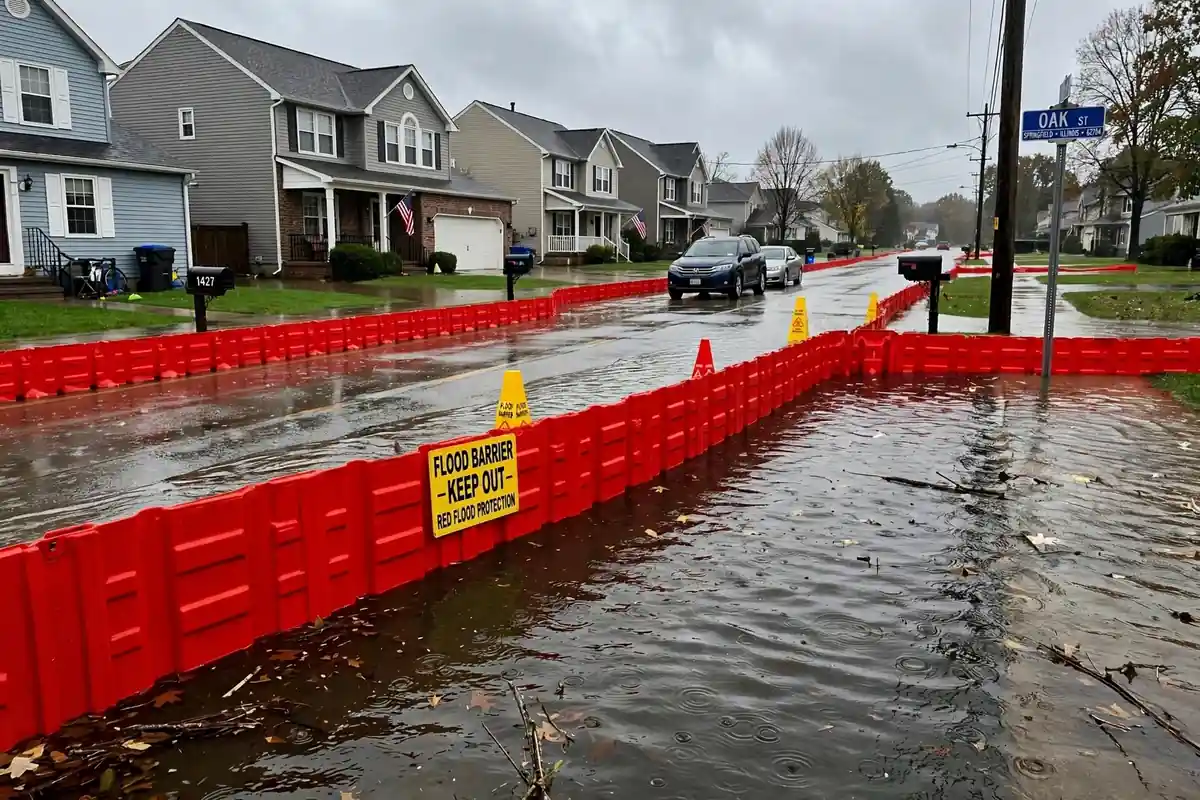
Our Belmont Cragin water damage services
Water extraction:
Rapid removal from bungalow full basements, two-flat lower units, and Cape Cod lower levels across the 60639 core and surrounding ZIPs.
Sewage cleanup:
Full Category 3 containment, extraction, and disinfection for combined-sewer backups — the loss type this neighborhood is officially known for.
Structural drying and dehumidification:
Calibrated drying for 1910s–30s brick, plaster, and wood framing, verified with moisture meters.
Mold remediation:
Containment and remediation to IICRC standards for basements that sat in backup water.
Sump and lateral failure response:
Emergency extraction when sump discharge lines freeze at the yard line or aging clay-tile laterals give way — plus pre-season pump maintenance guidance so it doesn't happen twice.
Common causes of water damage in Belmont Cragin
The defining cause is the aging combined sewer system — the vulnerability behind the UChicago "highest urban-flood-risk" designation. Shared sanitary and storm pipes surcharge in heavy rain, pushing sewage backup up through floor drains into full bungalow basements. Basement flooding is common during Chicago storms here, and the city's flood-sensor placements confirm the sewers are a known trouble spot.
The second cause is the construction itself. 1915–1930s bungalows combine the two worst traits for water damage: full basements plumbed into that old combined sewer, and century-old details — uninsulated crawl spaces, clay-tile laterals prone to root intrusion — that fail exactly when they're needed most.
The third is winter. Sump discharge lines that freeze at the yard line are a common cause of winter basement-flooding calls in the bungalow belt, and exposed pipes in uninsulated spaces burst in hard cold snaps — a freeze problem stacked on a flood problem.
The fourth is street-level: heavy downpours overwhelm drains and pond in the streets, and the sensor placements the community helped choose map the spots where it happens most.
Areas we serve in Belmont Cragin
We serve the 60639 core plus the 60634, 60641, and 60707 edges — Belmont Central, Cragin, Hanson Park, Kelvyn Park, Hermosa, Galewood, and Montclare. That includes Riis Park (56 acres, Alfred Caldwell design, Walter Ahlschlager fieldhouse), Hanson Park (30 acres), the Belmont Central shopping district, the Brickyard, La Placita at Grand and Fullerton, LaFollette and Kilbourn Parks, and the Grand, Fullerton, Belmont, Diversey, and Cicero corridors.
Belmont Cragin water damage FAQs
What does "highest urban-flood-risk" actually mean for my block? It's a risk assessment, not a mandate. The UChicago Harris/CMAP finding (2022) ranked neighborhoods by urban flooding — the sewer-driven kind, where shared pipes surcharge and back up into basements. Practically, it means your block's combined sewer is more likely to overwhelm your floor drains in heavy rain than in most of the city. That's worth a sump-pump test and our number: (773) 200-3228.
The city installed flood sensors here. Am I protected now? Not exactly. The Hyfi pilot sensors detect sewer overflow and street flooding so help reaches affected areas faster — they warn, they don't prevent. That community meetings here chose the placements tells you the system is a known problem spot. Sensors plus a restoration crew on speed dial is the real protection.
My bungalow was built in the 1920s. Is it more vulnerable than newer homes? Yes. The 1910s–30s stock — bungalows, two-flats, Cape Cods — pairs full basements with clay-tile laterals prone to root intrusion and uninsulated crawl spaces. Local plumbing trade sources specifically recommend pre-season sump pump maintenance and sewer camera inspections for this housing. If your lateral has never been camera-inspected, consider it.
What did the old Grand Avenue factories have to do with flooding? The corridor between Cicero and Central once held Zenith, Schwinn, and Brach's — 15,000 union workers in 1970. Deindustrialization took the jobs and the tax base; the bungalow housing stayed, and the infrastructure underneath it aged without the investment a thriving industrial district once supported.
How do I prepare before storm season? Test your sump pump, clear the discharge line so it can't freeze or clog, have any backwater valve inspected, and keep valuables off the basement floor. When heavy rain is forecast, cut household water use to keep capacity in the shared pipes. And save (773) 200-3228 — we're here 24/7 when the prep isn't enough.
Cost factors & insurance claim help
Belmont Cragin losses are usually sewer-category losses: the water's contamination level, how many rooms the backup reached, and whether materials must be removed all shape the scope. We never quote prices sight unseen and never invent numbers — what we provide is a verified record: photos, moisture logs, and itemized scopes that give your adjuster everything needed from the first call. We deal with your insurance company directly, from the first call to the final walkthrough. Call (773) 200-3228 to talk through your situation.
How We Restore Water-Damaged Homes in Belmont Cragin
- Source and category check. We identify whether it's combined-sewer backup, a frozen discharge line, a failed lateral, or seepage — and treat surcharged backup as Category 3 from the start.
- Emergency extraction. Standing water is removed immediately, with containment where contamination is involved.
- Moisture mapping and drying. Meters and thermal imaging find hidden damp in vintage brick, plaster, and framing; industrial equipment dries to verified readings.
- Sanitizing and mold remediation. Contaminated areas are disinfected; mold is contained and remediated to IICRC standards.
- Documentation and repair coordination. Itemized records for your insurer, plus coordinated repairs to put the basement back.
Water Damage in Belmont Cragin, Chicago? We Respond 24/7
Every minute counts. Rapid Water Damage Restoration Illinois dispatches certified technicians across Belmont Cragin, Chicago day and night — with insurance documentation handled for you.
Call (773) 200-3228 NowWater Damage Restoration Services in Belmont Cragin
- Our water damage restoration service
- Commercial Water Damage Restoration in Belmont Cragin
- Residential Water Damage Restoration in Belmont Cragin
- Emergency Flood Cleanup in Belmont Cragin
- Storm & Flood Damage Restoration in Belmont Cragin
- Ceiling & Wall Water Damage Repair in Belmont Cragin
- Sewage Backup Cleanup in Belmont Cragin
- Mold Remediation in Belmont Cragin
- Burst Pipe & Leak Water Damage in Belmont Cragin
- Drying & Dehumidification in Belmont Cragin
Nearby Areas We Serve Around Belmont Cragin
Helpful Water Damage Guides
- What to Do When Your Basement Floods: A Step-by-Step Emergency Guide
- Sewage Backup Cleanup: Health Risks & Pro Help
Official resources: FEMA FloodSmart (flood insurance) and EPA guide to mold and moisture.