On July 2, 2023, more than eight inches of rain fell on Austin. WTTW's "Chicago Tonight: Black Voices" reported the West Side "especially hard hit"; Mayor Brandon Johnson toured damaged homes days later, called the storms "unprecedented," and pledged disaster-relief and flood-prevention funding. Austin homeowner Larry Quinn Jr. told reporters what it looked like inside: five feet of water shot up through his sewer drains, ruining two furnaces, appliances, tools, and an electrical panel — about $70,000 in damage his insurance did not cover.
In September 2023, State Rep. La Shawn Ford secured a $1 million state grant for Austin nonprofits to repair storm damage — up to $25,000 per owner-occupied building. And the city knows the risk continues: Austin was slated for 13 pilot Hyfi flood sensors, more than any other neighborhood, targeting sewer-overflow areas.
This is Community Area 25 on the far West Side — Chicago's third-largest by population (about 97,500) and second-largest by area; the 60644 ZIP sits entirely within Austin. The key fact: Austin's flood problem is sewer-driven, not river-driven — Category 3 water backing up through floor drains. We extract it, disinfect, dry, remediate, and document for insurers and grant applications. Call (773) 200-3228 — 24/7.
Common causes of water damage in Austin
The defining cause is combined-sewer surcharge: Austin's flood losses come up through floor drains when the shared pipes overwhelm. July 2023 was Category 3 sewage backup — and it destroyed furnaces, appliances, and electrical panels in a single weekend.
The second cause is the housing stock — "one of the best housing stocks in the city": single-family homes (about 20%), bungalows, two-flats and greystone two-flats, Victorians, Queen Annes, and Prairie-influenced houses, many by Frederick Schock, with a median year built of 1919. The signature risk type: the 1920s greystone two-flat, with porous Bedford limestone foundations and below-grade living space.
Finished lower levels mean sewage contamination requires full material removal, not just drying. In winter, garden-level units face burst supply lines and frozen sump discharge lines. And in storm season, MWRD's Overflow Action guidance applies directly: when heavy rain is forecast, cut household water use to keep capacity in the shared pipes.
Our Austin water damage services
Sewage cleanup:
Full Category 3 containment, extraction, and disinfection for combined-sewer backups — Austin's defining loss type. This is hazardous water; don't wade in it, call us.
Water extraction:
Rapid removal from greystone and two-flat basements, finished lower levels, bungalows, and single-family homes across Galewood, The Island, North Austin, and South Austin.
Structural drying and dehumidification:
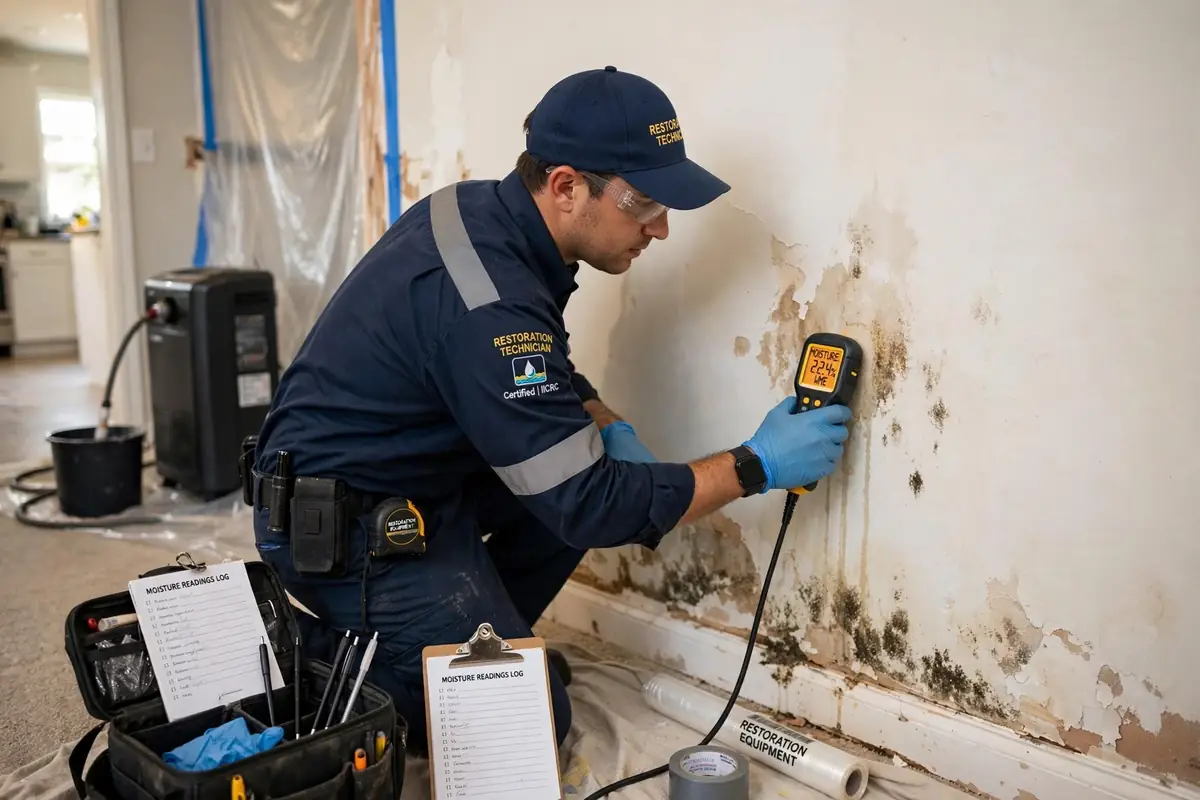
Calibrated drying for 1910s-era brick, porous limestone foundations, vintage plaster, and wood framing — verified with moisture meters.
Mold remediation:
Containment and remediation to IICRC standards for below-grade spaces that sat in backup water.
Documentation for insurance and grant applications:
Itemized photo and moisture records supporting insurance claims and repair-assistance applications through Austin nonprofits.
Cost factors & insurance claim help
Sewer-backup losses are contamination losses: the scope depends on the water's category, how many rooms and systems it reached, and whether finished-basement materials must be removed. We never quote prices sight unseen. We build the verified record — photos, moisture logs, itemized scopes — that insurers and assistance programs need, and we work directly with your insurance company from first call to final walkthrough. Call (773) 200-3228 to talk through your situation.
Austin water damage FAQs
Why wouldn't insurance cover a $70,000 sewer backup loss? Standard homeowners policies exclude sewer and sump-pump backup unless you've added a specific endorsement — which is why Larry Quinn Jr.'s July 2023 loss (five feet of water through his sewer drains; two furnaces, appliances, tools, and an electrical panel ruined; about $70,000) wasn't covered. Check your policy for a sewer-backup endorsement before the next storm — and call (773) 200-3228 when backup happens, because fast extraction limits the loss either way.
Is there financial help available for Austin flood repairs? In September 2023, State Rep. La Shawn Ford secured a $1 million Illinois DCEO grant for Austin nonprofits to repair storm damage — up to $25,000 per owner-occupied building, for as many as 100 buildings in the 8th House District. Contact an Austin nonprofit about applying; our photo, moisture, and itemized documentation can support your application.
Why is water coming up through my drains instead of in through the walls? Austin's flood problem is sewer-driven, not river-driven. When the combined system surcharges, flow reverses and pushes up through floor drains — which is why July 2023 arrived as five feet of water through sewer drains, not rainwater through windows. That water is Category 3 sewage: don't wade in it.
What should I do before the next forecast like July 2023? Follow MWRD's Overflow Action guidance: cut household water use during heavy rain to keep capacity in the shared pipes. Test your sump pump, clear the discharge line, move valuables and electronics off the basement floor, and know where your main water shutoff is. Then save (773) 200-3228.
Are greystone two-flats really more vulnerable? The 1920s greystone two-flat pairs porous Bedford limestone foundations with below-grade living space — and with a median build year of 1919, Austin's stock carries aging laterals and original plumbing too. Finished basements, common in Austin rehabs, make contamination losses worse.
What are the 13 flood sensors in Austin for? The city's Hyfi pilot sensors detect sewer overflow and street flooding so help reaches affected areas faster. Austin got 13 — more than any other neighborhood — targeting sewer-overflow areas. They warn; they don't prevent. We're the other half: (773) 200-3228, 24/7.
How We Restore Water-Damaged Homes in Austin
- Source and safety check. We confirm combined-sewer backup versus seepage or supply-line failure — and treat surcharged backup as Category 3 hazardous water from the start.
- Emergency extraction. Contaminated standing water is removed immediately under full containment.
- Moisture mapping and drying. Meters and thermal imaging find hidden damp in limestone, brick, plaster, and framing; industrial equipment dries to verified readings.
- Sanitizing and mold remediation. Sewage-affected areas are disinfected; mold is contained and remediated to IICRC standards.
- Documentation and repair coordination. Photos, moisture logs, and itemized records for your insurer or grant application, plus coordinated repairs.
Areas we serve in Austin
We serve the full 60644 ZIP — entirely within Austin — plus the 60639, 60651, and 60707 edges: Galewood, The Island, North Austin, and South Austin. That covers Columbus Park (135 acres, Jens Jensen's masterpiece and a National Historic Landmark District), LaFollette Park, Austin Town Hall Park, and Levin Park; Austin Boulevard and Central Avenue; CTA Green Line stations at Austin, Central, and Laramie; and the Chicago, Division, and Madison corridors.
Water Damage in Austin, Chicago? We Respond 24/7
Every minute counts. Rapid Water Damage Restoration Illinois dispatches certified technicians across Austin, Chicago day and night — with insurance documentation handled for you.
Call (773) 200-3228 NowWater Damage Restoration Services in Austin
- Our water damage restoration service
- Commercial Water Damage Restoration in Austin
- Residential Water Damage Restoration in Austin
- Emergency Flood Cleanup in Austin
- Storm & Flood Damage Restoration in Austin
- Ceiling & Wall Water Damage Repair in Austin
- Sewage Backup Cleanup in Austin
- Mold Remediation in Austin
- Burst Pipe & Leak Water Damage in Austin
- Drying & Dehumidification in Austin
Nearby Areas We Serve Around Austin
Helpful Water Damage Guides
Official resources: FEMA FloodSmart (flood insurance) and EPA guide to mold and moisture.