Oak Lawn's flood records name two dates the way other towns name holidays: June 9, 2011 and April 17, 2013. That's how the village's own flood records identify the two historic flooding events that caused widespread damage — 143 homes impacted between them, with basement, backyard, and street flooding across the village. Not a rumor, not a worst case: the two storms Oak Lawn measures every other storm against.
The village's engineers explain why those storms hit so hard. Oak Lawn's sewer system drains southwest to Stony Creek west of Cicero — and it becomes surcharged in even a 2-year storm, pipes running full with nowhere left to go. Much of the housing stock dates to the mid-1960s (typical year built around 1965), and a good share was rebuilt after the April 21, 1967 F4 tornado tore a 16.2-mile swath through Oak Lawn — killing 33, injuring 1,000, destroying 152 homes and damaging 900, including Oak Lawn Community High School. Post-tornado reconstruction shaped much of today's architecture: mid-century ranches, bungalows, and split-levels on a drainage system that fills fast. When it fills, Rapid Water Damage Restoration Illinois answers 24/7 in Oak Lawn — call (773) 200-3228.
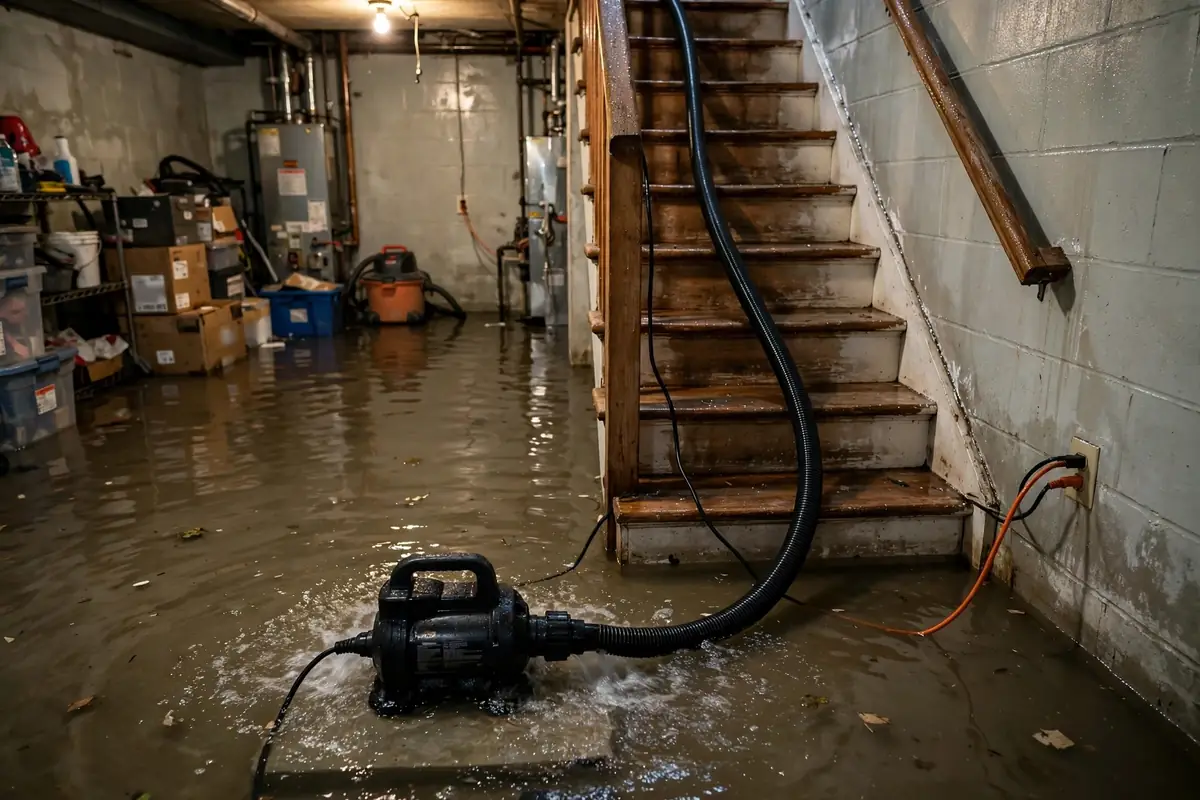
Common causes of water damage in Oak Lawn
- The two historic floods. June 9, 2011 and April 17, 2013: the benchmarks in village flood records — widespread flooding and property damage, 143 homes impacted.
- A sewer system that surcharges in a 2-year storm. The engineers' own description: the system draining to Stony Creek west of Cicero reaches capacity in moderate rain — not extreme rain. By a 100-year event, flooding is widespread.
- Riverine and urban flooding. The village reports a long history of both during moderate and severe storms — from Stony Creek, Oak Lawn Creek, Melvina Ditch, and Stony Creek East, plus street and yard flooding far from any channel.
- Infiltration and inflow. Cracked laterals and illicit connections let groundwater and stormwater into the sanitary system until it backs basements up — which is why the village runs a Private Sector I/I Reduction Cost Share program.
- Mid-century housing stock. Typical year built is around 1965: post-war ranches, bungalows, and split-levels, many rebuilt after the 1967 tornado. Sixty-year-old supply lines, waste stacks, and laterals are prime candidates for leaks, cracks, and freeze bursts.
Areas we serve in Oak Lawn
We serve the entire village, anchored by ZIP 60453: the 95th Street commercial corridor and downtown redevelopment district, Advocate Christ Medical Center and the surrounding medical hub, Stony Creek Golf Course and the Stony Creek corridor west of Cicero, the Children's Museum in Oak Lawn, Oak Lawn Community High School, Oak Lawn Park District facilities, the historic station neighborhoods dating to the Wabash Railroad era, and the mid-century ranch and split-level neighborhoods throughout the village. Flooding in 60453 — call (773) 200-3228.
Our Oak Lawn restoration process
- First call, any hour: (773) 200-3228. Describe what you're seeing — backup, flooding, or a burst pipe. We'll ask whether it's stormwater, sewage, or clean supply water, because that decides the cleanup protocol.
- Source check and moisture mapping. We trace where the water came from and map every affected area — including hidden moisture behind drywall and under flooring.
- Extraction with safety first. Standing water is pumped out fast; where sewage is involved, containment and disinfection come before anything else.
- Monitored structural drying. Dehumidifiers and air movers run until moisture meters verify framing, subfloors, and masonry are truly dry — then we check again.
- Cleaning, mold work, and rebuild. Affected areas are sanitized, mold-affected materials remediated to IICRC standards, and damaged finishes restored to pre-loss condition. Every photo and moisture log is compiled for your adjuster before our final walkthrough with you.
Our Oak Lawn water damage services
Emergency water extraction. Surcharged-sewer backup, street flooding at your foundation, a burst pipe in a 1960s ranch — truck-mounted pumps and portable extractors clear standing water fast, starting with the most contaminated areas.
Structural drying and dehumidification. Mid-century ranches, bungalows, and split-levels hold moisture in plaster, hardwood, and aging framing long after surfaces look dry. We dry to the meter, not to the eye.
Mold remediation. Oak Lawn's flood history means moisture has visited many basements before. We contain affected areas, remove contaminated materials, and treat surfaces to IICRC standards.
Sewage cleanup. When infiltration and inflow overload the sanitary system, wastewater backs into living space. We extract Category 3 water in full PPE, remove unsalvageable porous materials, and disinfect every affected surface.
Storm damage repair. Wind-driven rain through damaged roofs and siding, plus repairs after severe-storm flooding — we secure the structure, extract interior water, dry it, and rebuild, and we can advise on the village-recommended upgrades: overhead sewers, larger or backup-powered sump pumps, and keeping storm grates clear.
Frequently asked questions
What happened on June 9, 2011 and April 17, 2013?
The two historic flooding events in Oak Lawn's village flood records — widespread flooding and property damage, with 143 homes impacted between them. The drainage limitations behind them are still in place.
What does it mean that Oak Lawn's sewers "surcharge in a 2-year storm"?
The pipes start running full in moderate rain — a 2-year storm arrives every couple of years. When pipes are full, water goes up and out: into basements, onto streets, across yards.
Why does Oak Lawn's sewer-backup guidance mention an overhead sewer?
An overhead sewer reroutes your home's sanitary line so wastewater exits above basement level — a surcharged village sewer can't push sewage back down into your basement. Oak Lawn's own sewer-backup advice page recommends one.
Why does the village say to call the Sewer Division before calling a plumber?
Because the first question is whose pipe is failing. Oak Lawn tells residents to call the Sewer Division at (708) 499-7748 before calling a plumber — village crews determine whether the problem is the public main or your private lateral.
What is the village's I/I Cost Share program?
Oak Lawn runs a Private Sector Infiltration/Inflow Reduction Cost Share program (resident guide published December 2019) to help homeowners fix cracked laterals and illicit connections. Ask the village's Public Works department about current eligibility.
Cost factors & insurance claim help
We never quote by phone — every Oak Lawn loss is scoped on its facts: the water category, how much stayed wet and for how long, and the home's age and materials. Two coverage questions matter most: sanitary-backup coverage often depends on a backup endorsement on your homeowners policy, while creek overbank flooding is generally a flood-insurance matter — so the water's source decides the claim. We photograph and log everything, review your coverage with you, and work directly with your insurance company from first call to final walkthrough. Call (773) 200-3228 to get started.
Water Damage in Oak Lawn? We Respond 24/7
Every minute counts. Rapid Water Damage Restoration Illinois dispatches certified technicians across Oak Lawn day and night — with insurance documentation handled for you.
Call (773) 200-3228 NowWater Damage Restoration Services in Oak Lawn
- Our water damage restoration service
- Commercial Water Damage Restoration in Oak Lawn
- Residential Water Damage Restoration in Oak Lawn
- Emergency Flood Cleanup in Oak Lawn
- Storm & Flood Damage Restoration in Oak Lawn
- Ceiling & Wall Water Damage Repair in Oak Lawn
- Sewage Backup Cleanup in Oak Lawn
- Mold Remediation in Oak Lawn
- Burst Pipe & Leak Water Damage in Oak Lawn
- Drying & Dehumidification in Oak Lawn
Nearby Areas We Serve Around Oak Lawn
Helpful Water Damage Guides
- Mold Remediation Cost: What Actually Drives the Price in Illinois
- Water Damage Restoration Cost in Illinois: What Really Drives the Bill
Official resources: FEMA FloodSmart (flood insurance) and EPA guide to mold and moisture.