Lisle's defining water story is written in a county flood-control plan. The East Branch of the DuPage River runs through the village, and DuPage County's River–Dumoulin Flood Control Plan — covering the reach between the I-88 Tollway and Maple Avenue — records historic flooding that caused over $9.3 million in damages across a 45-year simulated storm period. The plan names three damage sources: local drainage backing up behind the levee, high river water overtopping the levee, and overflow water diverted through the Route 53 viaducts under Ogden Avenue and the Burlington Northern Railroad. The studied remedies read like a flood survivor's wish list: voluntary buyouts, floodproofing, pump stations, levee maintenance, and storage reservoirs. When a county plan contemplates buyouts for part of your village, flooding isn't hypothetical.
The record book backs it up. In the July 17–18, 1996 flood, the St. Joseph Creek at Route 34 in Lisle peaked at 12.89 feet — greater than a 100-year flood — while the East Branch near Downers Grove hit 16.13 feet and the East Branch at Bolingbrook crested at 23.75 feet, also beyond the 100-year mark. On April 18, 2013, the Chicago Tribune filmed flooded Lisle streets; a post-flood survey found 56 Lisle residents who flooded, and 68% of those reached said they'd gotten an official warning — which means nearly a third didn't. And the exposure isn't shrinking: a 2025 consultant analysis for the proposed Lincoln Avenue–Route 53 TIF district found that 94% of improved parcels sit within FEMA's national flood hazard layer, citing "inadequate utilities and stormwater infrastructure" as a qualifying blight factor. Runoff from that corridor feeds flooding in both the St. Joseph Creek and East Branch watersheds.
Lisle's housing tells the rest. The village core holds postwar ranches, split-levels, and colonials — Beau Bien's rancher, split-level, and colonial-revival homes date to 1967–1986 — plus newer subdivisions, townhomes, and the 1,000-plus-unit Four Lakes condo community built around a man-made ski hill. With 51 subdivisions and a median housing era of the 1960s–80s, original plumbing, aging service lines, and older outdoor hose bibs and irrigation lines are common freeze-burst candidates. And the landmarks anchor every loss: the 1,700-acre Morton Arboretum — founded in 1922 by Joy Morton of Morton Salt — at 4100 Illinois Route 53, the historic downtown Main Street with its Metra station, the Eyes to the Skies Festival and Depot Days. When water gets into a Lisle home, Rapid Water Damage Restoration Illinois answers 24/7. Call (773) 200-3228.
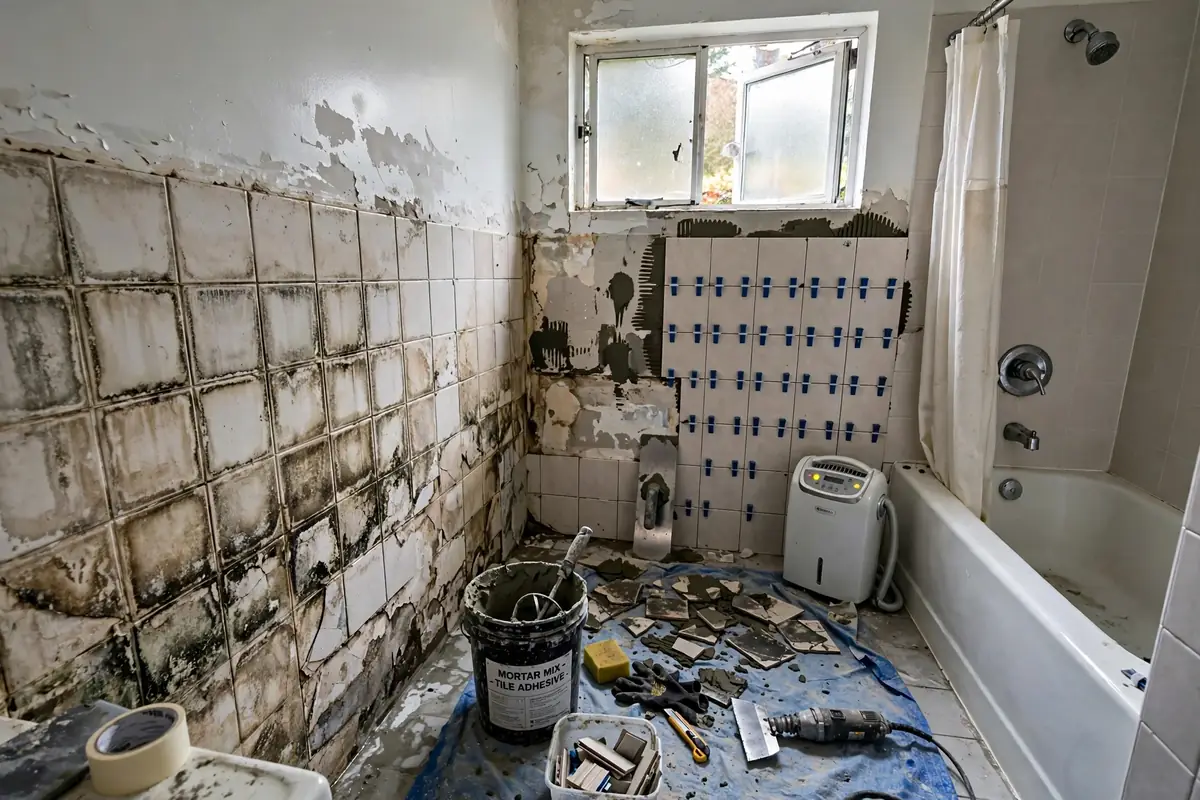
Common Causes of Water Damage in Lisle
- East Branch DuPage River flooding. Levee overtopping, drainage backing up behind the levee, and viaduct-diverted overflow — the three damage sources in the county's River–Dumoulin plan.
- St. Joseph Creek flash rises. The creek's 1996 peak of 12.89 feet at Route 34 exceeded the 100-year flood; it drains the eastern side of the village.
- Levee and pump-station stress. The corridor's protection depends on levees, pump stations, and maintenance — infrastructure that the flood-control plan itself flags as needing work.
- Inadequate stormwater infrastructure. The 2025 TIF analysis cited failing utilities and stormwater capacity in the Lincoln Avenue–Route 53 corridor as a blight factor.
- Aging plumbing in 1960s–80s homes. Original service lines, aging outdoor hose bibs, and irrigation systems are the standard freeze-burst profile across Lisle's mid-century stock.
- Finished lower levels. Raised ranches and split-levels with plumbing in unconditioned crawl spaces and lower levels are especially exposed to freeze and seepage.
- Sump discharge and grading failures. Flat lots and older drainage around postwar homes let groundwater in when sump systems fail during storms.
Our Lisle Water Damage Services
Emergency water extraction
River and creek floodwater, sewer backup, sump failure, burst pipes — high-capacity pump-out with contamination protocols, day or night.
Structural drying
Monitored drying for postwar ranches, split-levels, colonials, and condo interiors — verified with moisture meters, not guesswork.
Mold remediation
Damp basements and wall cavities grow mold within days. We contain, remove, and treat to IICRC standards.
Sewage cleanup
Storm-sewer and sanitary backups demand extraction, sanitization, and safe disposal of contaminated porous materials.
Storm and freeze damage repair
From flood-damaged interiors to burst-pipe destruction, restored to pre-loss condition across all 51 subdivisions.
How We Restore Water-Damaged Homes in Lisle
- Call (773) 200-3228 — around the clock. We dispatch with extraction equipment, triaging active flooding and sewage backups first.
- Trace the water. East Branch overbank, St. Joseph Creek rise, levee-area seepage, sewer backup, or burst line — the source sets the protocol.
- Extract and contain. Standing water comes out; river and sewage water get containment and protective protocols before anything else is touched.
- Map the hidden moisture. Meters and thermal imaging find water inside walls, under flooring, and in crawl spaces of split-level and raised-ranch homes.
- Dry on a monitored plan. Air movers and dehumidifiers run on logged schedules with daily readings until materials hit their targets.
- Restore and document. Pre-loss repairs with a photo-and-moisture record your adjuster can build a file on.
Areas We Serve in Lisle
All of ZIP 60532: Beau Bien (north-central), Four Lakes and its ski-hill condos, Arbor Ridge, Peach Creek (far western Lisle), River Bend, the Seven Bridges area along the southeast, Arboretum Villages condos, the Lincoln Avenue–Route 53 corridor, historic downtown Main Street near the Metra station, and blocks around the Morton Arboretum (4100 Illinois Route 53).
Frequently Asked Questions
What is the River–Dumoulin Flood Control Plan, and why does it matter to my home?
It's DuPage County's plan for the East Branch DuPage River between the I-88 Tollway and Maple Avenue in Lisle — and it exists because historic flooding in that corridor caused over $9.3 million in damages across a 45-year simulated period. It names three damage sources: drainage backing up behind the levee, river water overtopping the levee, and overflow diverted through the Route 53 viaducts. If you live near the river corridor, this plan is the official description of your risk.
What happened in the July 1996 flood?
The record event for the modern era. St. Joseph Creek at Route 34 in Lisle peaked at 12.89 feet — beyond a 100-year flood — while the East Branch at Bolingbrook crested at 23.75 feet, also beyond the 100-year mark, in widespread record flooding from Rockford to Joliet. It's the benchmark every East Branch flood since has been measured against.
Is it true 94% of parcels in one Lisle district are in a flood hazard layer?
A 2025 consultant analysis for the proposed Lincoln Avenue–Route 53 TIF district found that 94% of improved parcels sit within FEMA's national flood hazard layer, and cited "inadequate utilities and stormwater infrastructure" as a qualifying blight factor. Runoff from that area contributes to flooding in both the St. Joseph Creek and East Branch watersheds. It's a blunt, official measure of how exposed parts of Lisle remain.
I live in a Four Lakes condo. Who handles water damage — me or the association?
Usually the association covers common elements (roof, exterior, shared plumbing) while you cover your unit's interior and belongings — but condo declarations vary widely, and Four Lakes' 1,000-plus units span many building types. Call us immediately to stop the damage; we document the source and affected areas, which clarifies responsibility, and we can coordinate with either party's insurer.
Why do so many Lisle homes freeze-burst pipes?
Much of Lisle's housing dates to the 1960s–1980s, with original plumbing, aging service lines, and outdoor hose bibs and irrigation that were never winterized. Raised ranches and split-levels run plumbing through unconditioned crawl spaces and lower levels — the exact pathways deep freezes exploit. Freeze–thaw cycling also stresses aging water mains across the suburbs every winter.
Cost Factors & Insurance Claim Help
No flat quotes — every Lisle loss is scoped on its facts: water category, square footage and materials affected, how long they stayed wet, and the caliber of finishes. River and creek floodwater is contaminated water, which raises scope; finished basements multiply it. Coverage questions here often turn on flood-versus-sewer distinctions or a sewer-backup endorsement, so we review your policy with you. We build your claim file as we work — photo logs, moisture readings — and deal with your insurance company directly from first call to final walkthrough.
Water Damage in Lisle? We Respond 24/7
Every minute counts. Rapid Water Damage Restoration Illinois dispatches certified technicians across Lisle day and night — with insurance documentation handled for you.
Call (773) 200-3228 NowWater Damage Restoration Services in Lisle
- Our water damage restoration service
- Commercial Water Damage Restoration in Lisle
- Residential Water Damage Restoration in Lisle
- Emergency Flood Cleanup in Lisle
- Storm & Flood Damage Restoration in Lisle
- Ceiling & Wall Water Damage Repair in Lisle
- Sewage Backup Cleanup in Lisle
- Mold Remediation in Lisle
- Burst Pipe & Leak Water Damage in Lisle
- Drying & Dehumidification in Lisle
Nearby Areas We Serve Around Lisle
Helpful Water Damage Guides
- How to Prevent Frozen and Burst Pipes During an Illinois Winter
- How Long Before Water Damage Causes Mold?
Official resources: FEMA FloodSmart (flood insurance) and EPA guide to mold and moisture.