Wrigley Field has stood at Clark and Addison since 1914 — built for the Federal League's Chicago Whales, renamed for William Wrigley Jr. in 1926, and still the heartbeat of Wrigleyville. Down the street, the Music Box Theatre has shown silent films with live organ accompaniment since 1929. But below the street level of Lake View's vintage walk-ups, courtyard buildings, converted greystones, and three-flats sit basement and garden-level units — the most water-exposed living spaces in Chicago.
When 2 to 9 inches of rain fell across the city in about 18 hours on July 1–2, 2023, tens of thousands of basements flooded — Lake View's dense stock of below-grade rental units took the hit through the combined sewer system, which can surcharge sewage backup straight into garden apartments. The lake itself is a second threat: Lake Michigan rose nearly 6 feet between 2013 and 2020, and the Environmental Law & Policy Center flagged North Side lakefront communities as vulnerable to high lake levels plus storm surge — the combination that battered the shoreline with 23-foot waves in January 2020.
Whether it's a surcharged sewer under your three-flat or lake-driven groundwater seeping into a vintage walk-up, we extract it, dry it, and document it for your insurer. Call (773) 200-3228 anytime.
Common causes of water damage in Lake View
Garden and basement units are the defining local exposure. Lake View's rental stock is packed with below-grade apartments in vintage walk-ups, courtyard buildings, and converted greystones, at the exact elevation where sewer backup and seepage converge. During intense storms like July 2023, the combined sewer system sends backup up through floor drains while saturated clay soil pushes seepage through foundation cracks at the same time.
High Lake Michigan levels add a lake-driven dimension that inland neighborhoods don't face. With the lake rising nearly 6 feet between 2013 and 2020 and record-high levels plus storm surge documented along the North Side shoreline in January 2020, elevated groundwater presses against foundations near the lakefront parks — lake-driven basement water on top of sewer risk.
The January 30–31, 2019 polar vortex (−23°F at O'Hare) broke water mains and burst pipes citywide; Lake View's vintage three-flats and walk-ups with uninsulated exterior walls and garden-level plumbing are among the most exposed housing to frozen pipes.
Areas we serve in Lake View (60613 & 60657)
We serve both ZIPs — 60613 in the east and central area, 60657 to the north and west — covering Wrigleyville, Northalsted (the nation's first officially recognized LGBTQ+ neighborhood, still widely known as Boystown), Lakeview East, West Lakeview including the Southport Corridor, Lakeview West, Graceland West, and the Sheridan Station Corridor. Our crews are near Belmont Harbor, the lakefront parks and beaches, the Belmont Theater District, Metro and Schubas Tavern, Graceland Cemetery, and Alta Vista Terrace — with CTA Red, Brown, and Purple Line access throughout.
Our Lake View water damage services
Water extraction:
From flooded garden apartments to soaked courtyard-building basements, we remove standing water fast — the first and most urgent step in any below-grade loss.
Structural drying and dehumidification:
Vintage walk-ups and greystones hold moisture in old plaster, wood framing, and masonry. We dry to verified moisture readings so hidden damp doesn't become a mold problem months later.
Mold remediation:
Below-grade units that stay damp are prime territory for mold. We contain, remediate, and treat to IICRC standards.
Sewage cleanup:
Combined-sewer backups are a defining Lake View event. Full Category 3 protocol — extraction, disinfection, and removal of contaminated materials — handled safely.
Storm damage repair:
From July-2023-style flash flooding to lake-surge seepage and burst pipes, we stabilize, dry, and coordinate repairs for vintage and modern buildings alike.
Cost factors & insurance claim help
Costs depend on the water's volume and category, how many rooms are affected, and whether contaminated materials must be removed. Renters and landlords face different questions about who pays — we help sort that out with clear, itemized scopes before work begins. We work directly with insurers, documenting the water's source, pathway, and every affected material so your claim is supported. Call (773) 200-3228 and we'll explain your options plainly.
How We Restore Water-Damaged Homes in Lake View
- 24/7 dispatch and inspection. Call (773) 200-3228 — we arrive, identify the water source (sewer backup, seepage, lake-driven groundwater, burst pipe), and assess affected materials.
- Extraction. Standing water comes out immediately with truck-mounted or portable equipment.
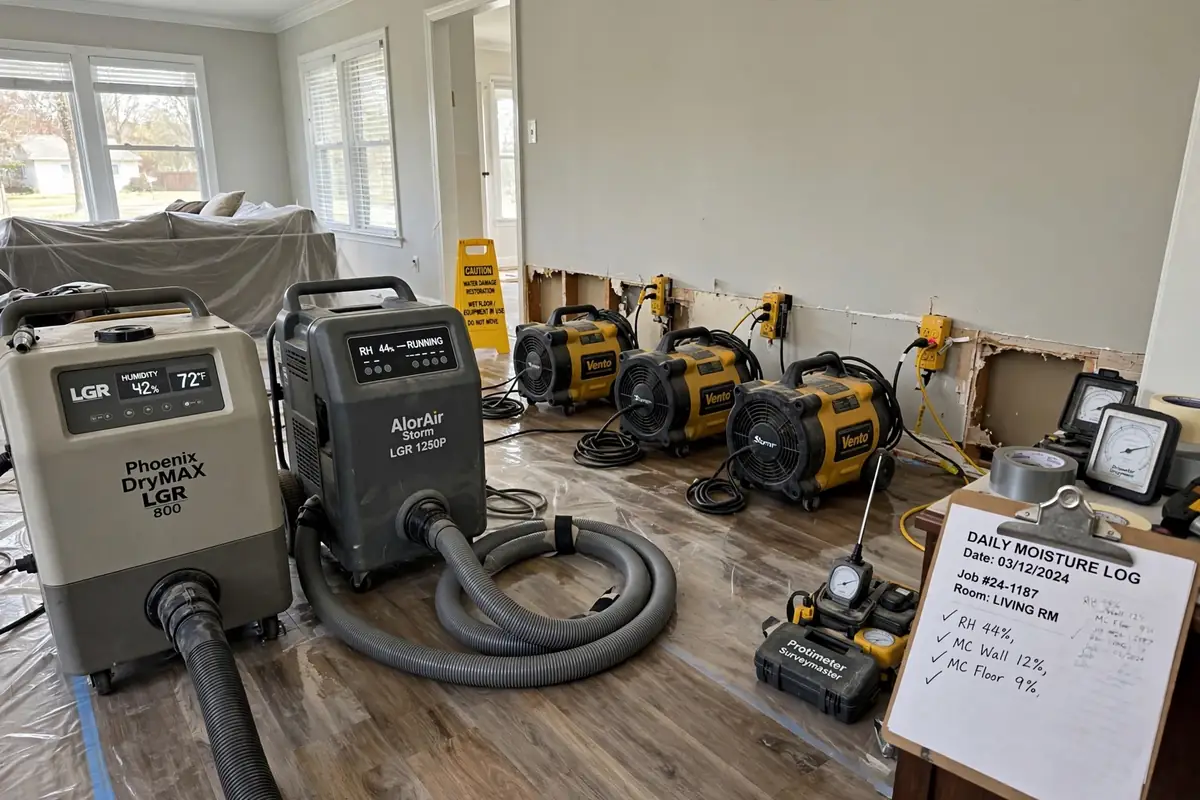
- Drying and dehumidification. Industrial air movers and dehumidifiers run until moisture meters confirm walls, floors, and framing are truly dry.
- Cleaning, sanitizing, and mold treatment. Contaminated areas are disinfected; mold is remediated where it's taken hold.
- Documentation and repairs. Photos, moisture logs, and itemized records for your insurer, plus coordinated repairs.
Lake View water damage FAQs
Are garden-level units really at higher risk? Yes. Garden and basement apartments sit below street grade, where sewer surcharge enters through drains and groundwater seeps through foundations. Lake View's rental stock has an unusually high concentration of these units in vintage walk-ups and converted greystones — which is why heavy-rain events hit the neighborhood's renters hardest.
How do high Lake Michigan levels affect my basement? When the lake runs high — it rose nearly 6 feet between 2013 and 2020 — groundwater near the shoreline rises with it, pressing water against foundations. The Environmental Law & Policy Center specifically flagged North Side lakefront communities for this combination of extreme lake levels and flooding, a risk on top of ordinary sewer backup.
My building's basement flooded — am I or my landlord responsible for cleanup? It depends on your lease and the water's source, but building systems (sewers, foundations, common-area plumbing) are generally the owner's responsibility, while your belongings are yours. We work with both tenants and property owners, document everything clearly, and can coordinate with landlords so the building gets dried properly.
What can I do to protect my vintage three-flat's basement? Common local mitigations include a sump pump with a check valve, an interior French drain, backwater valves to block sewer surcharge, and downspout disconnection. We handle the restoration when defenses fail — and we can tell you what went wrong.
Is the Wrigleyville area at more risk during big storms? Wrigleyville shares the neighborhood's citywide exposure — combined sewers, clay soil, vintage below-grade units — and sits in the footprint of the July 2023 flash flood and the April 2013 wettest-April flooding. The density of old walk-ups with garden units makes rapid response especially important.
How fast can mold grow after a basement flood? In a damp below-grade unit with old plaster and wood, mold can begin establishing within 24 to 48 hours. That's why extraction and drying can't wait — call (773) 200-3228 immediately.
Water Damage in Lake View, Chicago? We Respond 24/7
Every minute counts. Rapid Water Damage Restoration Illinois dispatches certified technicians across Lake View, Chicago day and night — with insurance documentation handled for you.
Call (773) 200-3228 NowWater Damage Restoration Services in Lake View
- Our water damage restoration service
- Commercial Water Damage Restoration in Lake View
- Residential Water Damage Restoration in Lake View
- Emergency Flood Cleanup in Lake View
- Storm & Flood Damage Restoration in Lake View
- Ceiling & Wall Water Damage Repair in Lake View
- Sewage Backup Cleanup in Lake View
- Mold Remediation in Lake View
- Burst Pipe & Leak Water Damage in Lake View
- Drying & Dehumidification in Lake View
Nearby Areas We Serve Around Lake View
Helpful Water Damage Guides
- How Long Before Water Damage Causes Mold?
- How to Prevent Frozen and Burst Pipes During an Illinois Winter
Official resources: FEMA FloodSmart (flood insurance) and EPA guide to mold and moisture.