Drive Northway Drive after a heavy rain and you'll understand Hanover Park's water story: the West Branch DuPage River runs along the village's western and northern edge, and flooding near Northway Drive is documented as chronic. In 1992, a roughly $5.5 million West Branch DuPage River Channel Improvement was built specifically "to improve drainage in the Hanover Park residential area adjacent to the river." Decades later, the Illinois EPA awarded the village $1,662,640 for the Springinsguth corridor improvements — a one-mile project of stream meandering, bank stabilization, eight acres of new vegetative cover, added floodplain storage, and a sediment forebay, from just east of Springinsguth Road to Olde Salem Park.
Hanover Park — "America's Global Village," with more than 30 languages spoken across 6+ square miles in Cook and DuPage counties — grew up fast in the 1950s and '60s, when new homes replaced farms and prairies. Its 1960s–70s raised ranches, bi-levels, and split-levels are exactly the stock where finished basements and exterior-wall plumbing turn a river rise or a freeze into water damage.
Rapid Water Damage Restoration Illinois's IICRC-trained technicians know the West Branch corridor and Hanover Park's drainage projects firsthand. Call (773) 200-3228 anytime, day or night.
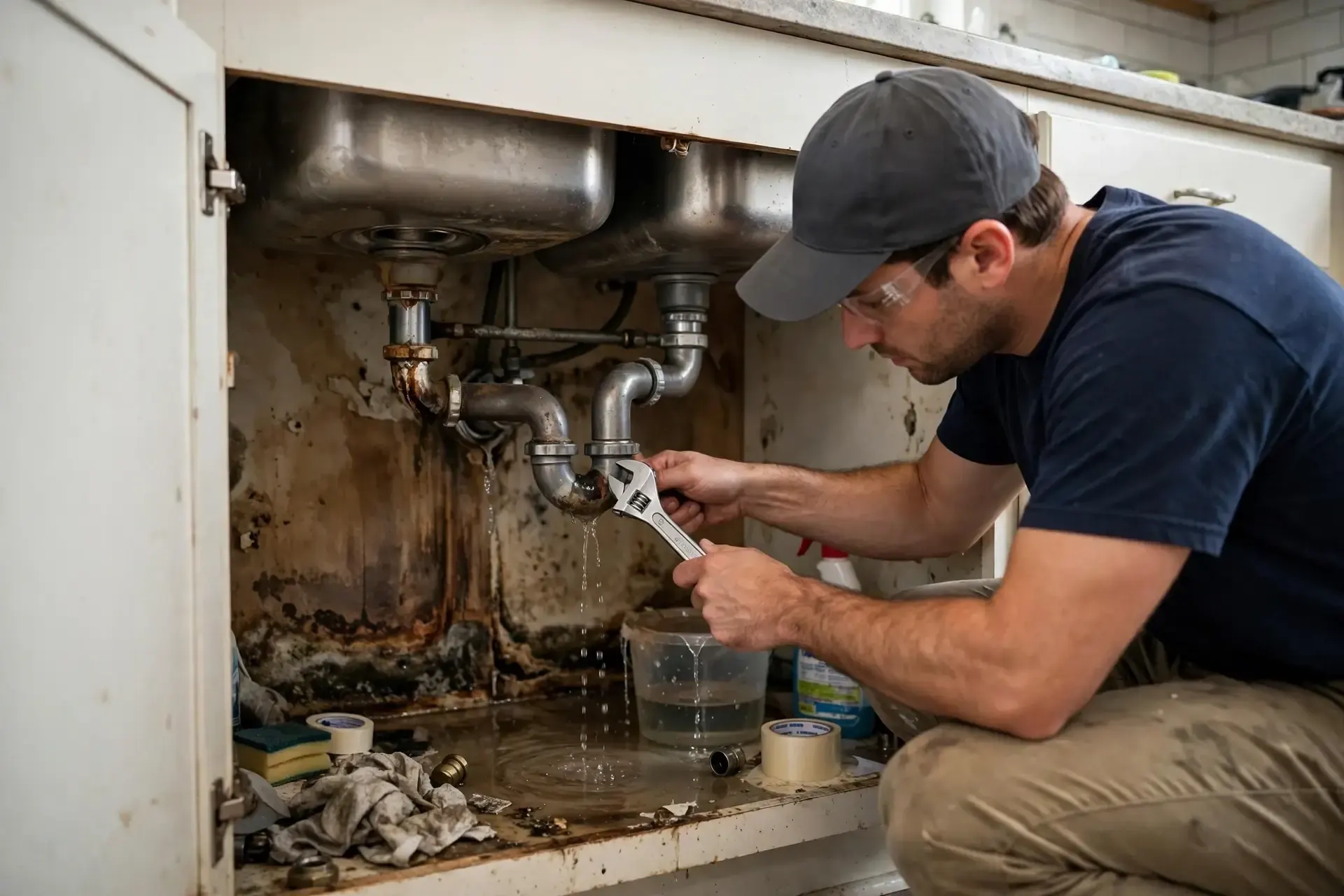
Our Hanover Park water damage services
Water extraction:
West Branch overbank flooding, storm-drainage backups, and burst-pipe losses — truck-mounted and portable extractors, day or night.
Structural drying and dehumidification:
Raised ranches and bi-levels hide moisture in finished-basement cavities and slab-adjacent framing. We dry with commercial equipment and verify with meters — never by feel.
Mold remediation:
River-water-soaked drywall and carpet grow mold within days. We contain affected areas, remove contaminated materials, and treat surfaces to IICRC standards.
Sewage cleanup:
When storm-drainage capacity is exceeded, contaminated backups demand full containment, professional disinfection, and safe disposal of unsalvageable materials.
Storm and freeze response:
From riverine flooding near Northway Drive to January polar-vortex pipe bursts, we stabilize the home first, then extract, dry, and coordinate repairs.
Common causes of water damage in Hanover Park
- West Branch DuPage River flooding. The chronic, documented risk: frequent flooding near Northway Drive, the village's primary exposure on both the Cook and DuPage sides.
- Localized storm-drainage capacity. The village operates under an MS4 permit with an annually revised storm sewer atlas mapping outfalls to the West Branch — but heavy events overwhelm inlets and low spots, pooling water against foundations.
- Overland runoff. Runoff from developed ground adjacent to the river corridor moves fast in cloudbursts, and properties between the river and the storm-sewer outfalls take the first and worst of it.
- Frozen and burst pipes. The 1960s–70s raised-ranch and bi-level stock — finished basements, slab-on-grade additions, plumbing in exterior walls — is the region's standard frozen-pipe casualty profile in January polar-vortex stretches.
- Ice-jam flooding. Like the Salt Creek corridor, Hanover Park's position on the West Branch DuPage River exposes it to winter ice-jam flooding — a January/February hazard that arrives with little warning.
- Sump pump failures. Homes that depend on sump systems for wet-season groundwater lose that defense the moment a storm knocks out power or a pump dies of old age.
Areas we serve in Hanover Park
We cover ZIP code 60133 — both the Cook County and DuPage County portions of the village. We respond in Hanover Highlands (north of Irving Park Road, east of Barrington Road), Hanover Gardens, Greenbrook, Hanover Terrace, Olde Salem, Tri Village, Arbors, Savannah, Farmington Glen, Tall Oaks, and Oakwood Landing — and along the Northway Drive corridor and near the Springinsguth Road project area. We're minutes from the Hanover Park Metra station (Milwaukee District West line) and Olde Salem Park.
How We Restore Water-Damaged Homes in Hanover Park
- Call us first, any hour. (773) 200-3228 connects you to a 24/7 dispatcher who'll confirm your address, the water's likely source, and whether sewage or electrical hazards are involved.
- Source control and safety sweep. We stop or confirm the stop of incoming water, check for electrical hazards in basements and crawl spaces, and establish containment for contaminated water.
- Thorough extraction. Standing water comes out with truck-mounted extractors — often within hours — while we move or block up furniture and belongings.
- Moisture mapping and engineered drying. Infrared cameras and meters find trapped water in finished-basement cavities and under flooring; air movers and dehumidifiers run until every reading confirms dry.
- Disinfection and rebuild coordination. Contaminated areas are sanitized and mold-treated; damaged drywall, flooring, and finishes are repaired — with complete photo and moisture documentation for your insurer.
Hanover Park water damage FAQs
Why does Northway Drive flood so often? It sits in the chronic-flooding corridor of the West Branch DuPage River, which runs along Hanover Park's western and northern edge. This stretch has documented frequent flooding across decades — enough that a 1992 channel improvement and the current Springinsguth project both targeted it.
What is the Springinsguth West Branch DuPage River project? A stream-corridor improvement awarded Illinois EPA GIGO funding of $1,662,640 (announced around 2022) on a total budget of about $2.77 million. The one-mile reach — from about 400 feet east of Springinsguth Road to Olde Salem Park — gets stream meandering, bank stabilization, eight acres of vegetative cover, additional floodplain terrace and storage, a sediment forebay, and a daylighted pipe. Hanover Park leads, with Schaumburg, the Schaumburg Park District, and MWRD as partners.
Why are there two different wastewater systems in Hanover Park? The village straddles two counties. The DuPage County portion is served by Hanover Park's own sanitary sewer treatment plant (STP #1) — Illinois EPA Plant of the Year in 1994 and 2013 — plus eight sanitary lift stations. The Cook County portion is served by the MWRD Hanover Park Water Reclamation Plant, in service since about 1963–64 at roughly 8.41 million gallons per day. Both are separated systems that can still be overwhelmed by riverine and storm-driven infiltration in extreme events.
What was the 1992 West Branch DuPage River Channel Improvement? A roughly $5.5 million engineered project, completed in 1992, built specifically to improve drainage in the Hanover Park residential area adjacent to the river. With the 1977 Upper DuPage Reservoir (230 acre-feet of upstream MWRD storage), it's the first generation of engineered protection for the same neighborhoods the Springinsguth project addresses today.
Are raised ranches and bi-levels harder to dry? They can be. Hanover Park's 1960s–70s raised ranches and bi-levels typically combine finished basements, slab-on-grade additions, and plumbing routed through exterior walls. Finished-basement cavities hide moisture behind drywall, and exterior-wall pipes are freeze-burst candidates — so we moisture-map aggressively rather than trusting surfaces that look dry.
Cost factors & insurance claim help
We never quote a flat fee — every Hanover Park loss is priced on its facts. What drives cost: how much water entered, how long it sat, the water category (clean supply water versus river floodwater versus contaminated backup), and how much finished material must be removed and rebuilt. Riverine flooding carries its own coverage wrinkle: standard homeowner policies treat rising-river floodwater differently from sudden backups, so we document the source and pathway precisely from the first visit. Your insurance company hears from us, not you — we coordinate the claim from first call to final walkthrough.
Hanover Park water emergency? Call (773) 200-3228 now
River flooding near Northway Drive, a storm-drainage backup, or a burst pipe in a 1960s bi-level — Rapid Water Damage Restoration Illinois answers 24/7 in Hanover Park. Call (773) 200-3228 for fast extraction, thorough drying, and help with your insurance claim.
Rapid Water Damage Restoration Illinois is a locally owned Illinois water damage restoration company, available 24/7 for emergencies. Our IICRC-trained technicians handle water extraction, structural drying, mold remediation, and sewage cleanup — and we work directly with your insurance company from first call to final walkthrough. Call (773) 200-3228 anytime, day or night.
Water Damage in Hanover Park? We Respond 24/7
Every minute counts. Rapid Water Damage Restoration Illinois dispatches certified technicians across Hanover Park day and night — with insurance documentation handled for you.
Call (773) 200-3228 NowWater Damage Restoration Services in Hanover Park
- Our water damage restoration service
- Commercial Water Damage Restoration in Hanover Park
- Residential Water Damage Restoration in Hanover Park
- Emergency Flood Cleanup in Hanover Park
- Storm & Flood Damage Restoration in Hanover Park
- Ceiling & Wall Water Damage Repair in Hanover Park
- Sewage Backup Cleanup in Hanover Park
- Mold Remediation in Hanover Park
- Burst Pipe & Leak Water Damage in Hanover Park
- Drying & Dehumidification in Hanover Park
Nearby Areas We Serve Around Hanover Park
Helpful Water Damage Guides
- Spring Flooding in Illinois: Home Protection Guide
- How to Prevent Frozen and Burst Pipes During an Illinois Winter
Official resources: FEMA FloodSmart (flood insurance) and EPA guide to mold and moisture.