In Gurnee, the question is not whether the Des Plaines River floods — it is how high. On Saturday, April 20, 2013, the river crested at 11.2 feet at Gurnee, overtopping its banks; Grand Avenue and the Grand/Milwaukee intersection closed, and Lake County distributed more than 20,000 sandbags. In July 2017, 7.22 inches of rain fell near Gurnee over two days, and the Des Plaines set record crests — contributing to roughly 3,500 damaged homes across Lake County.
And it keeps happening. In April 2026, the river pushed toward a 10.73-foot crest at Gurnee: Grand Avenue closed from Milwaukee Avenue to O'Plaine Road, high water reached Gowe Park and Esper Petersen Park, and the village handed out sandbags again. That September, flood warnings posted again at 9.3 feet — above the 7.0-foot flood stage.
The housing stock is modern — median year built 1992 — so many Gurnee homes have finished basements: media rooms, guest suites, and home gyms sitting below grade where river flooding and sewer overwhelm do the most damage. Rapid Water Damage Restoration Illinois's IICRC-trained technicians are on call around the clock for Gurnee. Call (773) 200-3228 anytime, day or night.
Areas we serve in Gurnee
We cover all of Gurnee — ZIP 60031 — including Coventry Estates, Stonebrook, Vista Ridge, Wentworth, Westgate, Quality Acres, the river corridor along Russell Road between the river and Kilbourne Road, the Gages Lake and Lake Carina areas, Gowe Park, Esper Petersen Park, Viking Park, and the Gurnee Mills and Six Flags Great America corridors.
Common causes of water damage in Gurnee
- Des Plaines River flooding. Flood stage at Gurnee is 7.0 feet; at 9.0 feet, Kilbourne Road and Emerald Avenue near Grand Avenue are threatened, and at 9.5 feet homes along Russell Road are at risk. River water entering basements brings silt, contaminants, and Category 3 contamination.
- Flash flooding from torrential rain. The July 2017 event dropped over 7 inches near Gurnee, overwhelming streets and storm systems — the same kind of cloudburst that forces water through window wells, doors, and foundation cracks.
- Finished-basement exposure. With most homes built 1980–2000 and finished lower levels common, even a few inches of water destroys drywall, flooring, and furnishings fast — losses here run severe.
- Sanitary sewer overwhelm. The village runs 140 miles of sanitary sewer with 8 pumping stations; extreme deluges can still overwhelm connections and push water up through lower-level drains — the 2025 Quality Acres sanitary sewer improvements show where the system has been stressed.
- Winter freeze damage. The village prioritizes water-main replacement using pipe-material and break-history data, evidence of recurring winter main-break exposure. Interior burst pipes in finished basements during deep cold snaps cause some of the costliest losses.
Our Gurnee water damage services
Water extraction:
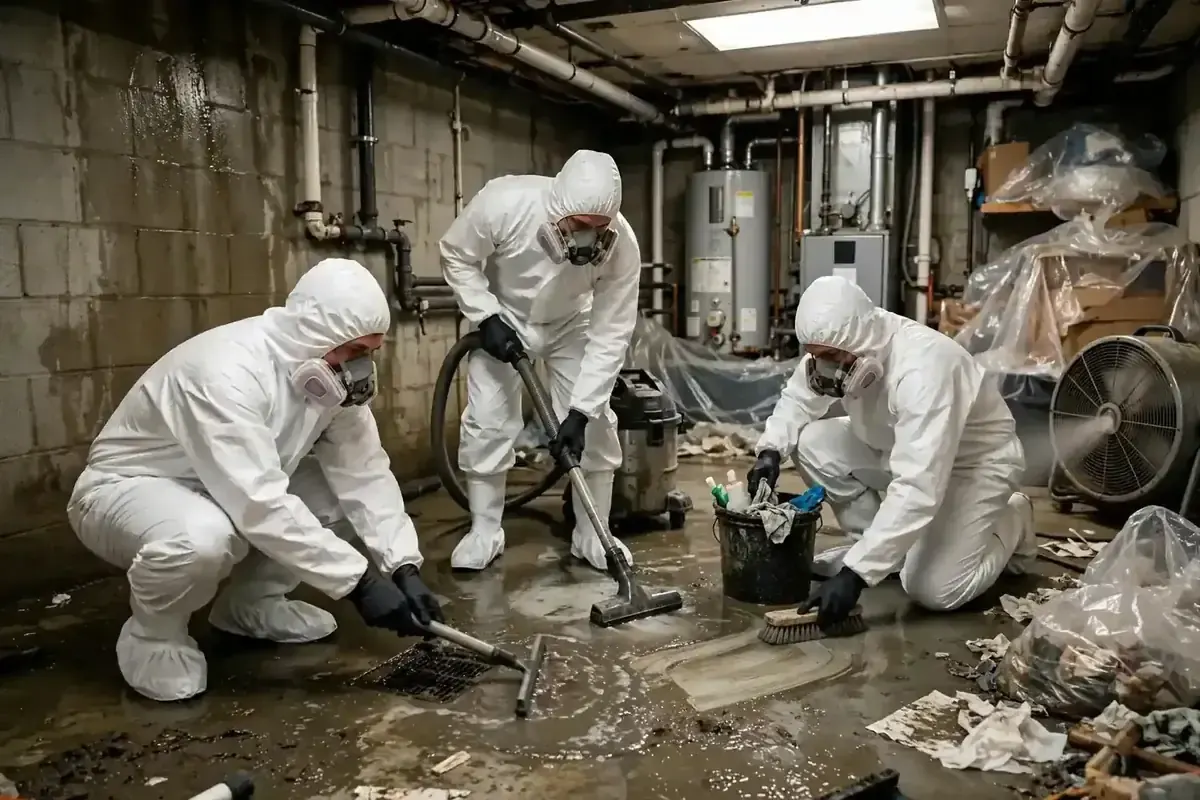
Truck-mounted and portable extractors clear river water, flash-flood ponding, and surcharged basements — starting within hours of your call.
Structural drying and dehumidification:
Industrial air movers and low-grain dehumidifiers run until moisture meters confirm dryness, critical for finished basements where moisture hides behind drywall and under carpet.
Mold remediation:
River floodwater and soaked carpet breed mold within days. The area gets contained, contaminated materials come out, and treatment follows IICRC standards.
Sewage cleanup:
Floodwater entering through drains and plumbing is Category 3. We handle full containment, disinfection, and removal of unsalvageable materials — and document the source for your claim.
Storm response:
From a 10-foot Des Plaines crest to a burst pipe over a finished media room, we stabilize, extract, dry, and coordinate repairs.
How We Restore Water-Damaged Homes in Gurnee
- Call and crew dispatch. One call to (773) 200-3228 puts a crew on the road to 60031 with extraction equipment aboard — the first visit is the one that stops the damage from compounding.
- Extraction. Standing water comes out first; every hour of contact time deepens damage, especially to the finished basements common in Gurnee's 1990s housing stock.
- Drying to the meter. Dehumidifiers and air movers run until moisture-meter readings confirm materials are dry — surfaces that feel dry can still hold enough moisture to grow mold.
- Cleaning and contents protection. Affected areas are cleaned and disinfected; salvageable belongings are cleaned, documented, and protected.
- Restoration and documentation. We repair or replace what water ruined and compile the photos, moisture logs, and itemized records your insurer needs.
Cost factors & insurance claim help
No two Gurnee losses price the same — river water versus supply-line water, duration of contact, and how much finished basement is involved all move the number. We scope on site and put it in writing before work begins, with photos and moisture readings your adjuster can follow.
Gurnee water damage FAQs
What do the Des Plaines River gauge stages mean for my home? Flood stage at the Gurnee gauge is 7.0 feet. Around 9.0 feet, Kilbourne Road and Emerald Avenue near Grand Avenue are threatened; near 9.5 feet, homes along Russell Road between the river and Kilbourne Road are at risk. When the gauge climbs, basement exposure climbs with it.
Which roads close during Des Plaines River flooding? During the April 2026 flooding, closures included Grand Avenue (Milwaukee Avenue to O'Plaine Road), Old Grand Avenue (Grand to Emerald), and Kilbourne Road (Grand to Route 41). Closed roads mean river water is nearing homes — check your basement.
Is Gurnee's sewer system combined or separated? Separated. The village operates roughly 140 miles of sanitary sewer main with 8 sanitary pumping stations, plus a separate storm sewer system — and stormwater is regulated under Lake County's countywide Watershed Development Ordinance. Basement water entry here typically comes from river flooding, flash runoff, or overwhelmed connections rather than combined surcharge.
Where can I get sandbags in Gurnee? The village made sandbags available in 2013 and 2026; watch village announcements during flood warnings. Remember: sandbags slow water — they rarely stop it from a 10-foot crest.
Are my finished basement features at special risk? Yes. With a median year built of 1992, Gurnee's typical home includes a finished lower level — media rooms, guest suites, home offices. Finished drywall, carpet, and furnishings absorb water fast and must usually be removed, which is why rapid extraction matters so much here.
Water Damage in Gurnee? We Respond 24/7
Every minute counts. Rapid Water Damage Restoration Illinois dispatches certified technicians across Gurnee day and night — with insurance documentation handled for you.
Call (773) 200-3228 NowWater Damage Restoration Services in Gurnee
- Our water damage restoration service
- Commercial Water Damage Restoration in Gurnee
- Residential Water Damage Restoration in Gurnee
- Emergency Flood Cleanup in Gurnee
- Storm & Flood Damage Restoration in Gurnee
- Ceiling & Wall Water Damage Repair in Gurnee
- Sewage Backup Cleanup in Gurnee
- Mold Remediation in Gurnee
- Burst Pipe & Leak Water Damage in Gurnee
- Drying & Dehumidification in Gurnee
Nearby Areas We Serve Around Gurnee
Helpful Water Damage Guides
- Spring Flooding in Illinois: Home Protection Guide
- What to Do When Your Basement Floods: A Step-by-Step Emergency Guide
Official resources: FEMA FloodSmart (flood insurance) and EPA guide to mold and moisture.