Garfield Ridge is named for a glacial ridge — but 19th-century accounts describe its land as "soggy," poor-quality ground used as a transportation corridor rather than a place to live. That low, marshy character never fully left. When Chicago Municipal Airport opened in 1926 and the Archer Avenue streetcar pushed west, Eastern European — especially Polish — immigrants arrived; the population nearly doubled in the 1940s and more than tripled in the 1950s, filling block after block with single-story brick bungalows. Today, the northern half of Midway International Airport sits inside the community area — an enormous impervious footprint draining into the same combined sewers as the bungalows on the next block. In the mid-July 1996 deluge, the 13th Ward — "south and east of Midway Airport" — logged 463 flooded-basement calls, the city's second-highest ward total. When the July 2–3, 2023 storm dropped up to 9 inches of rain near Berwyn and Cicero, just north of the neighborhood, Southwest Side basements filled again.
If water is in your basement right now, don't wait it out. Our IICRC-trained technicians provide 24/7 emergency water damage restoration throughout Garfield Ridge — extraction, structural drying, mold remediation, and sewage cleanup. Call (773) 200-3228 now.
Areas We Serve in Garfield Ridge
We serve the full Garfield Ridge community area, about ten miles from the Loop, across ZIP codes 60638 (the majority of the area), 60629, and 60632: the LeClaire Courts, Sleepy Hollow, Vittum Park, and Archer Limits sub-neighborhoods. Our crews cover the Archer Avenue commercial spine, the Pershing Road corridor by the Stevenson Expressway (I-55), and the residential blocks between Cicero and Harlem Avenues from 59th Street south.
Common Causes of Water Damage in Garfield Ridge
Cloudburst-driven sewer surcharge. Garfield Ridge's flood risk is almost entirely pluvial — rainfall overwhelming combined sewers — rather than riverine. When intense, localized cloudbursts hit, local mains surcharge and push sewage back into basements.
The Midway impervious footprint. The airport's northern half lies within the community area. Runways, taxiways, terminals, and I-55 shed stormwater rapidly into the local combined system — runoff the neighborhood's bungalows compete with for sewer capacity.
Soggy land and high water tables. The 19th-century description of this ground as soggy still applies: flat terrain, poor drainage on older lots, and a water table that keeps basement walls and slabs under pressure.
Original galvanized supply lines. Garfield Ridge's bungalows and Cape Cods, mostly built between 1940 and 1969, often still run on original galvanized steel plumbing — which corrodes from the inside and splits more readily than modern copper or PEX when frozen.
Frozen sump-pump discharge lines. A recurring winter failure: the pump works, but its discharge line freezes solid during a polar-vortex snap, so the basement floods anyway. Backup power and freeze-resistant discharge routing are the fixes.
Our Garfield Ridge Water Damage Services
Emergency water extraction. Standing water comes out fast — truck-mounted and portable units clear flooded basements across 60638, day or night.
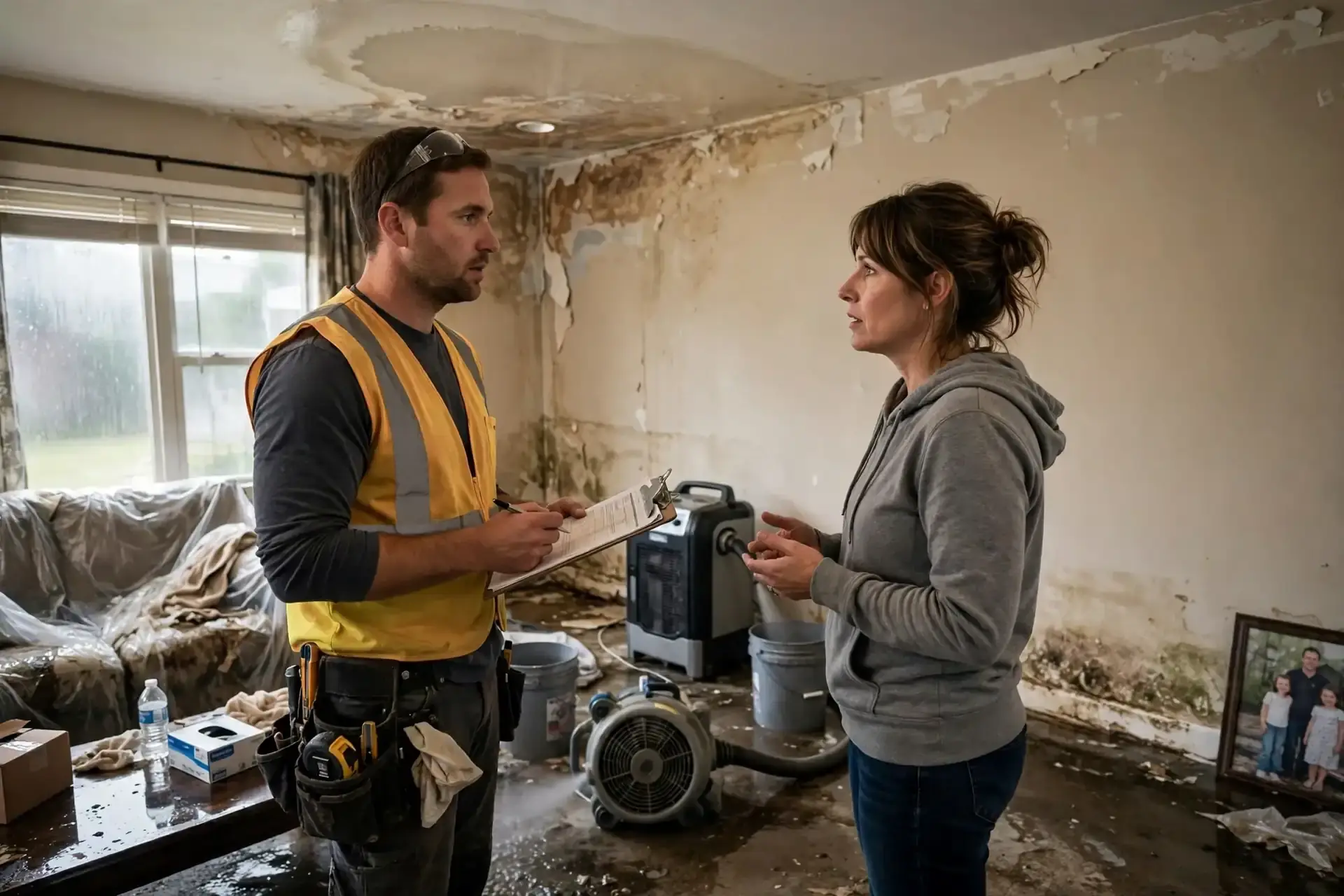
Structural drying and dehumidification. Brick bungalows and Cape Cods hold moisture in masonry, plaster, and framing. We map moisture with meters and thermal imaging, then place air movers and dehumidifiers to dry wall cavities, subfloors, and framing to verified dry standards.
Sewage backup cleanup. Surcharge is this neighborhood's signature disaster: contaminated water removed under containment, unsalvageable materials disposed of, and antimicrobial treatments applied so your basement is safe to re-enter.
Mold remediation. Full basements with original finishes trap moisture behind paneling and under flooring — damp drywall can colonize within 48 to 72 hours. We locate hidden growth, contain it, and remediate to industry standards.
How We Restore Water-Damaged Homes in Garfield Ridge
1. Intake and immediate dispatch. A live dispatcher takes your call, confirms the source is stopped, and sends the nearest crew — no phone trees while water rises.
2. Source control and water classification. On arrival we stop the source if still active, check for electrical hazards, and classify the water. Sewage gets full containment from minute one.
3. Extraction and belongings protection. Standing water comes out first while we lift, block, or move furniture and valuables.
4. Measured drying to verified standards. We map moisture across walls, floors, and framing and monitor equipment until readings confirm dry.
5. Cleaning and sanitizing. Affected surfaces are cleaned and treated with antimicrobials; sewage jobs include full decontamination of hard surfaces.
6. Rebuild and final walkthrough. Damaged drywall, flooring, trim, and paint are repaired or replaced, and we walk the finished space with you before signing off.
Cost Factors & Insurance Claim Help
Scope is driven by the category of water (sewage cleanup is more involved than a clean supply-line break), the rooms and materials affected, how long things stayed wet before drying began, and whether mold has taken hold. Finished basements with original plaster or hardwood add drying complexity.
We work directly with insurance companies: photographing damage, logging moisture readings, and providing the detailed scope adjusters need. For sewer backup losses, where coverage often hinges on a specific endorsement, that documentation is what keeps your claim moving.
Garfield Ridge Water Damage FAQs
Does having half of Midway Airport inside the neighborhood make basement flooding worse? It adds to the load. The airport's northern half — runways, taxiways, terminals — is a vast impervious surface inside the community area, draining into the same combined-sewer system as the surrounding bungalows, along with runoff from I-55. During extreme cloudbursts, that extra runoff competes with residential drainage for limited capacity.
Garfield Ridge is named for a glacial ridge. Why was the land called "soggy"? The ridge is real, but the ground around it was low, flat, marshy prairie — 19th-century accounts describe it as soggy land of poor quality, useful mainly as a transportation corridor. The postwar build-out paved over that character without changing the drainage: flat lots, a high water table, and combined sewers sized for a different era of storms. The name promises elevation; the soil delivers seepage.
What happened in the 13th Ward during the July 1996 deluge? The 13th Ward — "south and east of Midway Airport," including Garfield Ridge's northeastern blocks and neighboring West Elsdon — logged 463 flooded-basement calls during the mid-July 1996 deluge, the second-highest ward total in the city. It remains the benchmark for how this housing stock performs under extreme rain: block after block of 1940s–60s bungalows taking water through floor drains.
My Cape Cod's plumbing runs along the foundation walls. Why is that a freeze-break risk? Cape Cods and bungalows here commonly route supply lines along exterior foundation walls and through unheated crawl or attic spaces — the coldest plumbing runs in the house. During a polar-vortex snap, those lines freeze first, and the split often reveals itself only at the thaw, when water runs inside the wall. Original galvanized lines are more burst-prone than modern copper or PEX — keep heat circulating near those walls, insulate exposed runs, and know your main shutoff location.
Water Damage in Garfield Ridge, Chicago? We Respond 24/7
Every minute counts. Rapid Water Damage Restoration Illinois dispatches certified technicians across Garfield Ridge, Chicago day and night — with insurance documentation handled for you.
Call (773) 200-3228 NowWater Damage Restoration Services in Garfield Ridge
- Our water damage restoration service
- Commercial Water Damage Restoration in Garfield Ridge
- Residential Water Damage Restoration in Garfield Ridge
- Emergency Flood Cleanup in Garfield Ridge
- Storm & Flood Damage Restoration in Garfield Ridge
- Ceiling & Wall Water Damage Repair in Garfield Ridge
- Sewage Backup Cleanup in Garfield Ridge
- Mold Remediation in Garfield Ridge
- Burst Pipe & Leak Water Damage in Garfield Ridge
- Drying & Dehumidification in Garfield Ridge
Nearby Areas We Serve Around Garfield Ridge
Helpful Water Damage Guides
- What to Do When Your Basement Floods: A Step-by-Step Emergency Guide
- Sewage Backup Cleanup: Health Risks & Pro Help
Official resources: FEMA FloodSmart (flood insurance) and EPA guide to mold and moisture.