Salt Creek at Wood Dale is one of the most closely watched stretches of water in Illinois — and the numbers explain why. In September 2008, the creek's gage at Wood Dale climbed from 7.36 feet to 16.12 feet in two days, an eight-foot wall of rising water that the USGS later used to verify its hydraulic model for the reach. In July 2010 it crested at 14.08 feet. The USGS eventually mapped the 1.6-mile reach from the railroad to Elizabeth Drive in 14 flood-inundation map sheets covering gage heights from 11 to 17.5 feet — an extraordinary level of attention for a suburban creek.
Then came the federal buyout. In 2013, FEMA awarded Wood Dale $1,093,748 to acquire and demolish five residential properties that flooded over and over from Salt Creek, returning the land to open-space floodplain. A government doesn't pay a million dollars to tear down houses unless the water keeps coming back. The DuPage County comprehensive flood study of the city's Salt Creek areas identified 13 flood problem areas served by a patchwork of combined sewers, storm sewers, and roadside ditches — and the Wooddale-Itasca Reservoir (575 acre-feet, completed 1997) sits just downstream of Thorndale Avenue, holding back what it can.
The housing stock is the era water finds easiest: median year built 1972, with more than half of homes built between 1960 and 1979 — ranches and split-levels, some with saltbox influences, alongside newer New Traditional homes. Rapid Water Damage Restoration Illinois's IICRC-trained technicians respond 24/7 across Wood Dale. Call (773) 200-3228 anytime, day or night.
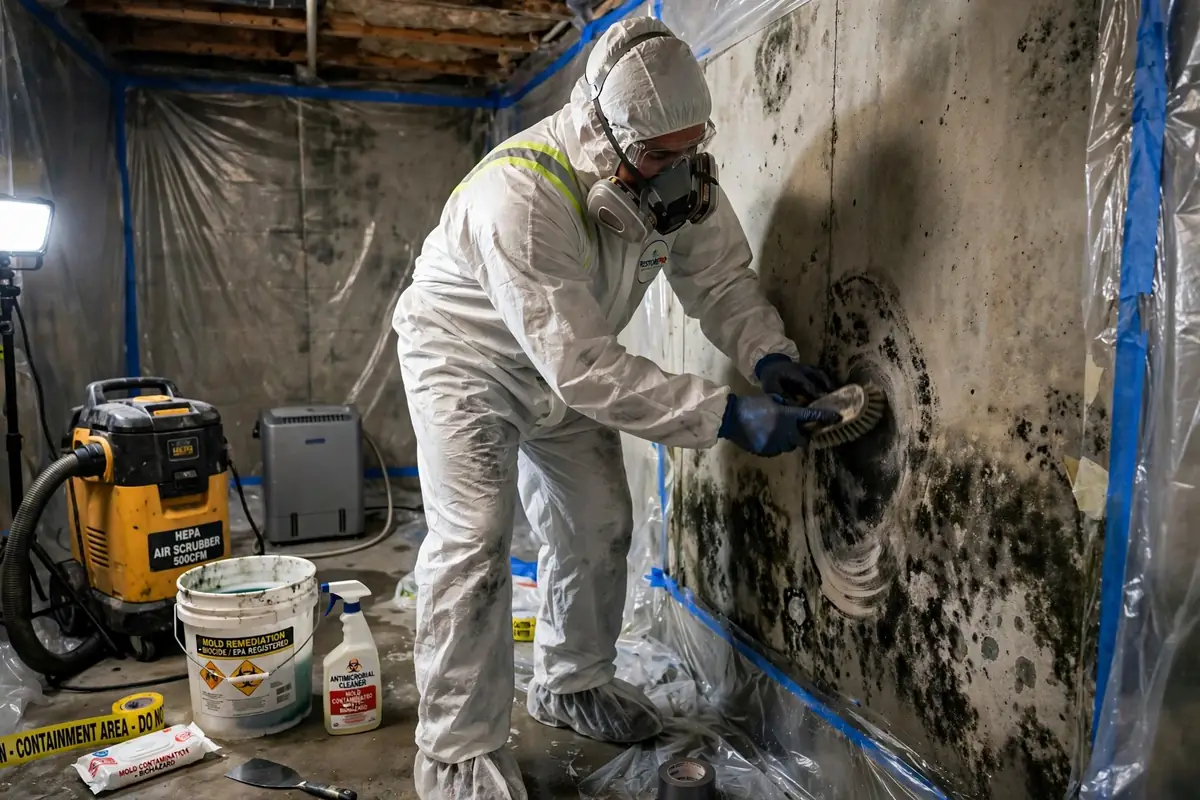
Common causes of water damage in Wood Dale
- Salt Creek flooding. The gage at Irving Park Road tells the story: 7.36 to 16.12 feet in September 2008, 14.08 feet in July 2010, and the repetitive-loss history that triggered the 2013 federal buyout. The creek's floodplain through Wood Dale is highly urbanized — homes and businesses, not open land.
- The 13 flood problem areas. DuPage County's comprehensive study mapped 13 problem areas in the city's Salt Creek zones, drained by a mix of combined sewers, storm sewers, and roadside ditches. Mixed drainage means mixed failure modes.
- Sewer backup in cloudbursts. Where combined sewers serve the area, intense rain surcharges them and pushes water up through basement drains — the classic Category 3 pathway.
- Roadside-ditch overflow. In ditch-drained areas, overwhelmed ditches spill across yards and against foundations, finding window wells and basement entries.
- Freeze damage in 1960s–70s stock. Ranches with basements and crawl spaces, supply lines in unheated crawl spaces, exterior-wall hose bibs — the polar-vortex winters of 2014 and 2019 produced surges of frozen services and main breaks across the suburbs, and Wood Dale's postwar plumbing sits squarely in that profile.
Areas we serve in Wood Dale
We cover all of Wood Dale — ZIP 60191 — including Royal Oaks, Sherwood Forest, Sullivan Oaks, Sylvan Oaks, Tall Oaks, Villa Cara, Whispering Oaks, Wood Dale Acres, Wood Dale Station, Woodside, Woodside Estates, Woodview, Elizabeth Park, and Station Walk. We're minutes from Salt Creek Park (97.5 acres along the creek), Wood Dale Grove Forest Preserve, Veterans Park, Central Park, the Irving Park Road and Wood Dale Road corridors, and the downtown Metra station.
Our Wood Dale restoration process
- Call (773) 200-3228 — 24/7. A crew dispatches to 60191 with extraction equipment aboard; the first hours decide what survives.
- Survey the loss. We trace the water's path — creek overflow, ditch spillover, sewer surcharge, or supply-line break — categorize the water, and meter every affected room.
- Extract standing water. Commercial pumps and extractors clear the bulk water fast; with contaminated creek or sewer water, speed limits contamination depth.
- Dry to verified readings. Air movers and dehumidifiers run under daily checks until materials test genuinely dry — not just dry to the touch.
- Clean, remediate, restore. Contaminated surfaces are disinfected, mold is contained and removed to IICRC standards, damaged finishes are rebuilt — and photos, moisture logs, and itemized records go to your insurer.
Our Wood Dale water damage services
Water extraction:
Salt Creek floodwater, ditch overflow, sewer backup, burst pipes — truck-mounted and portable extractors clear it within hours.
Structural drying and dehumidification:
Industrial air movers and low-grain dehumidifiers, verified with moisture meters — critical for 1960s–70s ranches with finished basements.
Mold remediation:
Contaminated floodwater and soaked materials breed mold within days. We contain, remove, and treat to IICRC standards.
Sewage cleanup:
Water arriving through drains or combined sewers is Category 3 — full containment, disinfection, and safe disposal, with the source documented for your claim.
Storm response:
From a Salt Creek surge to a January frozen pipe, we stabilize, extract, dry, and coordinate repairs.
Wood Dale water damage FAQs
What happened to Salt Creek at Wood Dale in September 2008? The streamgage at Irving Park Road recorded the creek rising from 7.36 feet on September 12 to 16.12 feet on September 14 — about eight feet in two days. The USGS used the event to verify its hydraulic model for Wood Dale, and high-water marks from the July 2010 flood (14.08 feet) later verified the federal flood-inundation map series for the 1.6-mile reach to Elizabeth Drive.
Why did FEMA pay to demolish five Wood Dale homes? Because they flooded repeatedly. In 2013, FEMA awarded the city $1,093,748 to acquire and demolish five residential properties regularly flooded by Salt Creek and return the land to open-space floodplain. It's the federal government's formal acknowledgment of chronic, repetitive-loss flooding along this stretch of the creek — and a warning to every other home in the floodplain.
What are the 13 flood problem areas? DuPage County's comprehensive flood study of Wood Dale's Salt Creek areas identified 13 flood problem areas — zones where the mix of combined sewers, storm sewers, and roadside ditches can't handle the water the creek and the storms deliver. If your home sits in one of these zones, your flood risk isn't theoretical; it's mapped.
How do roadside ditches affect my property's drainage? In ditch-drained parts of Wood Dale, stormwater travels in open roadside ditches rather than buried pipe. When a cloudburst overwhelms them, water spills across yards and ponds against foundations — finding window wells, basement entries, and low crawl-space vents. Ditch maintenance and grading toward (not away from) the ditch line matter more here than in piped neighborhoods.
Cost factors & insurance claim help
We price from the documented loss — water volume, spread, contamination category, and materials affected — never a flat fee, and we scope in writing before work begins. In Wood Dale, the creek-versus-sewer-versus-ditch question is the coverage question: Salt Creek floodwater, combined-sewer backup, and supply-line breaks are treated differently by most policies, and repetitive-loss history can complicate flood claims. We document source, category, and pathway precisely and work directly with your insurance company from first call to final walkthrough.
Water Damage in Wood Dale? We Respond 24/7
Every minute counts. Rapid Water Damage Restoration Illinois dispatches certified technicians across Wood Dale day and night — with insurance documentation handled for you.
Call (773) 200-3228 NowWater Damage Restoration Services in Wood Dale
- Our water damage restoration service
- Commercial Water Damage Restoration in Wood Dale
- Residential Water Damage Restoration in Wood Dale
- Emergency Flood Cleanup in Wood Dale
- Storm & Flood Damage Restoration in Wood Dale
- Ceiling & Wall Water Damage Repair in Wood Dale
- Sewage Backup Cleanup in Wood Dale
- Mold Remediation in Wood Dale
- Burst Pipe & Leak Water Damage in Wood Dale
- Drying & Dehumidification in Wood Dale
Nearby Areas We Serve Around Wood Dale
Helpful Water Damage Guides
- How to Prevent Frozen and Burst Pipes During an Illinois Winter
- Does Homeowners Insurance Cover Water Damage in Illinois?
Official resources: FEMA FloodSmart (flood insurance) and EPA guide to mold and moisture.