An aerial photograph from April 19, 2013 tells Peru's water story in a single frame: Water Street underwater. That April, the Illinois River hit record flood levels for the area after five to ten inches of rain fell April 17–18. Waterstreet Pub, Brandy's, and neighboring businesses emptied their lower levels and barricaded with concrete, tarp, and sandbags while 38 counties were declared disaster areas. It wasn't the first time the river came to Water Street, nor the last: May 2020 brought the third-highest crest on record at La Salle/Peru, and June 2019 hit 20.8 feet.
Peru has been a river town since the 1830s, founded next to the Illinois & Michigan Canal as the upper limit of steamboat navigation and incorporated as a city in 1851. The 1853 railroad made Water Street a dense industrial corridor — and the 1849 flood proved the bargain early, with the river "21 to 22 feet above their ordinary stages" and "the water up to the windows in the lower part of Peru." The Westclox era added worker housing — 1895–1926 bungalows and single-family homes with basements near Westclox Avenue — and by 1910 the Western Clock Company was the largest alarm-clock producer in the U.S. LaSalle County is also tornado-active: an F3 ripped through downtown Utica, about 15 miles east, in April 2004, killing nine; an EF-3 tore through Ottawa and Naplate in February 2017; and two EF-1 tornadoes were confirmed in the county in August 2026. River flood, tornado-opened roof, or a burst pipe in a century-old worker's cottage — Rapid Water Damage Restoration Illinois answers 24/7 in Peru. Call (773) 200-3228.
Our Peru water damage services
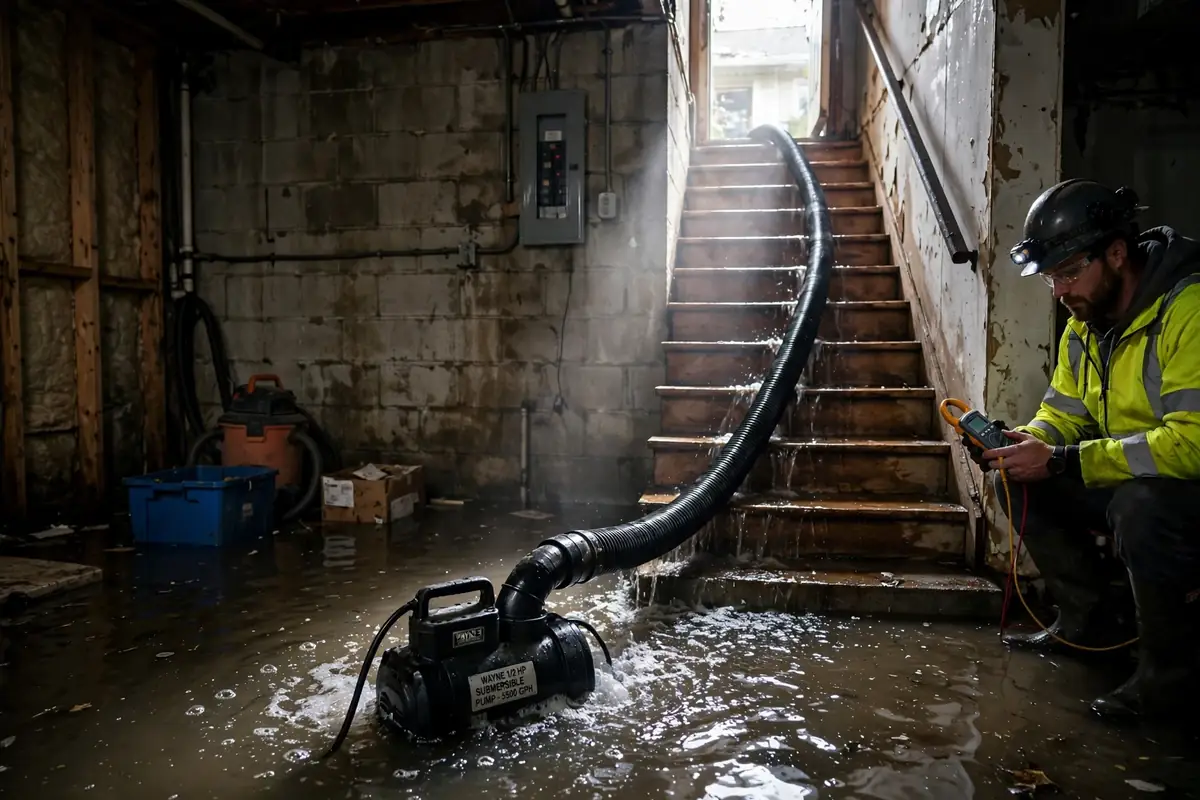
Emergency water extraction. Illinois River overbank on Water Street, a flooded basement in a Westclox-era bungalow, or a burst supply line — truck-mounted pumps and portable extractors remove standing water fast.
Structural drying and dehumidification. Peru's industrial-town housing — worker cottages, 1920s colonials, postwar ranches along the Route 251 corridor — gets patient, metered drying, with daily moisture-meter readings until every wall, floor, and cavity tests dry.
Mold remediation. River-flood moisture lingering in basements and wall cavities is ideal for mold. We contain affected areas, remove contaminated materials, and treat surfaces to IICRC standards.
Sewage cleanup. When heavy rain or high river stages stress older basement drains in the lowlands, sewage can back up into living space. We extract category-3 water in full PPE, remove contaminated porous materials, and disinfect every affected surface.
Storm damage repair. Tornado and derecho-driven water intrusion — torn roofing, shattered windows, damaged siding — is secured, extracted, dried, and rebuilt to pre-loss condition.
Common causes of water damage in Peru
- Illinois River flooding in the lowlands. The river gauge is read at nearby La Salle, where flood stage is 20.0 feet; at 20 feet, the La Salle, Spring Valley, and Peru lowlands flood. April 2013 set record levels for the area; May 2020 brought the third-highest crest on record; June 2019 reached 20.8 feet.
- Water Street's flood-prone corridor. The historic industrial riverfront corridor — dense since the 1853 railroad — sits in the flood zone. In April 2013 aerial photos showed Water Street underwater; in May 2020 several Water Street businesses were inundated.
- A 175-year flood history. March 1849: the river rose "21 to 22 feet above their ordinary stages" with "the water up to the windows in the lower part of Peru." May 1943: basin floods broke all records on the lower river after 8.5 inches of May rainfall, with peak flow of 83,100 cfs at Kingston Mines.
- Westclox-era worker housing. The 1895–1926 industrial-town stock — bungalows with wraparound porches, single-family homes with basements near Westclox Avenue and downtown — carries aging plumbing and basement drains vulnerable to backups and seepage.
- Tornado and derecho damage. LaSalle County's tornado record includes the April 2004 F3 at Utica (~15 miles east, 9 killed), the February 2017 EF-3 through Ottawa and Naplate, confirmed touchdowns near Peru in October 2021, two EF-1s in August 2026, and the August 2020 derecho's 80–120 mph winds. Tornado-opened roofs admit the rain that follows.
- Deep-freeze bursts. The January 2019 polar vortex brought record regional cold, and freeze-thaw water-main breaks hit Illinois municipalities in its wake — the classic burst-pipe profile for century-old homes.
Areas we serve in Peru
We dispatch 24/7 across Peru in ZIP 61354 (area code 815): Water Street and the historic industrial riverfront, the Westclox Avenue area, the La Salle-Peru Twin Cities neighborhoods, the postwar ranch development along the Route 251 and I-80 corridor, and the Peru Mall district. Nearby landmarks: Buffalo Rock State Park just east on the Illinois River bluffs, Starved Rock State Park about seven miles away, Matthiessen State Park, and the Illinois & Michigan Canal heritage corridor. We reach you via I-80, I-39, IL-251, and US-6. River rising on Water Street or a backup in a Westclox bungalow — call (773) 200-3228.
Our Peru restoration process
- Phone triage, 24/7. Call (773) 200-3228 and describe what you're seeing — river water, a backup, storm damage, or a burst pipe. During a river event, tell us your elevation relative to Water Street.
- Full on-site inspection. A certified technician identifies the water source, category, and spread, checks basements and wall cavities with moisture meters, and gives you a written plan before work begins.
- Water removal. Standing water comes out with truck-mounted and portable extraction equipment; contaminated water is isolated under containment from the start.
- Dehumidification and monitoring. Air movers and commercial dehumidifiers run against moisture-mapped targets, with daily readings until every material tests dry.
- Cleaning, disinfection, and mold prevention. Flood- and sewage-contacted surfaces are sanitized, compromised porous materials are removed, and we monitor for mold throughout drying.
- Restoration and sign-off. Damaged drywall, flooring, and finishes are rebuilt to pre-loss condition, documentation is packaged for your insurer, and we walk the job with you for final sign-off.
Cost factors & insurance claim help
We never quote by phone — every Peru loss is scoped on its facts: the water category (clean supply water versus Illinois River floodwater versus sewage), how much of the structure stayed wet and for how long, and the age and materials of the building. Peru homeowners should sort out one thing early: Illinois River overbank flooding is generally a flood-insurance matter, while burst pipes, wind-driven rain from tornado damage, and sewer backups (with a backup endorsement) typically fall under a homeowners policy. We photograph and log everything, review your coverage with you, and work directly with your insurance company from first call to final walkthrough.
Frequently asked questions
Why does Water Street flood so often in Peru?
It's a 19th-century industrial corridor built in the river's lowlands. The 1853 railroad made Water Street dense with industry, and the La Salle gauge reads flood stage at 20.0 feet — at 20 feet the Peru lowlands flood. April 2013's aerial photos showed Water Street underwater; the May 2020 crest inundated its businesses again.
What happened during the April 2013 flood in Peru?
The Illinois River reached record levels for the area after five to ten inches of rain fell April 17–18, 2013. An April 19 aerial photo showed Water Street underwater; Waterstreet Pub and Brandy's emptied their lower levels and barricaded with concrete, tarp, and sandbags; 38 counties were declared disaster areas.
How far back does Peru's flooding go?
To the 1840s. In March 1849 the river rose "21 to 22 feet above their ordinary stages," with "the water up to the windows in the lower part of Peru." In May 1943, basin floods broke all records on the lower river after 8.5 inches of May rain — double the normal — with peak flow of 83,100 cfs at Kingston Mines.
I live in Westclox-era housing. What should I watch for?
The 1895–1926 stock — bungalows and single-family homes with basements near Westclox Avenue — is a century old. Expect aging supply and drain lines, basement drains vulnerable when the river is high, and pre-modern foundations. A sump pump with battery backup is the single best investment in these homes.
LaSalle County seems tornado-active — does that create water-damage risk?
Yes. The April 2004 F3 killed nine in Utica, ~15 miles east; the February 2017 EF-3 tore through Ottawa and Naplate; two EF-1s were confirmed in the county in August 2026; and the August 2020 derecho brought 80–120 mph winds. Tornadoes open roofs to the rain that follows — that intrusion is a water-damage loss needing fast extraction and drying.
Water Damage in Peru? We Respond 24/7
Every minute counts. Rapid Water Damage Restoration Illinois dispatches certified technicians across Peru day and night — with insurance documentation handled for you.
Call (773) 200-3228 NowWater Damage Restoration Services in Peru
- Our water damage restoration service
- Commercial Water Damage Restoration in Peru
- Residential Water Damage Restoration in Peru
- Emergency Flood Cleanup in Peru
- Storm & Flood Damage Restoration in Peru
- Ceiling & Wall Water Damage Repair in Peru
- Sewage Backup Cleanup in Peru
- Mold Remediation in Peru
- Burst Pipe & Leak Water Damage in Peru
- Drying & Dehumidification in Peru
Helpful Water Damage Guides
- Water Damage From Roof Leaks: Illinois Guide
- What to Do When Your Basement Floods: A Step-by-Step Emergency Guide
Official resources: FEMA FloodSmart (flood insurance) and EPA guide to mold and moisture.