Few suburbs know flooding the way Midlothian does. In January 2015, residents ran a "Floodlothian" tour of their own drowning yards — one resident's yard had become an ephemeral pool of stormwater so regular it earned a name: "Lake Helen." The Center for Neighborhood Technology's RainReady Midlothian plan records flooding stories reaching back to the village's 1920s settlement, and a 2015 survey found more than 72% of residents had experienced flooding on their property. Flood damage has been cited as a common cause of foreclosures and abandoned properties here. This is not a one-bad-storm town. It is a every-storm town.
The geography explains it. Midlothian is intersected by four watersheds — Midlothian Creek, Natalie Creek, Calumet Union, and the Cal-Sag Channel — and its drainage chokes at Natalie Creek, which enters near 149th Street and Kilpatrick Avenue through restrictive underground and aboveground culverts. The 2016 MWRD flood-control presentation documented that in 2014 the village flooded five times in nine weeks — during storms of one year or less. It is, the plan found, "not uncommon for 149th Street between Kilbourn and Kostner avenues to be deluged by a storm bringing two inches of rain or less." The record runs deep: debris-clogged Midlothian Creek in June 1969, the flooded 14500 block of Karlov Street in May 1974, USGS high-water marks at seven Natalie–Midlothian Creek sites in July 1996's 16-plus-inch deluge, and the April 2013 regional record flood. In November 2018, MWRD broke ground on the Natalie Creek flood control project — upsized culverts, a widened channel, a stormwater storage basin — designed to benefit 237 structures in a 100-year storm. When water is rising in your Midlothian basement, Rapid Water Damage Restoration Illinois answers 24/7. Call (773) 200-3228.
Common Causes of Water Damage in Midlothian
- Natalie Creek culvert restrictions. Undersized culverts at 149th and Kilpatrick throttle the creek; water backs into streets, yards, and basements on storms as small as two inches.
- Midlothian Creek overbank. Debris and vegetation choke the creek near 147th–146th Streets — the same reaches that flooded in 1969 and 1974.
- Both sewer systems backing up. A 2015 USACE analysis found that "even during relatively minor storm events, the storm sewer system is overwhelmed, causing backup and ditch overtopping in streets and yards" — with sanitary backups riding the same events.
- Groundwater seepage. The RainReady plan documents a naturally high water table in parts of the village; seepage enters through foundations and basement windows.
- "Belly Button Hill" ponding. Around Kostner Avenue and 146th Street, ditches with insufficient capacity and flat grades back up at the outfall to the Cal-Sag Tributary and Midlothian Creek.
- Mid-century plumbing. 1950s–70s brick ranch and raised-ranch homes with original lines, plus 35% of homes on crawlspaces — the highest burst-pipe and seepage profile in the village.
- Power outages disabling sump pumps. As one resident put it in the RainReady survey: "If our pump can't keep up or goes out, the water will raise too high and drown our furnace, water heater, washer and dryer."
How We Restore Water-Damaged Homes in Midlothian
- 24/7 response. Call (773) 200-3228. We arrive with extraction equipment and identify the source first — creek overbank, storm or sanitary backup, seepage, or burst line.
- Immediate extraction. Standing water is pumped out with truck-mounted or portable equipment; sewage and creek water get containment protocols.
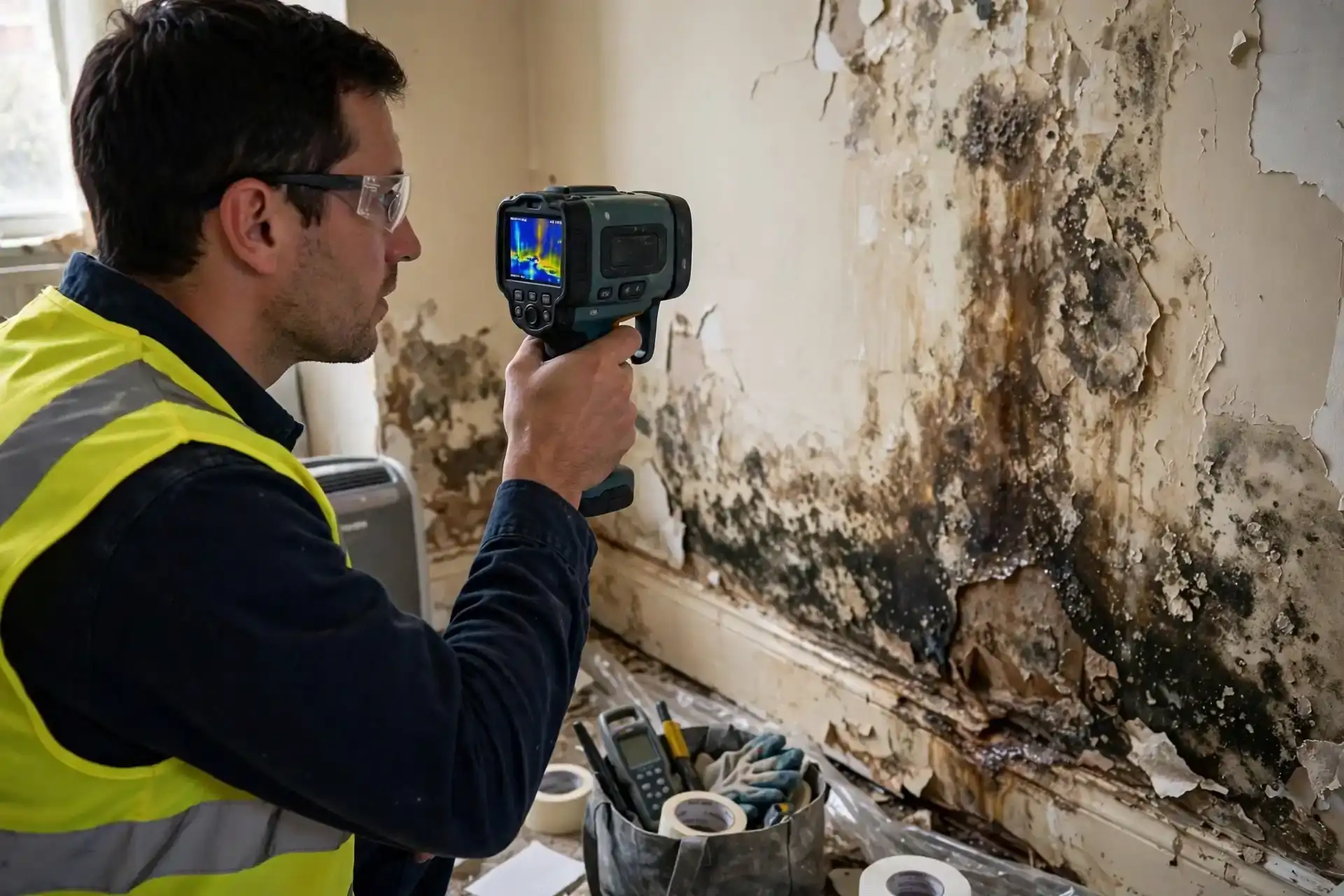
- Hidden-moisture mapping. Thermal imaging and meters trace water behind finished basement walls, under flooring, and in crawlspaces — where Midlothian's mid-century homes hide it.
- Monitored drying. Industrial dehumidifiers and air movers run until materials verify dry by measurement, not by touch. We log daily readings.
- Cleanup, sanitizing, and mold prevention. Contaminated areas are disinfected; antimicrobial treatment where warranted, full remediation where mold has taken hold.
- Repair and insurance documentation. We rebuild to pre-loss condition and hand your adjuster a complete file — photos, moisture logs, line-item scopes.
Our Midlothian Water Damage Services
Emergency water extraction
Creek floodwater, sewer backup, sump failures, burst pipes — removed fast, before it spreads through finished lower levels.
Structural drying
Calibrated for brick ranches and raised ranches with full basements (62% of surveyed homes) or crawlspaces — metered drying for framing, drywall, and paneling.
Mold remediation
Damp basements and wall cavities grow mold within days. We contain, remove, and treat affected materials to IICRC standards.
Sewage cleanup
Storm and sanitary backups are health hazards. We extract wastewater, disinfect surfaces, and remove contaminated materials safely.
Storm damage repair
After flash-flood and creek events, we repair water-ruined drywall, flooring, and finishes and rebuild to pre-loss condition.
Areas We Serve in Midlothian
We respond throughout ZIP 60445, including the flood-prone corridors our research names: the Natalie Creek corridor around 149th Street and Kilpatrick, Kenton, Kolmar, Kilbourn, and Kostner Avenues; Kostner Park / "Belly Button Hill" near Kostner Avenue and 146th Street; the Jolly Homes area of southeast Midlothian; the 14500 block of Karlov Street; and the custom-home area near the Midlothian Country Club. Memorial Park and the Midlothian Meadows Forest Preserve frame the edges of our standard response zone.
Cost Factors & Insurance Claim Help
No flat quotes — every Midlothian loss is scoped on its facts. Cost follows the water category (sewage and creek water require containment and tear-out; clean supply water does not), the square footage and materials affected, how long water sat before extraction, and the level of finish in the lower level. Coverage in Midlothian often hinges on sewer-backup and sump endorsements, so we review your policy with you. We document everything your adjuster needs — photos, moisture logs, itemized scopes — and work directly with your insurance company from the first call to the final walkthrough.
Frequently Asked Questions
Why do people call Midlothian "Floodlothian"?
Residents coined it for a 2015 community tour of flood damage — years of repetitive flooding had made it the village's nickname. One stop was resident Helen Lekavich's yard, which ponds so regularly it became "Lake Helen." When flooding gets a nickname and a guided tour, it's a way of life — which is why Midlothian homeowners need a restoration crew that understands repeat events.
What is the Natalie Creek flood control project, and will it fix the flooding?
MWRD broke ground in November 2018 near 149th Street and Kilpatrick Avenue to upsize the restrictive culverts, widen the channel, and build a stormwater storage basin — designed to benefit 237 structures in a 100-year storm. It's a major improvement, but it targets the creek's main reach, not every ditch, culvert, and flat-graded street in the village. Smaller storms will still test the system.
What is "Belly Button Hill," and why does the area around it flood?
It's the local name for the low-lying Kostner Park area near Kostner Avenue and 146th Street. The USACE's 2015 analysis found the ditches there have insufficient capacity and the grades are flat, so water backs up at the outfall to the Cal-Sag Tributary and Midlothian Creek. Homes in that pocket sit at the receiving end of the village's drainage — extra attention to sump pumps and backwater protection pays off.
My storm drains and my sanitary drains both seem to back up. Is that normal here?
In Midlothian, yes — it's documented. The USACE found that even relatively minor storm events overwhelm the storm sewer system, and the RainReady plan lists sanitary sewer backup, storm sewer backup, and groundwater seepage as the core home-level issues. The village also has a naturally high water table in places. That combination means backups here aren't one-off plumbing failures — they're a drainage signature.
What should I do if my sump pump loses power during a storm?
Don't wait to find out. Ice-storm and thunderstorm outages kill the pumps Midlothian homes depend on. Have a backup power plan — a battery backup or generator — sized to your pump, test it before storm season, and keep a battery-powered alarm in the pit. If water's already rising, call (773) 200-3228 — extraction equipment buys back what the outage cost.
Water Damage in Midlothian? We Respond 24/7
Every minute counts. Rapid Water Damage Restoration Illinois dispatches certified technicians across Midlothian day and night — with insurance documentation handled for you.
Call (773) 200-3228 NowWater Damage Restoration Services in Midlothian
- Our water damage restoration service
- Commercial Water Damage Restoration in Midlothian
- Residential Water Damage Restoration in Midlothian
- Emergency Flood Cleanup in Midlothian
- Storm & Flood Damage Restoration in Midlothian
- Ceiling & Wall Water Damage Repair in Midlothian
- Sewage Backup Cleanup in Midlothian
- Mold Remediation in Midlothian
- Burst Pipe & Leak Water Damage in Midlothian
- Drying & Dehumidification in Midlothian
Nearby Areas We Serve Around Midlothian
Helpful Water Damage Guides
Official resources: FEMA FloodSmart (flood insurance) and EPA guide to mold and moisture.