Glendale Heights (ZIP 60139) is a village built in a hurry. Farmland served by the Glen Ellyn post office — population 104 — until the late 1950s, it became a building site when Midland Enterprises (Charles and Harold Reskin) started putting up houses in 1958 on Glen Ellyn Road and Larry Lane near Fullerton Avenue. Incorporated July 13, 1959 as "Glendale" and renamed Glendale Heights in March 1960 after a naming conflict with a downstate town — the "Heights" nodding to its roughly 100-foot topographic swing across the Valparaiso Moraine — the village grew to 33,176 by 2020. The median year built is 1978: 51.9% of homes went up between 1960 and 1979, the archetypal ranch-home buildout. That matters for water damage, because housing this modest by DuPage standards — 2022 median residential sales price $235,000 per CMAP — carries a higher share of original mechanicals: original water heaters, aging supply lines, 1960s plumbing in crawl spaces and uninsulated garage runs. The East Branch DuPage River flows southward through the village, and the watershed's signature storms — July 1996's roughly 17 inches of rain in 24 hours, and the April 2013 record-stage flood — both devastated the East and West Branches. Old pipes and river water: that's the Glendale Heights profile.
Burst line, backed-up drain, or river water in the basement — call (773) 200-3228. Rapid Water Damage Restoration Illinois answers 24/7.
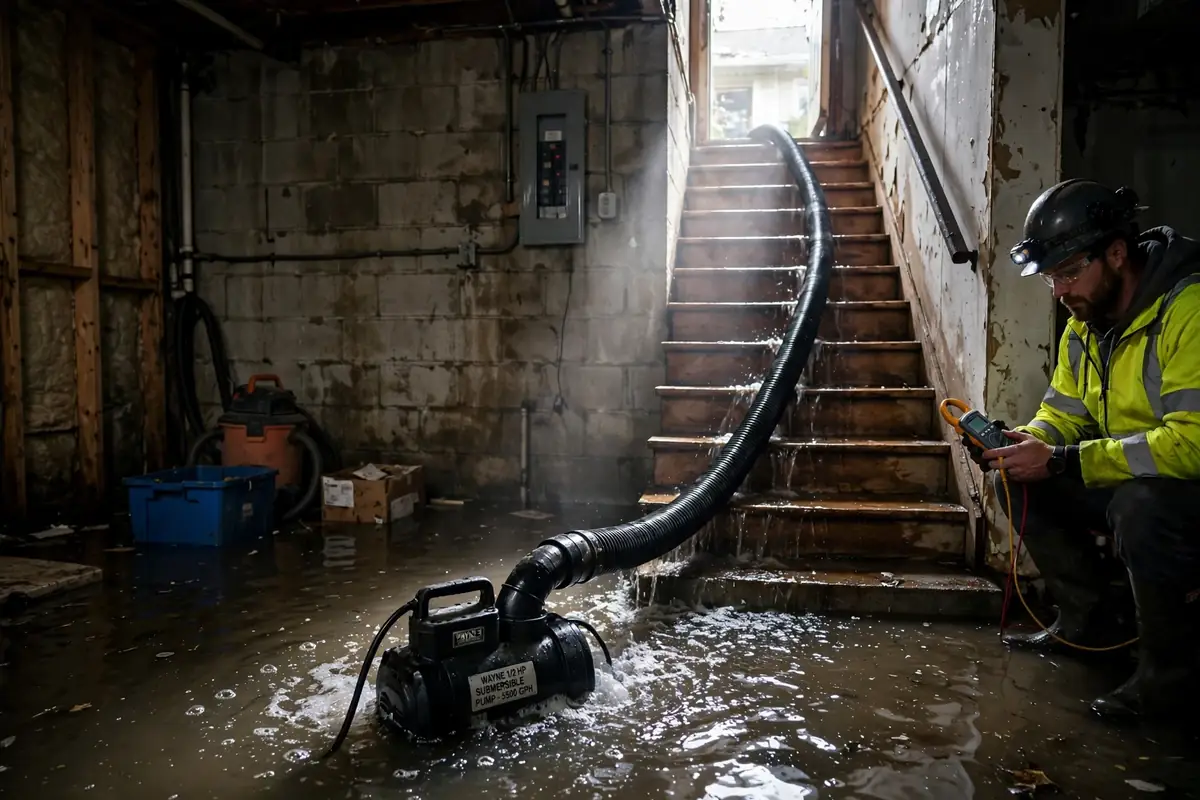
Our Glendale Heights Water Damage Services
Water extraction
From burst 1960s supply lines to East Branch floodwater, we remove standing water fast with truck-mounted and portable equipment.
Structural drying
Monitored drying for ranch framing, drywall, and slab-on-grade or crawl-space construction, verified with moisture meters.
Mold remediation
Aging plumbing leaks that drip for months feed mold inside walls. We contain, remove, and treat to IICRC standards.
Sewage cleanup
Backup events get full extraction, sanitization, disposal of contaminated porous materials, and disinfection of salvageable surfaces.
Storm damage repair
Flood, runoff, and wind-driven repairs on ranches, townhomes, and multi-family buildings — rebuilt to pre-loss condition.
Common Causes of Water Damage in Glendale Heights
- Original 1960s–70s plumbing failing. The dominant story in a 1978-median village: original water heaters rupturing, aging supply lines splitting in crawl spaces and uninsulated garage runs, and slow leaks inside walls.
- East Branch DuPage River flooding. The river runs southward through the village, and the July 1996 (~17 inches in 24 hours) and April 2013 record-stage floods both hit the East Branch hard.
- Engineered drainage under extreme load. The north side is served by a network documented in the county's East Branch Tributary No. 2 plan — a retention pond north of North Avenue, closed conduits, and an overflow channel between Main Street and Park Boulevard (streambank stabilization completed there in 1994). Engineered systems have design limits; extreme storms exceed them.
- Modest-stock deferred maintenance. With a $235,000 median residential sales price, a higher share of homes still run original mechanicals — the burst water heater, not the river, is the most common water-loss origin here.
- Freeze bursts in uninsulated runs. The qualitative freeze story for the 1960s–70s ranch stock: aging supply lines in crawl spaces and uninsulated garage runs during deep cold.
Areas We Serve in Glendale Heights
We serve all of Glendale Heights in ZIP 60139 — the almost entirely residential village straddling the Valparaiso Moraine. Our crews run the original tracts along Glen Ellyn Road and Larry Lane near Fullerton Avenue where the 1958 buildout began, the later multi-family and townhome developments layered in since, and the north-side blocks served by the East Branch Tributary No. 2 drainage network. Landmarks we pass: the village-owned Glendale Lakes Golf Club at 1550 President Street, Camera Park at 101 E. Fullerton Avenue, Camelot Park and its aquatic center, the Glendale Heights Sports Hub, the man-made Lake Glenview at the village center, and the Illinois Prairie Path. We reach you via North Avenue, Army Trail Road, and Bloomingdale Road. The village operates its own wastewater treatment plant discharging to Armitage Ditch about 2,000 feet upstream of the East Branch confluence — separate sanitary and storm systems throughout.
How We Restore Water-Damaged Homes in Glendale Heights
- Round-the-clock response at (773) 200-3228. Sewage backups and active flooding get priority dispatch, day or night.
- Find the source, secure the scene. Burst line, failed water heater, East Branch intrusion, or drain backup — we identify the entry path, shut it down, and make the area safe.
- Extract standing water. High-capacity pumps and portable units clear the space; contaminated water is contained and handled with protective protocols.
- Dry with data. Moisture mapping locates hidden wetness in walls and subfloors; air movers and dehumidifiers run until meters confirm every material is dry.
- Sanitize and stop mold. Affected surfaces are cleaned and disinfected; unsalvageable materials come out before mold can establish.
- Repair and handle the paperwork. We restore finishes to pre-loss condition and document with photos and moisture logs, working directly with your insurer to the final walkthrough.
Cost Factors & Insurance Claim Help
We don't do flat quotes — every Glendale Heights loss is scoped on its facts: clean supply water versus floodwater or sewage, the area and materials affected, how long they stayed wet, and whether aging plumbing or a crawl space complicates access. Sudden bursts are typically covered differently than slow leaks, so we review your policy with you before work starts. We document everything and work directly with your insurance company from first call to final walkthrough.
Frequently Asked Questions
Why do so many water-damage calls here come from 1960s homes?
Because the village's housing tells the story: median year built 1978, with 51.9% of units built 1960–1979 — the original Midland Enterprises-era ranch buildout on Glen Ellyn Road and Larry Lane. Modest-priced homes keep original mechanicals longer: original water heaters, aging supply lines, 1960s plumbing in crawl spaces. Time, not storms, is the main enemy of this stock.
What is Armitage Ditch, and does the treatment plant affect my home?
Armitage Ditch is a tributary to the East Branch DuPage River, and Glendale Heights operates its own wastewater treatment plant — screening, activated sludge, tertiary filtration, disinfection — discharging to the ditch about 2,000 feet upstream of the confluence. It runs on separate sanitary and storm systems under the county's MS4 program, so plant operations don't push water into basements.
Did the July 1996 flood hit Glendale Heights?
The village sat squarely in its footprint: roughly 17 inches of rain fell in 24 hours on July 17–18, 1996, and both the East and West Branches were devastated — as they were again in the April 2013 record-stage flood. These are the watershed's signature events, and the East Branch runs right through the village.
My water heater is original to my 1970s ranch. What should I watch for?
Rust-colored water, rumbling sounds, moisture at the base, and a unit past 10–12 years old. In a village where much of the stock still runs original mechanicals, the water heater is the likeliest burst source — and a full tank on a finished basement floor is a flood. Replace it before it fails.
Water Damage in Glendale Heights? We Respond 24/7
Every minute counts. Rapid Water Damage Restoration Illinois dispatches certified technicians across Glendale Heights day and night — with insurance documentation handled for you.
Call (773) 200-3228 NowWater Damage Restoration Services in Glendale Heights
- Our water damage restoration service
- Commercial Water Damage Restoration in Glendale Heights
- Residential Water Damage Restoration in Glendale Heights
- Emergency Flood Cleanup in Glendale Heights
- Storm & Flood Damage Restoration in Glendale Heights
- Ceiling & Wall Water Damage Repair in Glendale Heights
- Sewage Backup Cleanup in Glendale Heights
- Mold Remediation in Glendale Heights
- Burst Pipe & Leak Water Damage in Glendale Heights
- Drying & Dehumidification in Glendale Heights
Nearby Areas We Serve Around Glendale Heights
Helpful Water Damage Guides
- Mold Remediation Cost: What Actually Drives the Price in Illinois
- Water Damage Restoration Cost in Illinois: What Really Drives the Bill
Official resources: FEMA FloodSmart (flood insurance) and EPA guide to mold and moisture.